Adam und Eva
Gustav Klimt · 1910s
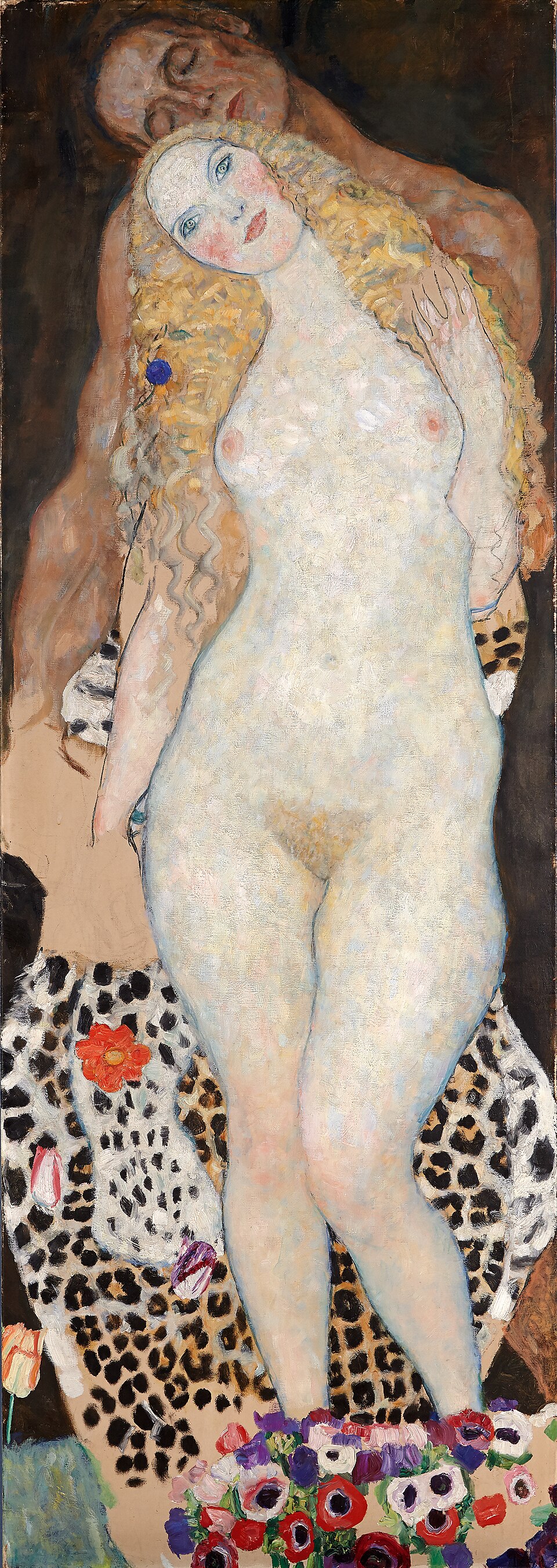
Eve stands awake and glowing while Adam sleeps in shadow behind her. It is one of the very few biblical scenes Klimt ever painted, and he never finished it: he died in February 1918 with the canvas still in his studio.
The story behind the painting
Klimt rarely turned to the Bible, Judith being the other well-known exception, and Adam and Eve belongs to the last works he was working on. He died on 6 February 1918, so the painting stayed unfinished. It follows on from his allegories about the bond between man and woman, such as The Kiss and The Embrace in the Stoclet Frieze. The picture draws on the creation story in Genesis, but it does not point to one particular episode, not even the Fall. Wikidata dates it simply to the 1910s.
What to look for
Eve dominates the tall, narrow canvas, about 173 by 60 cm. She is full-bodied and broad-hipped, wrapped in golden light, and she looks straight out at us. Klimt mixed delicate flesh tones with pale blue and yellow, so her pale body stands out against Adam's tanned one, which frames her like a protective foil. Adam's eyes are closed, his head tilted; he leans tenderly against her and almost melts into the dark background. Colourful anemones hide Eve's feet, and a leopard skin hangs around the pair. Underdrawing already shows where Adam's hands were meant to go.
Meaning and intent
The common reading sees Eve as the essence of everything feminine, a timeless mother of life that recalls prehistoric idols. The anemones stand for fertility and the flora of Paradise; the leopard skin, from Greek myth, for untamed Eros, so here Eve, not the serpent, is the temptress. Some read the skin as Adam's loincloth instead. Another view holds that Eve has already eaten from the Tree of Knowledge and is about to take Adam's hand, which may have held the apple. A third sees the pair as night and day, or the creation of Eve from the sleeping Adam's rib.
Legacy
Klimt shows Adam and Eve as equals, where earlier art usually placed Eve after Adam, and the biblical frame let him paint female nudity without penalty. The critic Wendy Osgerby found the picture, for all its beauty, a relic of another time: in 1918, with the war ending and Cubism and Expressionism in the air, it still belonged to the decadent Vienna of the fin de siècle. From 6 February 1919 it was shown in a memorial exhibition of Klimt's estate organised by Gustav Nebehay, and his friend Sonja Knips acquired it straight from the estate. It is now at the Belvedere.
Schon gewusst?
- Left unfinished when Klimt died on 6 February 1918.
- One of the few biblical subjects in Klimt's work.
- First shown in the estate exhibition of February 1919.
- Held at the Belvedere in Vienna.
Über den Künstler
Gustav Klimt (1862-1918)
religiöse Kunst · Österreichische Galerie Belvedere
Mehr von Gustav Klimt
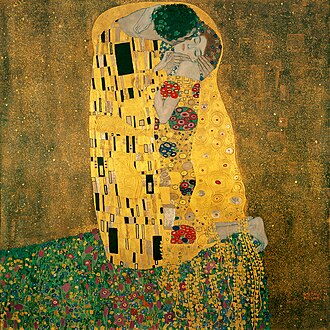 Der Kuss - Gustav Klimt (1907-1908)
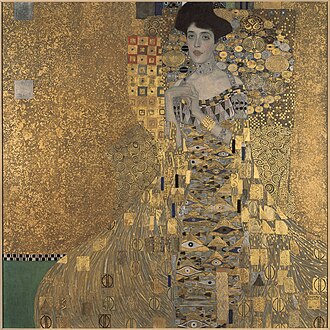 Adele Bloch-Bauer I - Gustav Klimt (1907)
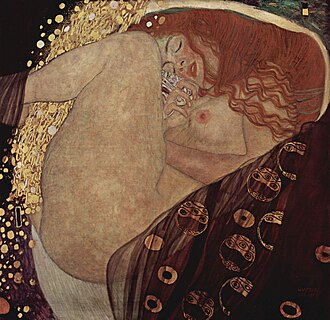 Danaë - Gustav Klimt (1907)
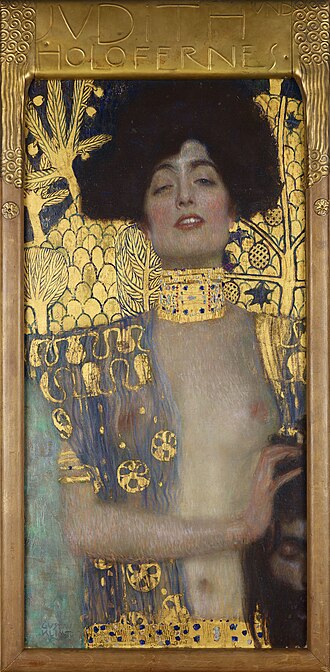 Judith I - Gustav Klimt (1901)
 Die drei Lebensalter einer Frau - Gustav Klimt (1905)
 Dame mit Fächer - Gustav Klimt (1917)
 Bildnis Adele Bloch-Bauer II - Gustav Klimt (1912)
 Porträt einer Dame - Gustav Klimt (1910s)