Gartenallee in Rueil
Édouard Manet · 1882
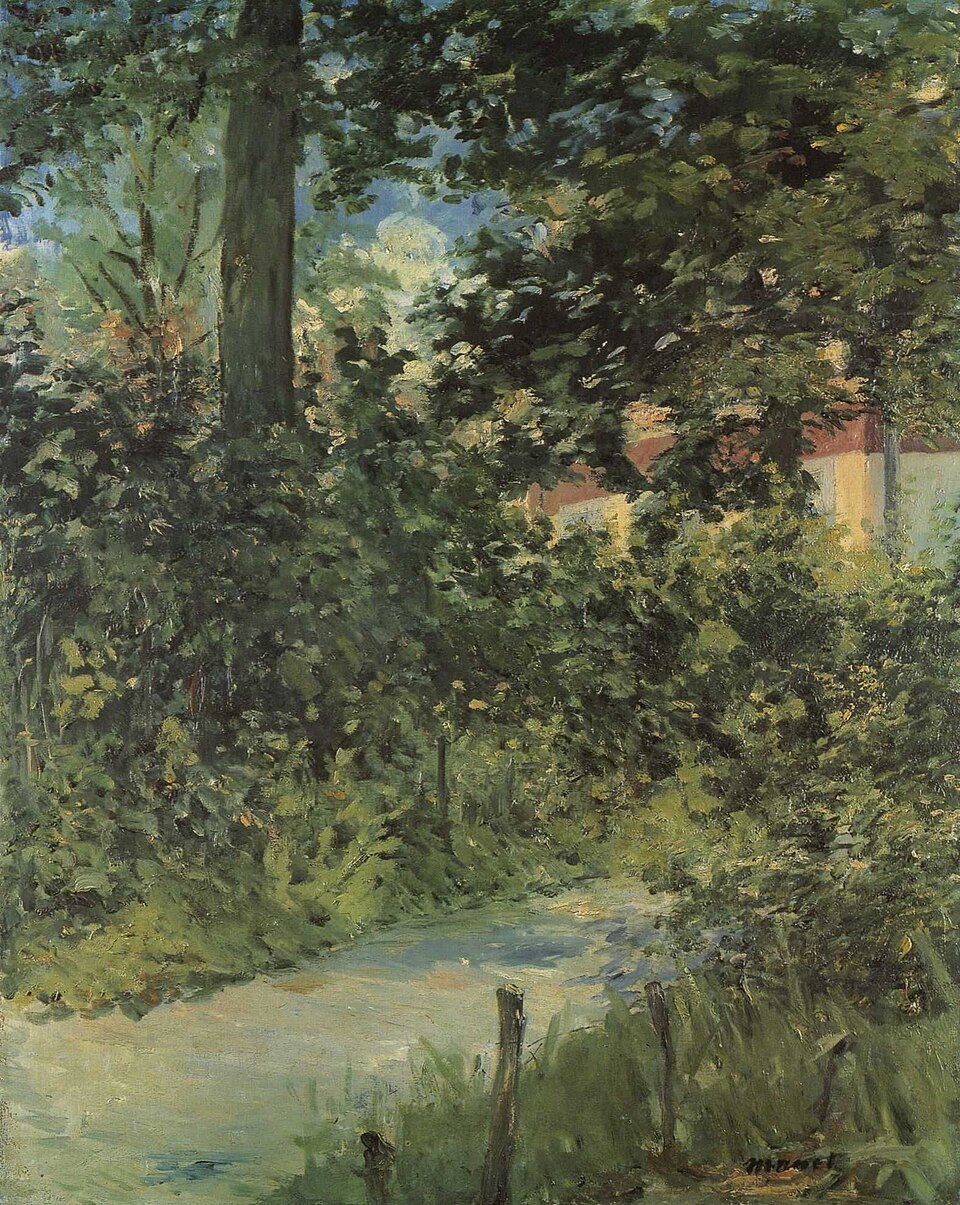
A bright path slips between summer greenery towards a half-hidden house. Manet painted it in 1882, sick and walking with a stick, and it is the only one of his three Rueil garden paths that he signed.
The story behind the painting
From July to October 1882 Edouard Manet stayed in Rueil, a suburb of Paris, for a cure, renting a house at 18 rue du Chateau for himself and his family. In earlier summers he had tried water treatments in Bellevue and Versailles, which brought only brief relief. He was first treated for rheumatism, but it later became clear he suffered from the effects of syphilis, then incurable. His leg hurt badly and he could only walk with a stick. Even so he was very productive in Rueil, and in good weather he painted in the garden of the house.
What to look for
In this version a wide pale path runs diagonally from the lower left corner to the right and disappears behind bushes. It is never clear whether it leads to the house in the background or passes it by. Lush summer foliage in many greens fills both sides. A dark tree trunk stands in the left half, its crown cut off by the top edge, and a leafy branch from the right almost hides the house, whose yellow and red facade stands out against the green. Pale blue sky shows through gaps on the right. On the path, sunlit patches of sand colour alternate with bluish shadows.
Meaning and intent
Manet painted three views of this garden path, and only this one, now in Bern, bears the signature Manet at lower right, which can be read as a sign he thought it finished. All three share free, spontaneous dabs of colour and blurred contours, typical of Impressionism. Francoise Cachin saw them as Manet's attempts to turn the coloured flicker of leaves, with glimpses of the house, into painting. Gerhard Finckh wrote that his whole skill appears here condensed into a small but splendid firework. Anne Coffin Hanson saw in the Rueil pictures his ability to overcome his own suffering and find the beauty of life around him.
Legacy
In 1883 the picture was in Manet's estate, listed as Fouillis (Rueil, paysage). At the studio sale at the Hotel Drouot in February 1884 it was bought by the opera singer Jean-Baptiste Faure, one of Manet's first collectors. Faure sold it to the dealer Paul Durand-Ruel in 1900, and in 1906 Paul Cassirer showed it in Berlin. From 1911 it belonged to the insurer Otto Gerstenberg, then to his daughter Margarethe Scharf, who moved it to Bavaria before many of the collection's works were taken to the Soviet Union after the war. Through the dealer Fritz Nathan it reached the Kunstmuseum Bern in 1955.
Schon gewusst?
- Painted in Rueil in summer 1882, the year before Manet died.
- The only signed version of three views of the same garden path.
- 82 by 66 cm, in the Kunstmuseum Bern since 1955.
- A third version has been lost since 1884.
Über den Künstler
Édouard Manet (1832-1883)
Mehr von Édouard Manet
 Das Frühstück im Grünen - Édouard Manet (1863)
 Olympia - Édouard Manet (1863)
 Bar in den Folies-Bergère - Édouard Manet (1882)
 Der Balkon - Édouard Manet (1868)
 Musik im Tuileriengarten - Édouard Manet (1862)
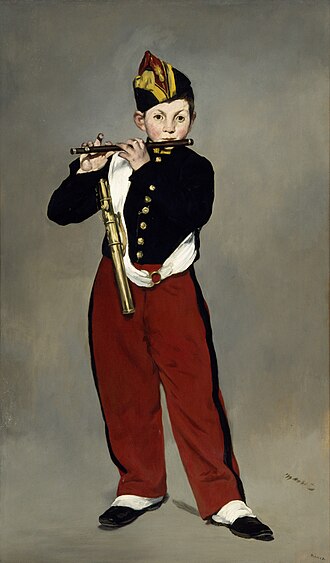 Der Pfeifer - Édouard Manet (1866)
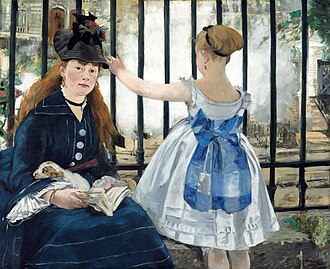 Die Eisenbahn - Édouard Manet (1873)
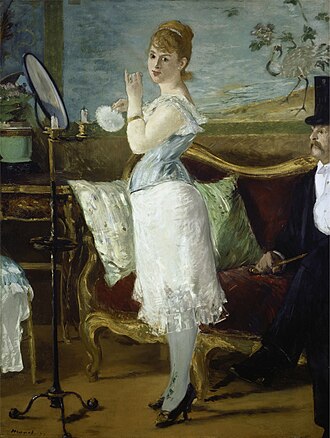 Nana - Édouard Manet (1877)
Werke verwandter Künstler
 Impression, Sonnenaufgang - Claude Monet (1872)
 Seerosen - Claude Monet (1906)
 Tanz im Moulin de la Galette - Pierre-Auguste Renoir (1876)
 Das Frühstück der Ruderer - Pierre-Auguste Renoir (1881)
 Wiege - Berthe Morisot (1872)
 Sommertag - Berthe Morisot (1879)
 Der Absinth - Edgar Degas (1875)
 Die Bellelli Familie - Edgar Degas (1858)
 Der Kanal von Loing - Alfred Sisley (1892)
 The Watering Pond at Marly with Hoarfrost - Alfred Sisley (1876)
 Straße in Paris an einem regnerischen Tag - Gustave Caillebotte (1877)
 Die Parkettschleifer - Gustave Caillebotte (1875)