Wheat Field at Auvers with House
Vincent van Gogh · 1890
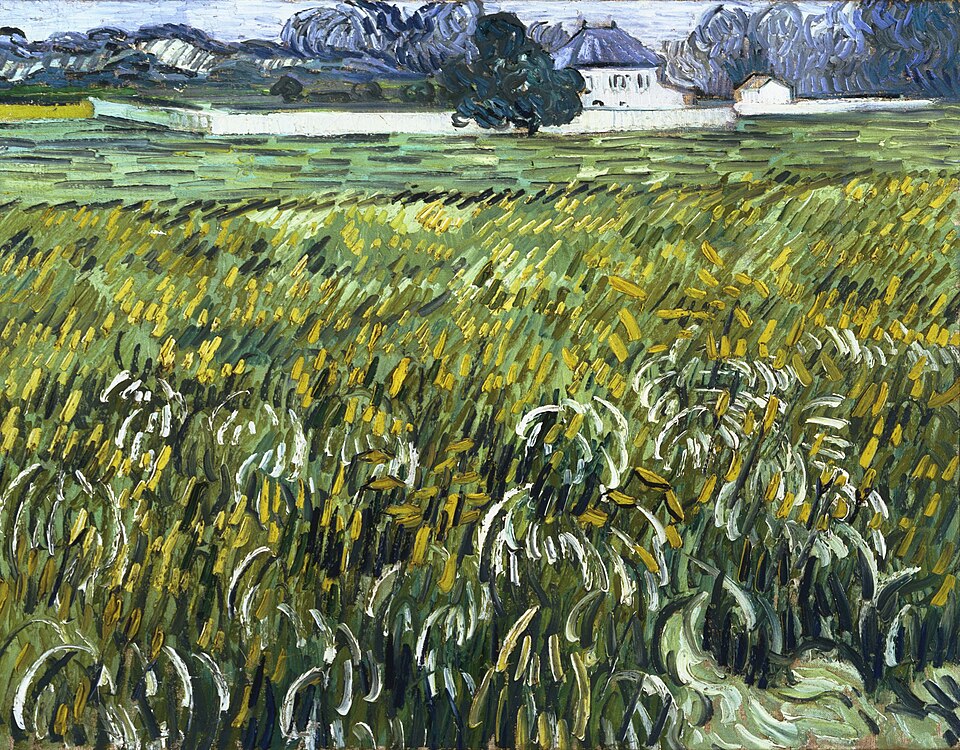
A green wheat field stretches toward a white house behind a white wall, with a single tree. Van Gogh painted this quiet view at Auvers in June 1890, a month before he died, and described it to his sister.
The story behind the painting
On 16 May 1890 Vincent van Gogh left the psychiatric hospital at Saint-Remy for Paris. There he saw his brother Theo, met Theo's wife Johanna, and their baby Vincent Willem, his godson. On 20 May he went on to Auvers-sur-Oise, where he was placed in the care of Doctor Gachet. The village made a good impression on him. He was drawn to its old houses, and the surrounding wheat fields inspired about a dozen works. This one, about 48.6 by 83.2 cm, was painted in June 1890. In a letter written in French to his sister Willemina on 13 June, he mentioned a landscape with nothing but a green field of wheat stretching to a white villa inside a white wall, with a single tree.
What to look for
A green wheat field fills the foreground. At a distance stands a white house with a slate roof behind a white enclosing wall. The wheat ripens gradually toward the back, and beyond the field a panoramic background tightens, its outlines starting to blur. With his brush Van Gogh brought order to the field, catching almost every stalk of wheat in a deliberate stroke. He used colour sparingly, limiting it to variations of green, delicate yellow and blue, and kept flat white only for the whitewashed walls of the house. Notice how harmony dominates, and how he removed every trace of his own presence.
Meaning and intent
The source reads the scene as relaxed and calm, treated with objectivity but with an anxious note underneath. Recording the ordinary, detached look of this spot away from the village, Van Gogh returned to an idea he had long neglected: simply showing things as they are. The result, in the source's words, is the effect of a sterile idyll. This restrained, almost soothed art always coexisted in him with a more violent side, an art of movement and distortion. At Auvers he combined madness and balance, violence and mastery, chaos and order, and here his leaning toward chaos is held in check by a deep perfectionism.
Legacy
The painting belongs to the last weeks of Van Gogh's life. Pictures from this Auvers period took on a more decorative character, closer to an ideal he had already glimpsed at Arles. He was looking for a more flexible art, based on the pure beauty of interlocking forms. At Saint-Remy, by contrast, he had felt bound by the constraints of his difficult situation and had treated his motifs abstractly until they became metaphors of his state of mind. This calm field, painted a month before his death, shows the balanced side of that final search. It is now in the Phillips Collection in Washington.
豆知識
- Painted in June 1890 at Auvers-sur-Oise.
- Described in a letter to his sister Willemina on 13 June 1890.
- About 48.6 by 83.2 cm.
- Now in the Phillips Collection, Washington.
画家について
Vincent van Gogh (1853-1890)
同じ画家の作品: Vincent van Gogh
 星月夜 - Vincent van Gogh (1889)
.jpg) 夜のカフェテラス - Vincent van Gogh (1888)
夜のカフェテラス - Vincent van Gogh (1888) ひまわり - Vincent van Gogh (1888)
 花咲くアーモンドの木の枝 - Vincent van Gogh (1890)
 カラスのいる麦畑 - Vincent van Gogh (1890)
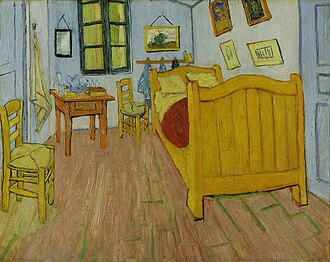 アルルの寝室 - Vincent van Gogh (1888)
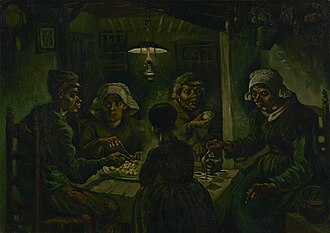 ジャガイモを食べる人々 - Vincent van Gogh (1885)
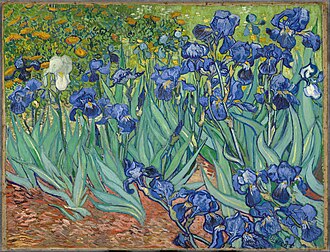 アイリス - Vincent van Gogh (1889)
関連する画家の作品
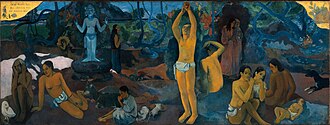 我々はどこから来たのか 我々は何者か 我々はどこへ行くのか - Paul Gauguin (1897-1898)
%201889.jpg) 黄色いキリスト - Paul Gauguin (1889)
黄色いキリスト - Paul Gauguin (1889) ムーラン・ド・ラ・ギャレットの舞踏会 - Pierre-Auguste Renoir (1876)
 舟遊びの昼食 - Pierre-Auguste Renoir (1881)