ヴィーナスとキューピッド
Hans Holbein the Younger · 1526
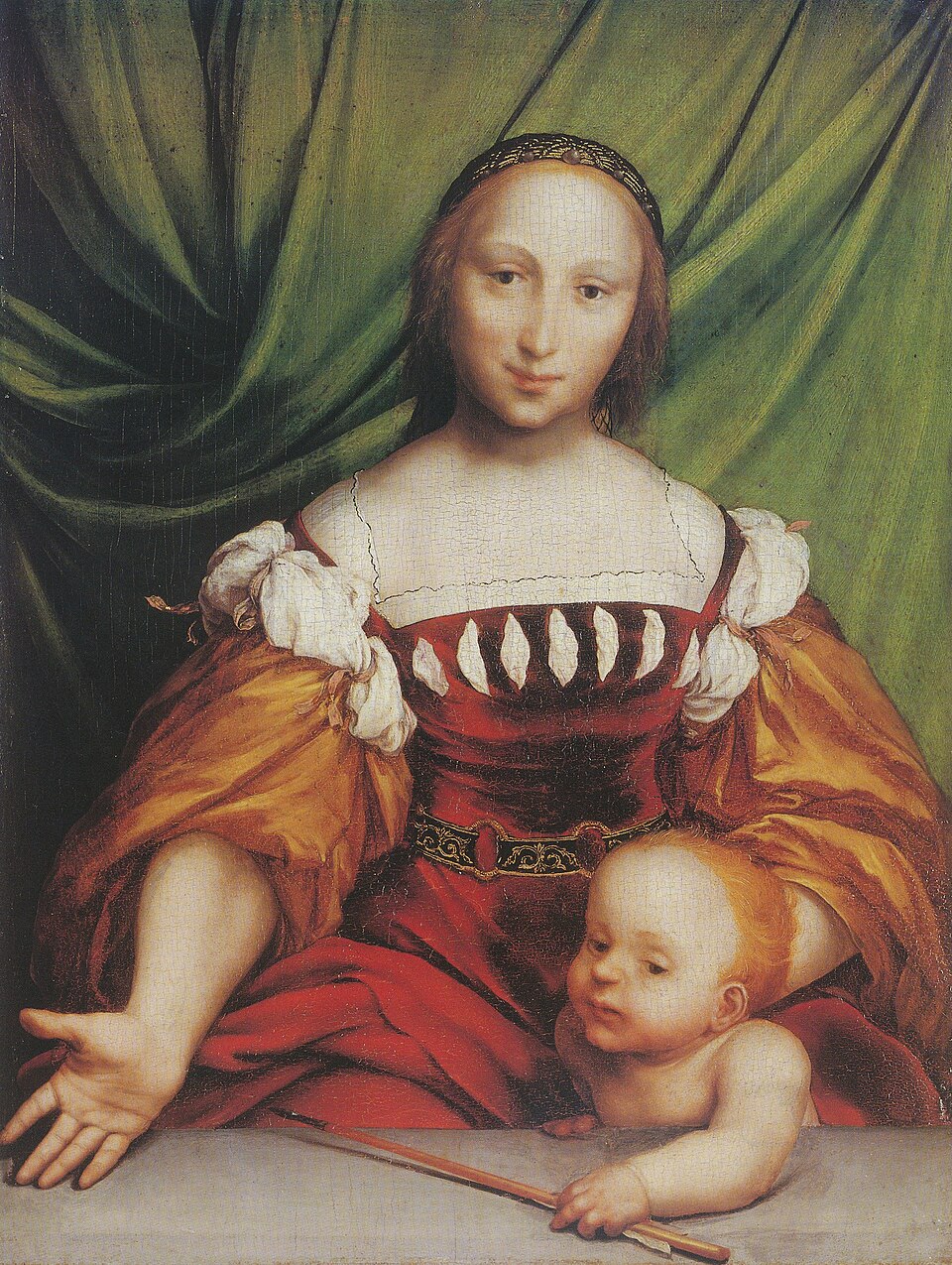
A woman with an open hand and a steady gaze, her small son climbing over the parapet with an arrow. Long credited to Holbein, this Venus hides a surprising secret in its outlines.
The story behind the painting
The painting shows Venus, the Roman goddess of love, with her son Amor, also called Cupid. For a long time it was believed to be by Hans Holbein the Younger himself, but research showed that this could not be so, and it is now given to his workshop. The painter had used a kind of carbon paper carrying the contours of Holbein's existing Lais of Corinth, and transferred them in reverse onto the new picture. Because it is dated 1526, the year Holbein left Basel, it is thought to have been painted between 1526 and 1528.
What to look for
Venus and Cupid stand in front of a large hanging green curtain, behind a low parapet. Venus makes an open gesture and looks out with a sincere gaze. Cupid is climbing onto the parapet, holding love's arrow in his left hand. His red-orange hair has the same colour and tone as the rich cloth sleeves on his mother's upper arms. Her gesture closely echoes that of Jesus in Leonardo's Last Supper of 1498, and her long, oval, idealised face seems modelled on Leonardo's images of the Virgin Mary.
Meaning and intent
Leonardesque portraits were very popular across northern Europe in the 1520s, and it is generally believed that several of Holbein's works were attempts to win favour with wealthy patrons. The art historians Oskar Batschmann and Pascal Griener wrote in 1999 that, as in the Lais of Corinth, Venus's open hand is stretched towards the beholder and prospective collector. The goddess reaches out of the picture as if inviting us in. The model is believed to be either Magdalena Offenburg or her daughter Dorothea, though the sources do not settle which.
Legacy
The work is first mentioned in 1578, when it came into the possession of the Basel collector Basilius Amerbach as a gift from his cousin, Franz Rechburger. Amerbach's inventory records that the picture began as a portrait of a lady from the Offenburg family, but art historians have not been able to confirm this claim. The painting, a small panel of 34.5 by 26 cm according to Wikidata, is now in the collection of the Kunstmuseum Basel in Switzerland, in the city Holbein had just left when it was dated.
豆知識
- Dated 1526, probably painted between 1526 and 1528.
- Now attributed to Holbein's workshop, not the master himself.
- Its outlines were traced in reverse from Holbein's Lais of Corinth.
- In the Kunstmuseum Basel since the Amerbach collection.
画家について
Hans Holbein the Younger (1497-1543)
神話画 · ウェヌス · クピードー · カーテン · バーゼル市立美術館 · 矢
同じ画家の作品: Hans Holbein the Younger
 大使たち - Hans Holbein the Younger (1533)
 墓の中のキリストの屍 - Hans Holbein the Younger (1520s)
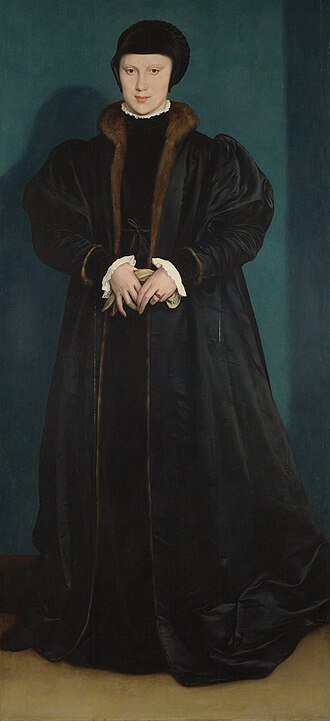 デンマークのクリスティーナ、ミラノ公妃 - Hans Holbein the Younger (1538)
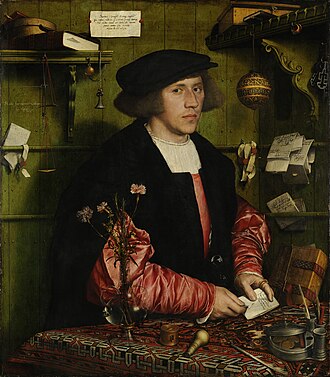 ゲオルク・ギーゼの肖像 - Hans Holbein the Younger (1532)
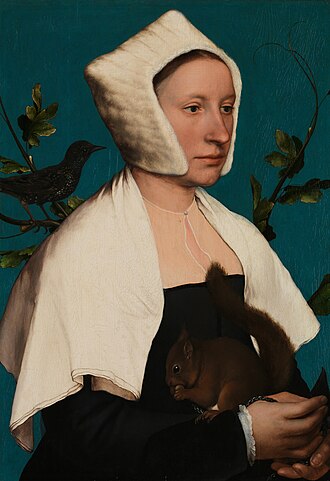 リスとムクドリを伴う婦人の肖像 - Hans Holbein the Younger (1520s)
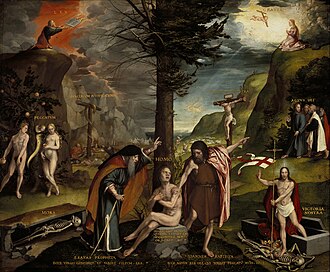 An Allegory of the Old and New Testaments - Hans Holbein the Younger (1530)
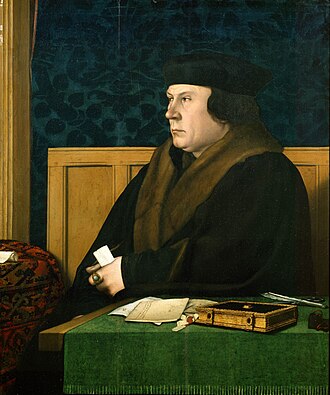 Thomas Cromwell - Hans Holbein the Younger (1530s)
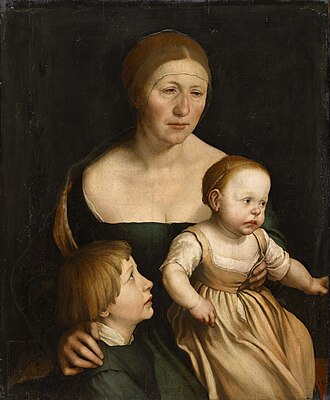 画家の家族の肖像 - Hans Holbein the Younger (1528)
 雪中の狩人
 ネーデルラントの諺
 快楽の園
 愚者の船
 アルノルフィーニ夫妻像
 ヘントの祭壇画