The Remorse of the Emperor Nero after the Murder of his Mother
ジョン・ウィリアム・ウォーターハウス · 1878
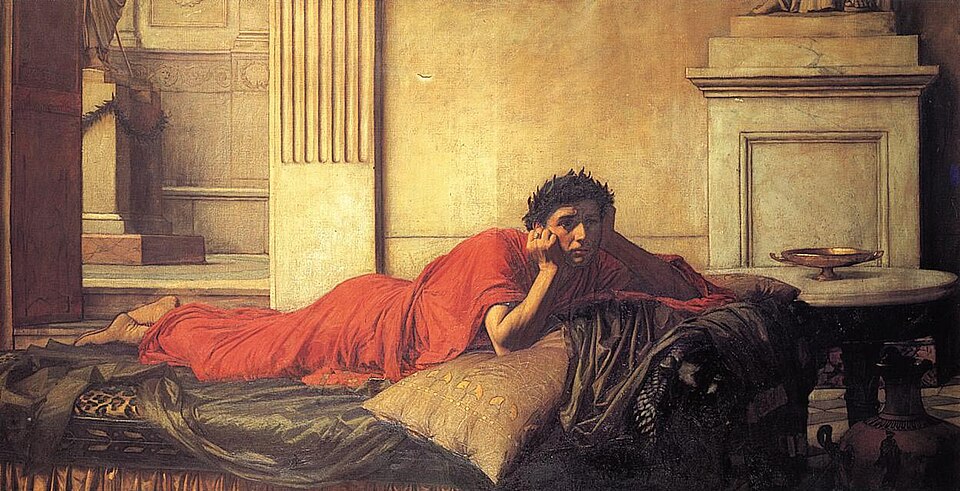
A Roman emperor sprawls on a couch in a dark-red robe, his face hollow with guilt. Nero has just had his own mother killed. The young John William Waterhouse painted not a triumphant tyrant but a man undone by what he has done.
The story behind the painting
Waterhouse painted the picture in 1878, early in his career. Its subject is the Roman emperor Nero contemplating his dead mother, Agrippina, whose murder he had ordered. The work is known by several titles, including The Remorse of Nero after the Murder of his Mother and simply The Remorse of Nero. It was noticed by the press in its own year: both The Art Journal and The Magazine of Art wrote about it in 1878. Today it belongs to a private collection, after it was sold anonymously at Sotheby's on 19 June 1984, and it is rarely seen by the public.
What to look for
Nero lies on a bed heaped with cloth and cushions, wrapped in a red robe. That dried-blood red was the most prized shade of Tyrian purple, the costly dye of Ancient Rome, so it speaks of his rank and of the blood he has shed. His pose is casual, almost lazy, yet his face is haunted and grieving, and the gap between body and expression shows his inner conflict. Behind him rises a Roman interior of columns and ornate decoration. Waterhouse floods the room with deep shadow and orange light, so the whole scene feels heavy, sombre and closed in, as if there were no way out of the moment.
Meaning and intent
In Waterhouse's time, artists were criticised for playing down the moral decay of Imperial Rome. This painting stands apart from the idealising pictures of his contemporaries and may even be a reaction to them: it has been described as an image of Nero as melodramatic rather than victorious. The Magazine of Art praised a simple composition in which nothing is exaggerated for effect, noting that the young face shows no sign yet of the cruelty to come. The Art Journal wrote that the viewer becomes an unwilling witness to the man's unutterable remorse, and compared the figure with Thomas Matthews Rooke's Death of Ahab.
Legacy
Not every critic was convinced. The Illustrated London News found the figure gaunt and remorseful enough, but complained that he looked a full forty years old, when the real Nero was heavy and not yet thirty. The remark points to something that runs through Waterhouse's work: he cared more about mood and atmosphere than historical accuracy, as later in Miranda. Blackburn's Academy Notes called it a powerful picture, and his biographer Anthony Hobson writes that, though it has a single figure, it had some dramatic force. It appeared in the 1978 to 1979 Waterhouse exhibition in Sheffield and Wolverhampton.
豆知識
- Painted by Waterhouse in 1878.
- Shows Nero after ordering the murder of his mother Agrippina.
- Reviewed by The Art Journal and The Magazine of Art in 1878.
- In a private collection after a 1984 Sotheby's sale.
画家について
ジョン・ウィリアム・ウォーターハウス (1849-1917)
同じ画家の作品: ジョン・ウィリアム・ウォーターハウス
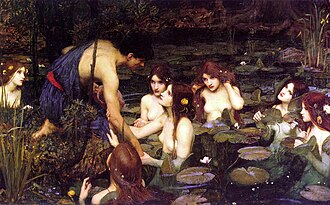 ヒュラスとニンフたち - John William Waterhouse (1896)
.jpg) シャロットの女 - John William Waterhouse (1888)
シャロットの女 - John William Waterhouse (1888)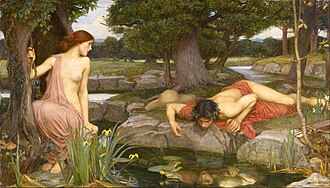 エーコーとナルキッソス - John William Waterhouse (1903)
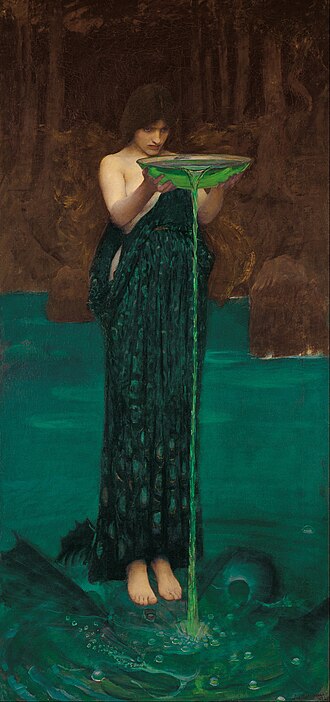 Circe Invidiosa - John William Waterhouse (1892)
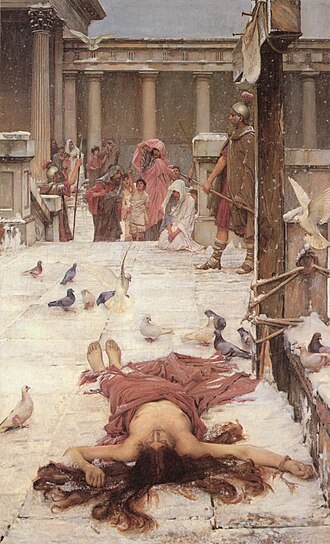 聖エウラリア - John William Waterhouse (1885)
.jpg) Ulysses and the Sirens - John William Waterhouse (1891)
Ulysses and the Sirens - John William Waterhouse (1891)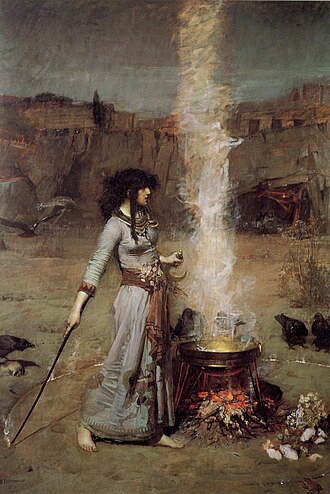 魔法円 - John William Waterhouse (1886)
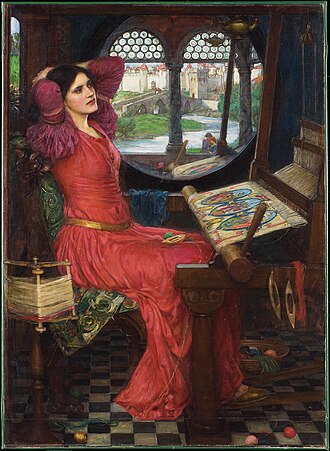 "I am half sick of shadows" said the Lady of Shalott - John William Waterhouse (1916)
 オフィーリア
%20-%20Google%20Art%20Project.jpg) 両親の家のキリスト
両親の家のキリスト プロセルピナ
 キスされた唇