"I am half sick of shadows" said the Lady of Shalott
ジョン・ウィリアム・ウォーターハウス · 1916
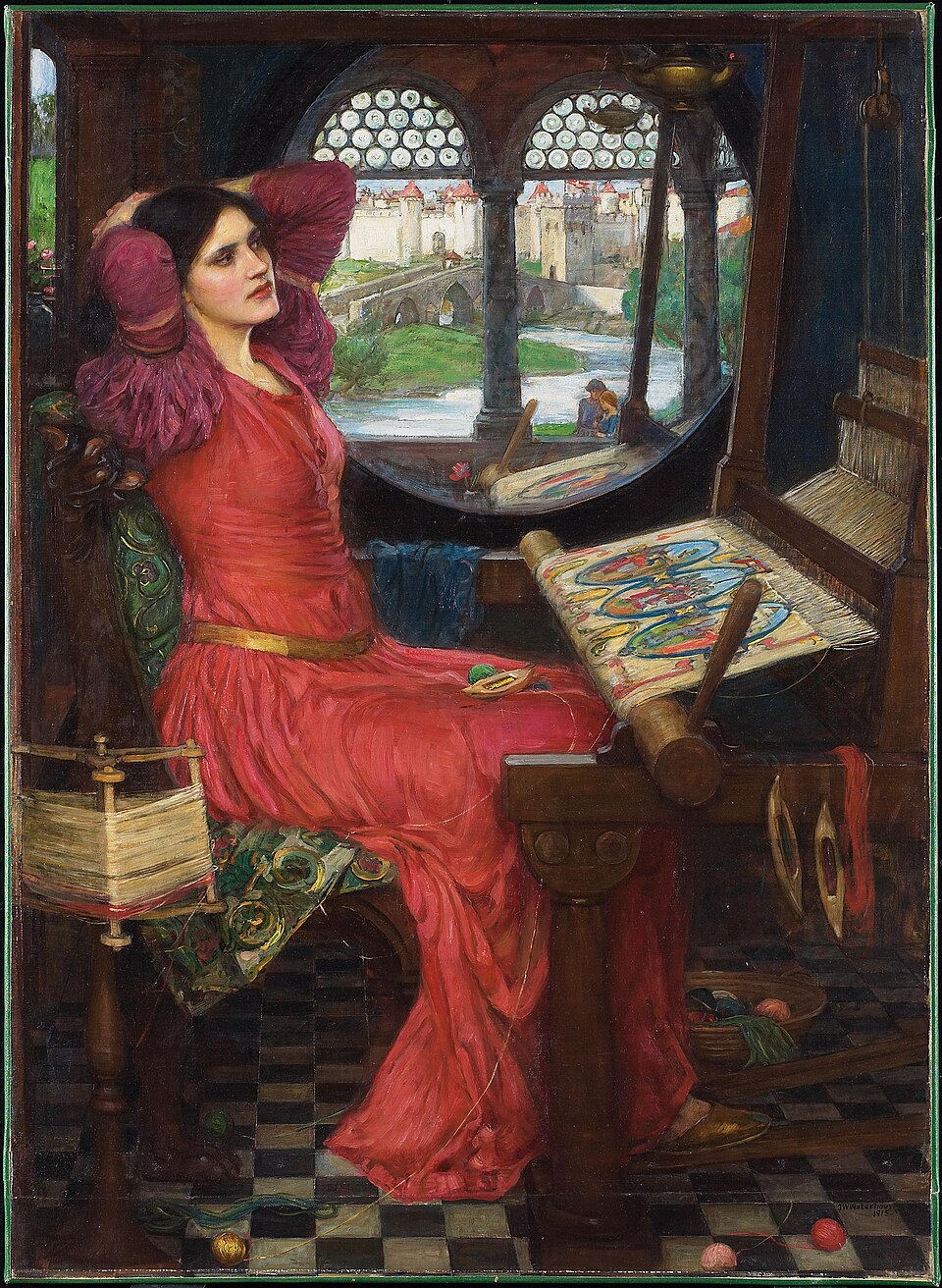
Shut in her tower, the Lady of Shalott may see the world only in a mirror. Here she pauses from her weaving, tired of shadows. Waterhouse returned to Tennyson's poem a third time near the end of his life.
The story behind the painting
John William Waterhouse painted three scenes from Alfred Tennyson's poem The Lady of Shalott: one in 1888, one in 1894, and this one. Wikipedia says it was completed in 1915 and shown at the Royal Academy Summer Exhibition in 1916, while Wikidata dates it 1916. The title quotes the end of the second part of the poem, where the Lady, cursed to weave and to see the world only through a mirror, admits she is half sick of shadows. Unlike the earlier pictures, this one shows her before she leaves the tower.
What to look for
The Lady wears a red dress and rests from her weaving. The frame of the loom and the geometric floor tiles lead us into the room, where reds, yellows and blues echo the brighter colours outside. In the large mirror behind her we see the window's arches on Romanesque columns, a bridge over a river leading to the walls and towers of Camelot, and a man and a woman, perhaps the two young lovers lately wed of Tennyson's poem. A single poppy is reflected in the glass.
Meaning and intent
The moment is chosen with care. It comes shortly before the image of Lancelot appears in the mirror and draws the Lady out of her tower to her death. Here she is still safe, but restless, looking at a world of lovers and bright colour that she may only see reflected. Waterhouse plants small warnings: the shuttles of the loom are shaped like boats, foreshadowing the boat in which she will drift to Camelot and die, and the lone poppy shines in the mirror.
Legacy
After the 1916 exhibition the painting belonged to the accountant John George Griffiths, whose estate sold it at Hampton's in 1923. It passed through the art dealer Arthur de Casseres and then to Mr and Mrs Frederick Cowan. Their great-niece, the wife of the Canadian engineer Philip Berney Jackson, inherited it and gave it to the Art Gallery of Ontario in Toronto in 1971. It completes Waterhouse's long engagement with a single poem, told across almost thirty years.
豆知識
- Waterhouse's third painting from Tennyson's The Lady of Shalott.
- Dated 1915 by Wikipedia, 1916 by Wikidata.
- The loom's shuttles look like boats, a sign of her fate.
- Given to the Art Gallery of Ontario in 1971.
画家について
ジョン・ウィリアム・ウォーターハウス (1849-1917)
女性 · ラファエル前派 · アストラットのエレイン · タペストリー
同じ画家の作品: ジョン・ウィリアム・ウォーターハウス
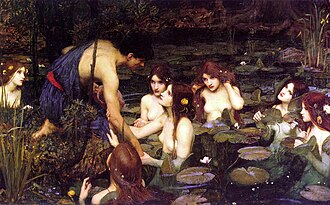 ヒュラスとニンフたち - John William Waterhouse (1896)
.jpg) シャロットの女 - John William Waterhouse (1888)
シャロットの女 - John William Waterhouse (1888)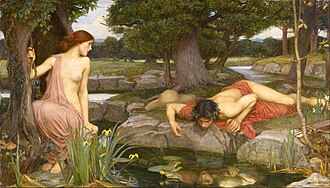 エーコーとナルキッソス - John William Waterhouse (1903)
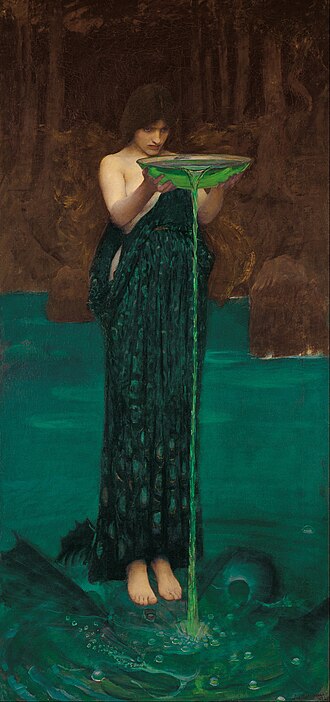 Circe Invidiosa - John William Waterhouse (1892)
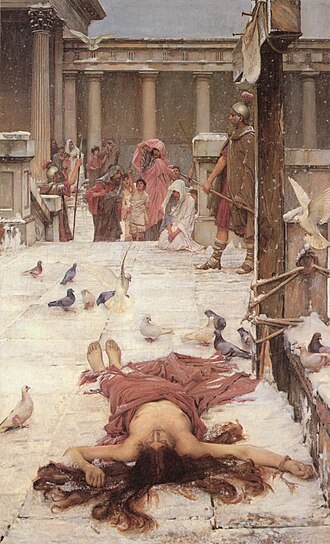 聖エウラリア - John William Waterhouse (1885)
.jpg) Ulysses and the Sirens - John William Waterhouse (1891)
Ulysses and the Sirens - John William Waterhouse (1891)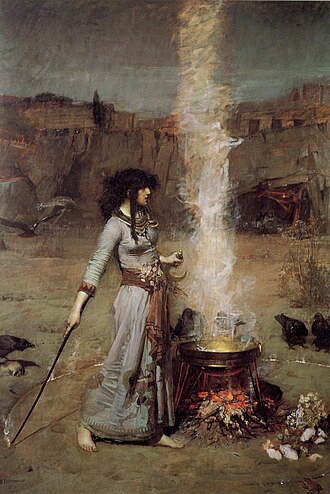 魔法円 - John William Waterhouse (1886)
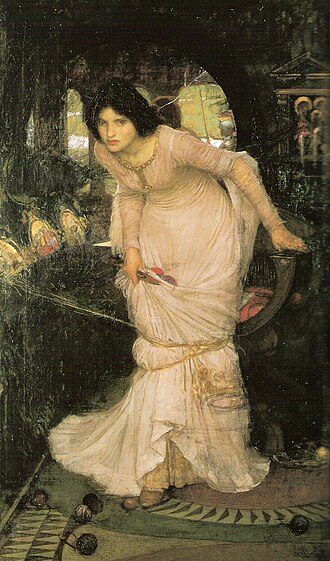 The Lady of Shalott looking at Lancelot - John William Waterhouse (1894)
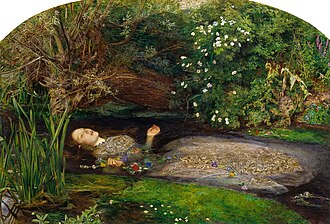 オフィーリア
%20-%20Google%20Art%20Project.jpg) 両親の家のキリスト
両親の家のキリスト プロセルピナ
 キスされた唇