衛兵隊のフィンチリーへの行進
ウィリアム・ホガース · 1750
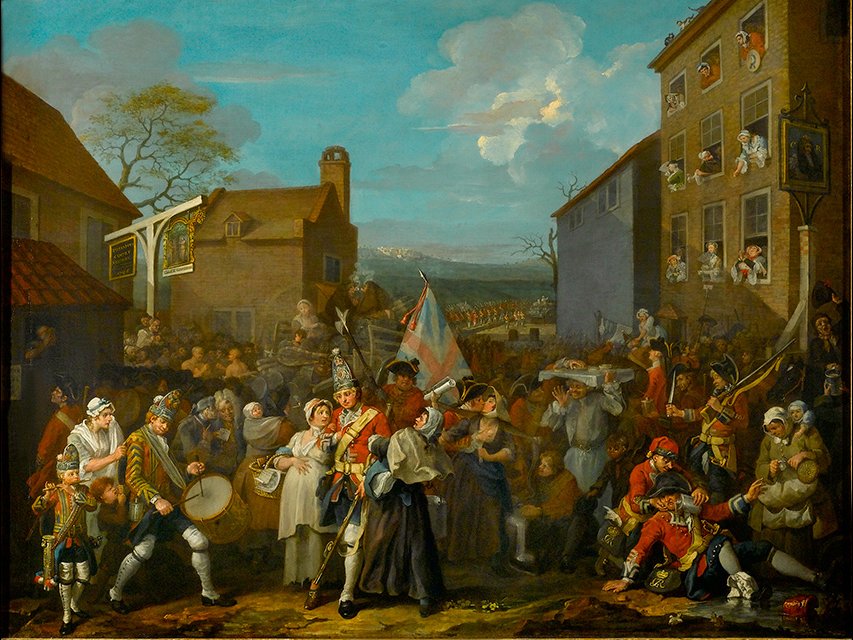
Soldiers meant to save London from a rebel army are drinking, brawling and flirting in the street. Hogarth called it steeped in humour; King George II called it insolence and sent it back.
The story behind the painting
In 1745 the last Jacobite rising broke out, as Charles Edward Stuart tried to overthrow George II and marched on London before turning back at Derby. Hogarth's 1750 painting imagines the foot guards gathering on Tottenham Court Road to march north to Finchley and defend the city. He meant it as a gift to the King and sent a print first. George II, expecting honour for his favourite guards, took it as an insult; one reported exchange has him saying he hated painting and poetry. The hurt Hogarth then dedicated the work to Frederick the Great of Prussia.
What to look for
Orderly lines of soldiers march away in the distance, while the foreground is a crowded mess. In the centre two women fight over a grenadier: a pregnant ballad seller with copies of God Save the King, and an older woman in dark robes with a crucifix and a Jacobite paper. Behind them a soldier embraces a milkmaid. A drunk soldier refuses water and reaches for more gin. Others rob civilians or take a pieman's food, two soldiers box before an eager crowd, and women call down from the windows of Mother Douglas's house.
Meaning and intent
Hogarth, known for satire, mocks the guards' lack of training and discipline, yet the drummer and the boy fifer call them back to duty, so the picture also shows that this rabble can become a fighting force. Critics such as Percy Scholes saw in the two women a nation wavering between the Protestant Hanoverian and the Catholic Stuart successions. Hogarth said several figures, such as the grenadier, the drummer and the drunkard, were drawn from life, and Lord Albemarle Bertie modelled the man with clenched fists behind the boxers.
Legacy
An engraving by Hogarth's assistant Luke Sullivan was published soon after, unusually not reversed, and Hogarth added a lottery for the original among subscribers. He gave the unsold tickets to the Foundling Hospital, which he had long supported; holding almost one in ten, the Hospital won, and scholar Ronald Paulson thinks the lottery was rigged from the start. The painting is still owned by and shown at the Foundling Museum. Robert E. Moore compared its ordered chaos to Henry Fielding's novel Tom Jones.
豆知識
- Painted in 1750.
- Rejected by George II and dedicated to Frederick the Great.
- Won by the Foundling Hospital in Hogarth's lottery.
- On display at the Foundling Museum.
画家について
ウィリアム・ホガース (1697-1764)
同じ画家の作品: ウィリアム・ホガース
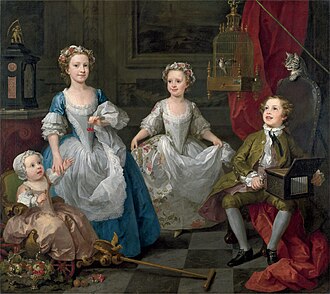 グレイアム家の子供たち - William Hogarth (1742)
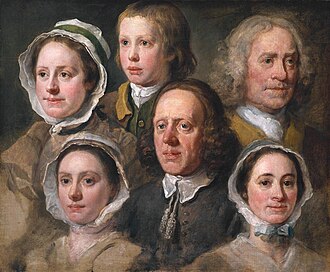 Hogarth's Servants - William Hogarth (1750s)
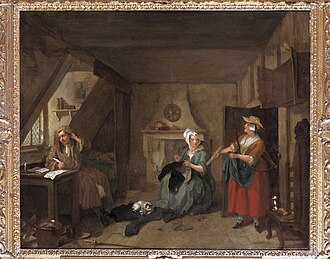 The Distrest Poet - William Hogarth (1730s)
 Marriage A-la-Mode: 2. The Tête à Tête - William Hogarth (1743)
 リチャード3世に扮したデイヴィッド・ギャリック - William Hogarth (1745)
 The Orgy - William Hogarth (1735)
 Marriage A-la-Mode: 6. The Lady's Death - William Hogarth (1743)
The Lady's Last Stake - William Hogarth (1759)