閂
ジャン・オノレ・フラゴナール · 1770s
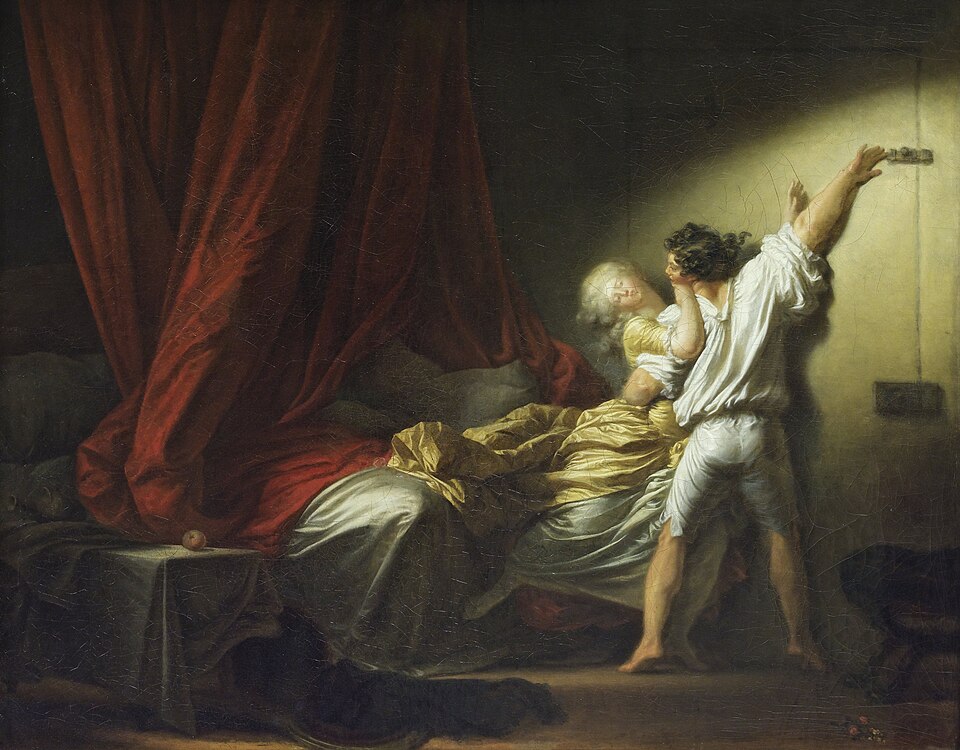
A man stretches toward the bolt of a door while a woman in golden satin twists in his arms. Is this a lovers' embrace or an assault? Fragonard's most famous scene still divides the people who look at it.
The story behind the painting
The Bolt, also called The Lock, was commissioned in 1773 by Louis-Gabriel, Marquis de Véri, a demanding collector, and Wikipedia dates the painting to 1777. Fragonard had first made his name with history painting, winning the Prix de Rome in 1752, and his galant scenes then became very popular with the nobility, who gave him commissions such as The Swing of 1767. The Marquis owned a collection of amorous, sometimes coarse pictures, and this canvas, light on the surface but ambitious, joined it.
What to look for
The canvas measures about 73 by 93 cm. A woman in a golden satin gown is caught in the grasp of a partly dressed man who reaches for the bolt on the door. The room is in disarray: an unmade bed, an overturned chair. An apple rests in a patch of light. The light falls on the couple like a stage spotlight, and the heavy canopy drapes, which take up more than half the painted surface, add to the feeling of theatre. Every movement leads to the bolt, and the woman too stretches an arm toward it.
Meaning and intent
The picture is famous for its ambiguity. One reading sees two lovers, the man sliding the bolt shut, and points to the disordered bed and his clothing. Another sees a rape, with the woman trying to break free, and reads her agitation as coercion; the work has sometimes even been titled The Rape. Whether she reaches to close the bolt herself or to escape is never made clear. Seen as a symbol of the libertine spirit of the 18th century, it reflects the mood of painters such as François Boucher, one of Fragonard's teachers.
Legacy
Fragonard first gave The Bolt a companion, The Contract, itself following another picture, The Armoire. One theory reads the three as chapters of a novel about two lovers: passion, discovery and reconciliation. The Contract is known today only through an etching by Maurice Blot, who had also etched The Bolt; that print was judged mediocre but sold very well thanks to Fragonard's fame. The Bolt is also often discussed beside his religious Adoration of the Shepherds of 1775. It now hangs in the Louvre among the 18th century French paintings.
豆知識
- Commissioned in 1773 by the Marquis de Véri.
- Wikipedia dates it 1777.
- Read both as a love scene and as a scene of rape.
- Held by the Louvre.
画家について
ジャン・オノレ・フラゴナール (1732-1806)
ルーヴル美術館絵画部門 · ベッド · カップル · 椅子 · リンゴ · 寝室 · interior view
同じ画家の作品: ジャン・オノレ・フラゴナール
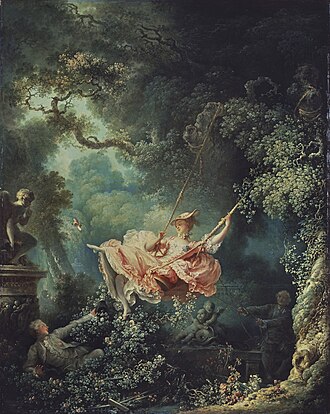 ぶらんこ - Jean-Honoré Fragonard (1760s)
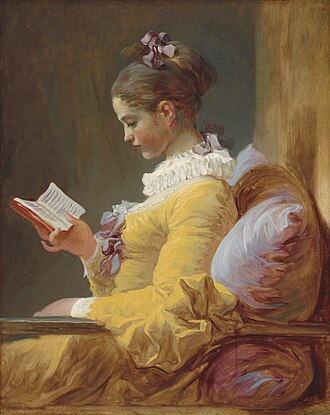 読書する娘 - Jean-Honoré Fragonard (1770)
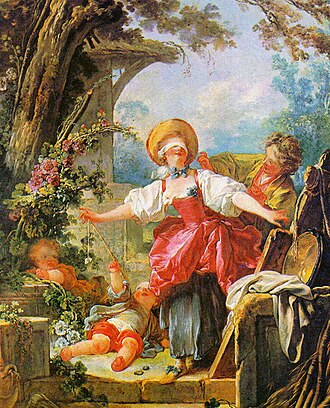 目隠し鬼 - Jean-Honoré Fragonard (1760s)
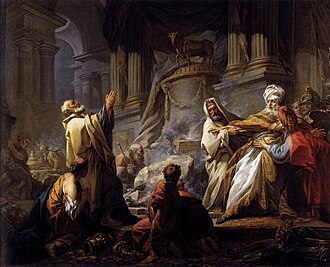 偶像に犠牲を捧げるヤロブアム - Jean-Honoré Fragonard (1752)
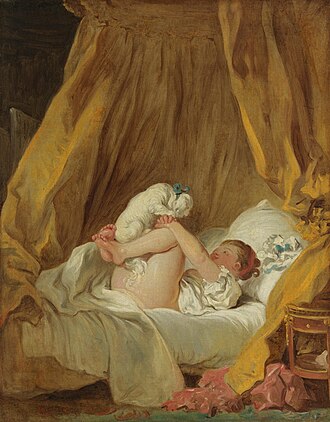 La Gimblette - Jean-Honoré Fragonard (1770)
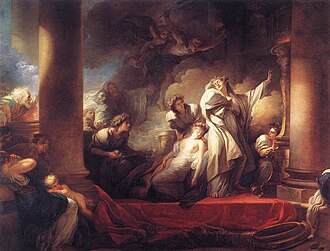 カリロエを救うために自らを犠牲にするコレソス - Jean-Honoré Fragonard (1765)
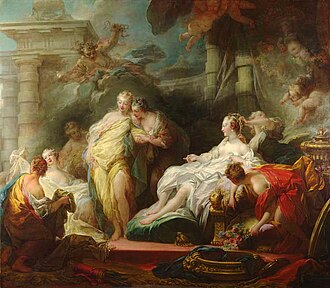 キューピッドからの贈り物を姉妹たちに見せるプシュケ - Jean-Honoré Fragonard (1753)
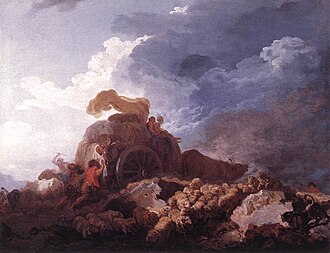 嵐 - Jean-Honoré Fragonard
 シテール島の巡礼
 ピエロ
ピエロ 水浴のディアナ
 オダリスク
オダリスク 1808年5月3日
.jpg) 裸のマハ
裸のマハ