The Day Dream
ダンテ・ゲイブリエル・ロセッティ · 1880
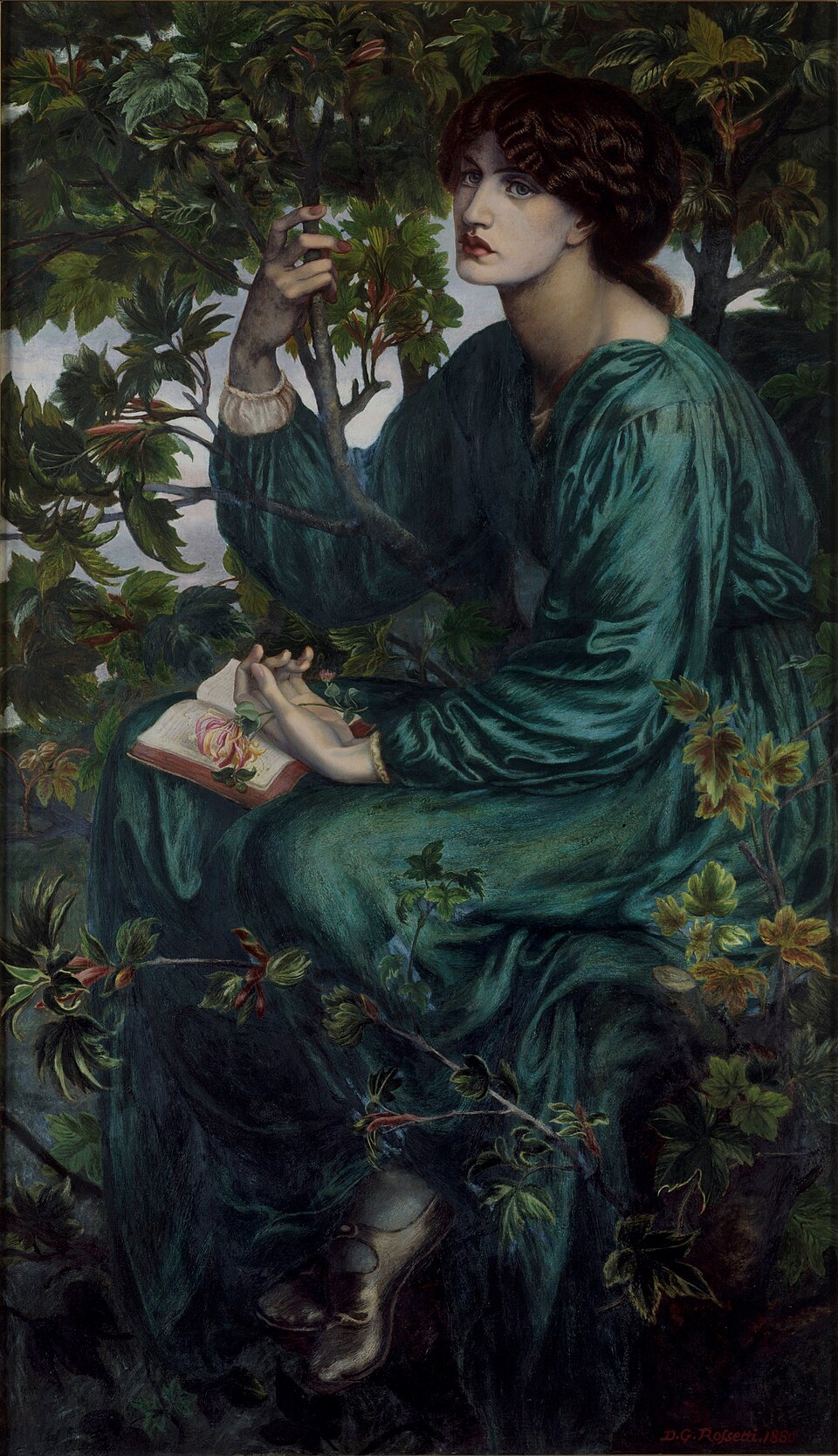
A woman in green sits in the arms of a sycamore, a sprig of honeysuckle in her hand, lost in her own thoughts. Rossetti painted Jane Morris here near the end of his life, and he believed it was as good as anything he ever made.
The story behind the painting
The Day Dream began as a chalk sketch. In 1878 Rossetti drew Jane Morris, whom he had met at the Theatre Royal, Drury Lane, in 1857 and who became his secret lover and the model for several of his best known pictures, including Proserpine. The drawing hung above the mantelpiece in his studio. In 1879 the collector Constantine Alexander Ionides commissioned a painting, and Rossetti worked on it in 1880. He first meant to call it Monna Primavera, or Vanna Primavera, a name perhaps drawn from La Vita Nuova, a text that had long fascinated him. He was not fully satisfied at first and revised it several times, even writing to Morris to apologise for copying another woman's feet into the picture.
What to look for
Morris sits on the bough of a sycamore, shown full length, which is unusual for Rossetti's work of this late period. The branches curve above and around her as if embracing her, or as if she were emerging from the tree like a dryad, a tree nymph. Her wide, loose silk dress is all green and falls in soft folds that blend into the leaves. In her hand is a small stem of honeysuckle. She looks down and away from us, towards something unseen. Inside her leafy shelter it is dark, but around her shoulder there are patches of light blue against the deep green, a sign that it is daytime. The signature reads D. Rossetti 1880, at lower right.
Meaning and intent
Honeysuckle was a token of love in the Victorian era, and the sprig may hint at the secret affair between the painter and his model. The sheltering branches add to the hidden, private mood of the scene, perhaps suggesting a clandestine meeting place. Rossetti was a poet as well as a painter and wrote sonnets to accompany several of his pictures; the last poem in his series Sonnets for Pictures belongs to this painting. Near completion, on 18 March 1880, he wrote to Ionides that it would be beyond question as good a thing as he ever did, a rare note of confidence from an artist so often unsatisfied.
Legacy
Rossetti cared about how the picture would be seen and sent Ionides precise instructions about where to hang it, including its height from the floor and the direction from which the light should fall. It is one of his last paintings. Ionides left it to the Victoria and Albert Museum in London in 1900, where it remains. The sizes in the sources differ slightly: Wikipedia gives 158.7 by 92.7 cm, while Wikidata records 157.5 by 92.7 cm. Either way it is a tall, near life-size image of a woman held by the green shade of a tree.
豆知識
- Painted in 1880, from a chalk sketch of 1878.
- The model is Jane Morris, Rossetti's secret lover.
- Commissioned by Constantine Alexander Ionides in 1879.
- Left to the Victoria and Albert Museum in 1900.
画家について
ダンテ・ゲイブリエル・ロセッティ (1828-1882)
同じ画家の作品: ダンテ・ゲイブリエル・ロセッティ
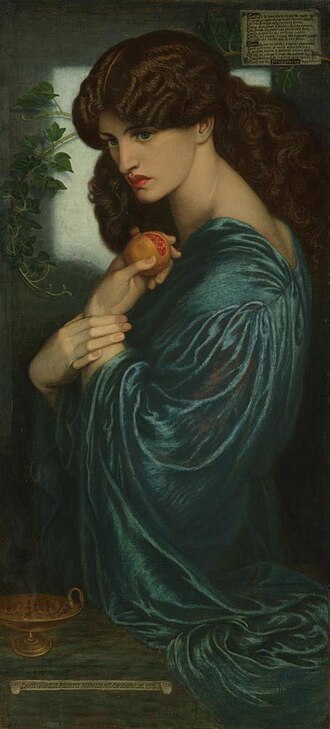 プロセルピナ - Dante Gabriel Rossetti (1874)
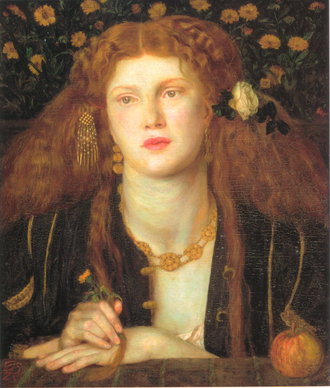 キスされた唇 - Dante Gabriel Rossetti (1859)
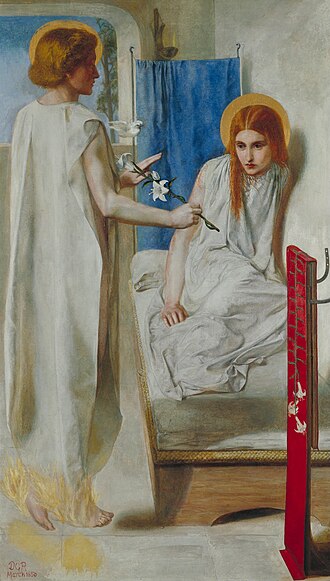 幼児のマリア - Dante Gabriel Rossetti (1850)
.jpg) ベアトリーチェの死とダンテの夢 - Dante Gabriel Rossetti (1871)
ベアトリーチェの死とダンテの夢 - Dante Gabriel Rossetti (1871)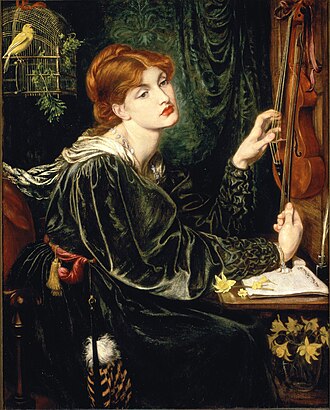 ヴェロニカ・ヴェロネーゼ - Dante Gabriel Rossetti (1872)
.jpg) モナ・ローザ - Dante Gabriel Rossetti (1867)
モナ・ローザ - Dante Gabriel Rossetti (1867)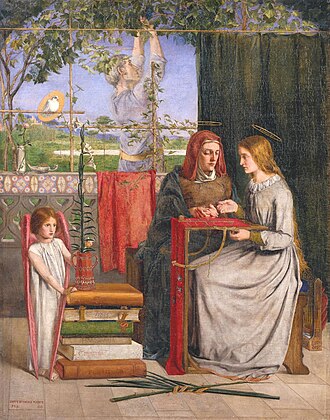 The Girlhood of Mary Virgin - Dante Gabriel Rossetti (1840s)
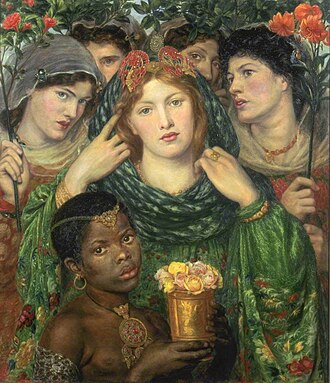 The Beloved - Dante Gabriel Rossetti (1865)
関連する画家の作品
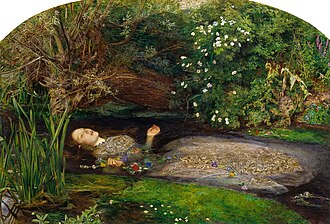 オフィーリア - John Everett Millais (1851)
%20-%20Google%20Art%20Project.jpg) 両親の家のキリスト - John Everett Millais (1849)
両親の家のキリスト - John Everett Millais (1849)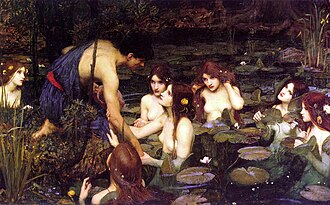 ヒュラスとニンフたち - John William Waterhouse (1896)
.jpg) シャロットの女 - John William Waterhouse (1888)
シャロットの女 - John William Waterhouse (1888)