幼児のマリア
ダンテ・ゲイブリエル・ロセッティ · 1850
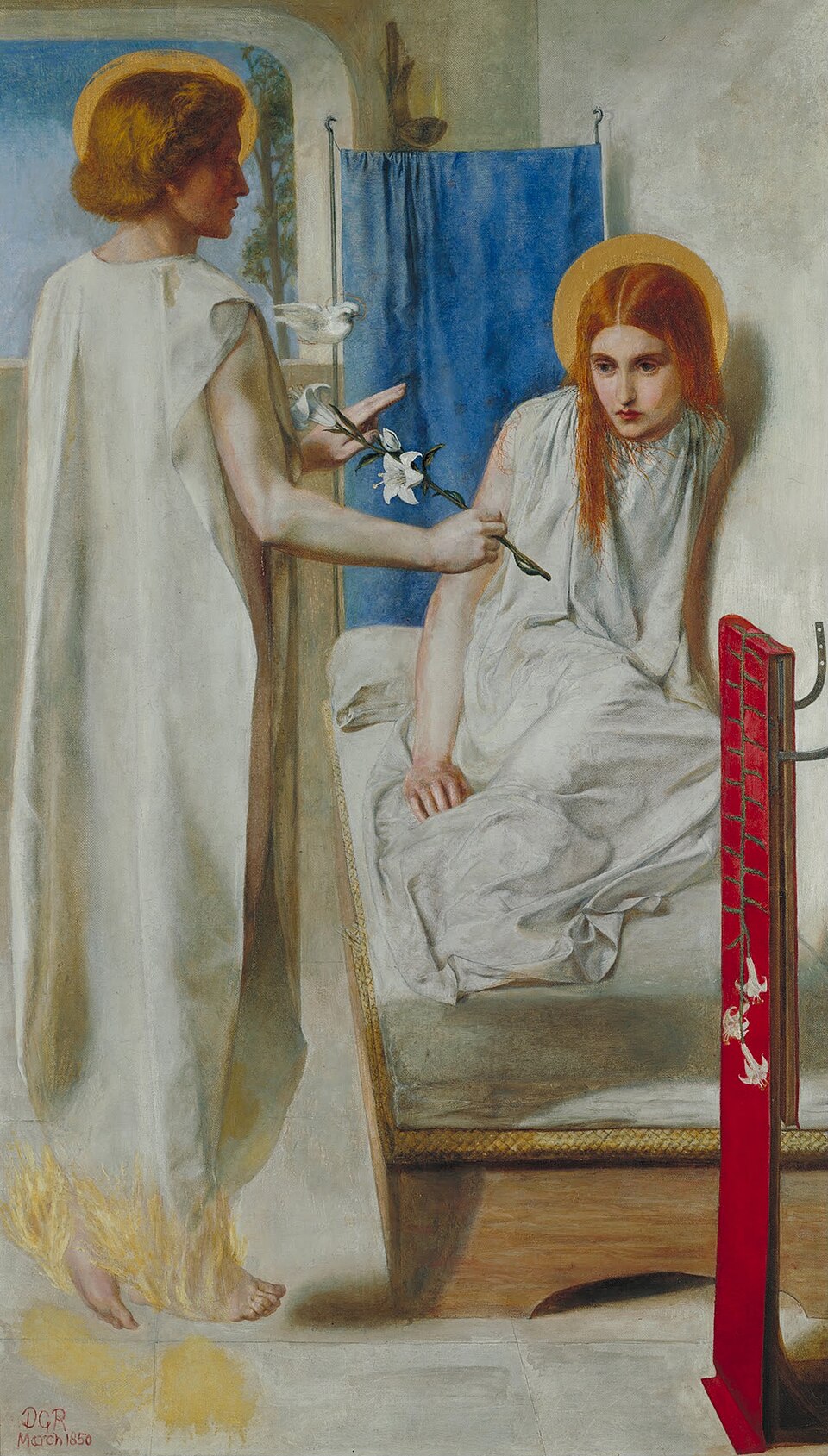
A girl in white shrinks back on her bed as a wingless angel offers her a lily. Rossetti painted his sister as Mary in 1850, and the Victorian public did not know what to make of it.
The story behind the painting
Ecce Ancilla Domini!, Latin for Behold the handmaiden of the Lord, also called The Annunciation, is an oil painting by Dante Gabriel Rossetti, first painted in 1850. The title quotes the Vulgate text of the first chapter of Luke's Gospel, where Mary accepts the message of the Angel Gabriel that she will bear a child by God. The title correctly carries an exclamation mark, though many sources leave it out. Rossetti's sister, the poet Christina Rossetti, posed for Mary, and his brother William posed for Gabriel. It was a family picture in every sense.
What to look for
Rossetti deliberately kept to a limited range of colours. White, symbol of virginity, dominates, set against a vibrant blue linked to Mary and a red for Christ's blood. He changed Christina's hair to auburn to continue the red. Gabriel holds a lily, the traditional flower of Mary in Italian Renaissance art but also a funeral flower pointing to Christ's death. At the foot of the bed is the red vestment on a hinged frame that Mary was embroidering in his Girlhood of Mary Virgin of 1849. Note the dove's halo and the two different haloes of Mary and Gabriel.
Meaning and intent
The picture breaks with tradition. The angel usually appears while Mary prays; here she is in bed, woken, in a long nightgown that suggests a newly married bride. Gabriel has no wings, the flames at his feet suggest a classical influence, and his nakedness can be glimpsed through the side of his robe. These choices made the reviews mixed. The difference between the haloes may come from time itself: Mary's was painted in 1850, while Gabriel's was added only in 1853, after Rossetti had returned to the canvas.
Legacy
The painting was first shown in April 1850 at the Old Portland Gallery on Regent Street in London. Francis McCracken, a well known patron of the Pre-Raphaelites, bought it in 1853, and the Tate Gallery acquired it in 1886. Today it hangs at Tate Britain in London, in the section of historic and early British modern art. The small, pale canvas remains one of the defining images of the young Pre-Raphaelite Brotherhood.
豆知識
- Painted by Dante Gabriel Rossetti in 1850.
- Christina Rossetti posed for Mary, William Rossetti for Gabriel.
- First shown in April 1850 at the Old Portland Gallery.
- Acquired by the Tate in 1886.
画家について
ダンテ・ゲイブリエル・ロセッティ (1828-1882)
宗教美術 · 女性 · 聖母マリア · ナショナル・ギャラリー · 天使 · ラファエル前派 · テート・ギャラリー · 受胎告知 · ガブリエル
同じ画家の作品: ダンテ・ゲイブリエル・ロセッティ
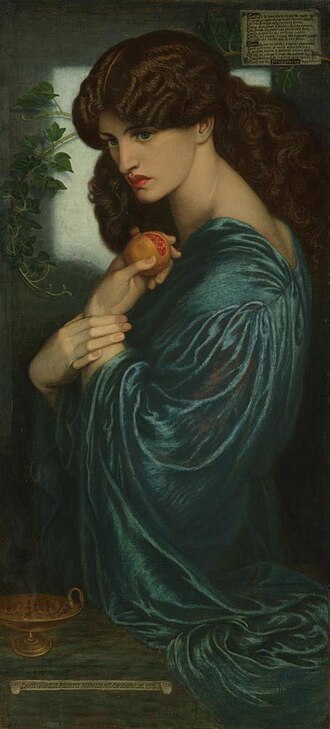 プロセルピナ - Dante Gabriel Rossetti (1874)
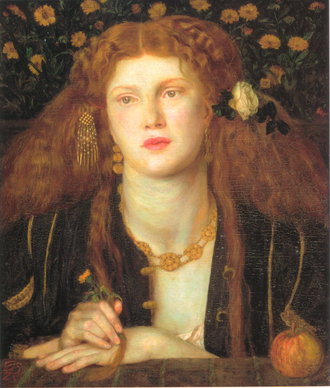 キスされた唇 - Dante Gabriel Rossetti (1859)
.jpg) ベアトリーチェの死とダンテの夢 - Dante Gabriel Rossetti (1871)
ベアトリーチェの死とダンテの夢 - Dante Gabriel Rossetti (1871)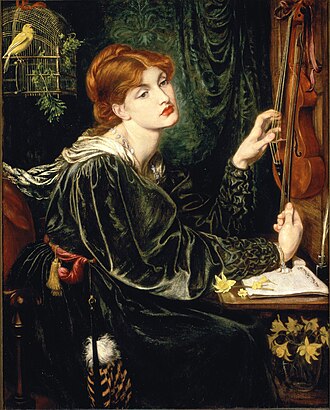 ヴェロニカ・ヴェロネーゼ - Dante Gabriel Rossetti (1872)
.jpg) モナ・ローザ - Dante Gabriel Rossetti (1867)
モナ・ローザ - Dante Gabriel Rossetti (1867)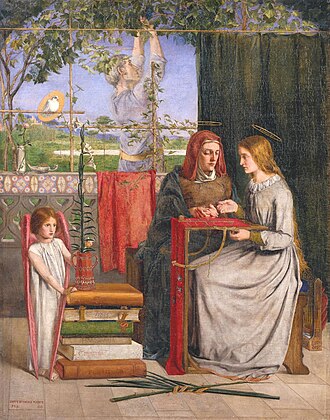 The Girlhood of Mary Virgin - Dante Gabriel Rossetti (1840s)
 The Beloved - Dante Gabriel Rossetti (1865)
 The Day Dream - Dante Gabriel Rossetti (1880)
関連する画家の作品
 オフィーリア - John Everett Millais (1851)
%20-%20Google%20Art%20Project.jpg) 両親の家のキリスト - John Everett Millais (1849)
両親の家のキリスト - John Everett Millais (1849)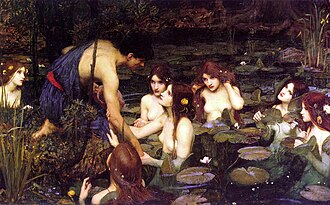 ヒュラスとニンフたち - John William Waterhouse (1896)
.jpg) シャロットの女 - John William Waterhouse (1888)
シャロットの女 - John William Waterhouse (1888)