Shepherd with a Flock of Sheep
Vincent van Gogh · 1885
%20by%20Vincent%20Van%20Gogh%20-%20Museo%20Soumaya%20-%20Mexico%202024.jpg)
Under a dark sky, a shepherd lifts his staff above his flock, and the line of it cuts across the horizon. Van Gogh hoped the figure would carry something of the old Brabant where he was born.
The story behind the painting
The painting, also known as After the Storm, comes from Van Gogh's early years in Nuenen, the village where he lived and worked from December 1883 to November 1885. It was part of a commission from Antoon Hermans, a wealthy goldsmith and dealer who had retired and was decorating his house in Eindhoven. Hermans wanted scenes of the Last Supper for his dining room, but Van Gogh persuaded him that scenes of rural life would better stimulate the appetite. He showed six sketches: a sower, a ploughman, a wheat harvest, potato gatherers, a winter scene and a shepherd. There is a conflict over the date: the Spanish Wikipedia gives September 1884, Wikidata 1885.
What to look for
The colours are dark and muted, typical of this early period. In the middle of a country field stands a shepherd surrounded by his sheep, raising a staff that breaks the line of the horizon in a diagonal and gives the composition its movement. The horizon is the only line that contrasts with the darkness of the canvas, a band of light against the heavy tones of earth and sky. The canvas is wide, about 67 by 126 centimetres, a long format made to decorate a wall. Let your eye travel from the flock to the raised staff and out to that thin strip of light.
Meaning and intent
At the time, Van Gogh was living with his parents in Nuenen and was in emotional turmoil. Both families had rejected his relationship with Margot Begemann, an older woman, who attempted to take her own life, while he took refuge in painting. The source sees in this work a reflection of the artist's loneliness. Yet his letters show another side. He wrote to his friend and mentor Anthon van Rappard about the pleasure the commission gave him, and to his brother Theo: if I am lucky with the shepherd, it will become a figure with something of the old Brabant, the province where the Van Goghs were born.
Legacy
The canvas survived by chance. After his father died in 1885, Van Gogh's mother and sister moved to Breda with crates of his drawings and canvases. Stored away, they remained until 1902, when a junk dealer, Jan Couvreur, bought them for two guilders. Some works were destroyed or sold off cheaply; the tailor Kees Mouwen Jr. later acquired this canvas among others. It then passed through private collections in Europe and the United States, went through Sotheby's in London in 1997, and was acquired that year by the Museo Soumaya in Mexico City. The following year Van Gogh would go to Antwerp and begin brightening his palette.
豆知識
- Also known as After the Storm; painted in Nuenen
- Date conflict: Spanish Wikipedia says September 1884, Wikidata says 1885
- Part of a commission from goldsmith Antoon Hermans for his dining room in Eindhoven
- Acquired by the Museo Soumaya, Mexico City, in 1997
Wikipedia (Spanish) · Wikidata
画家について
Vincent van Gogh (1853-1890)
同じ画家の作品: Vincent van Gogh
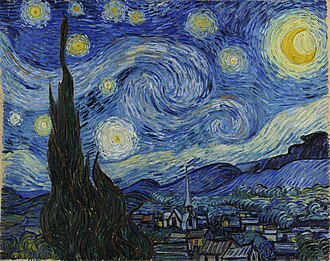 星月夜 - Vincent van Gogh (1889)
.jpg) 夜のカフェテラス - Vincent van Gogh (1888)
夜のカフェテラス - Vincent van Gogh (1888)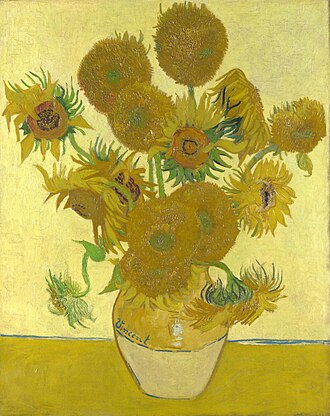 ひまわり - Vincent van Gogh (1888)
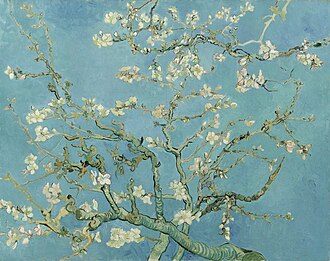 花咲くアーモンドの木の枝 - Vincent van Gogh (1890)
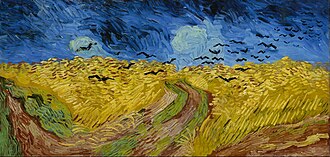 カラスのいる麦畑 - Vincent van Gogh (1890)
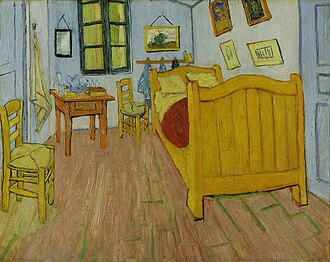 アルルの寝室 - Vincent van Gogh (1888)
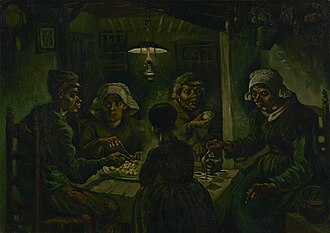 ジャガイモを食べる人々 - Vincent van Gogh (1885)
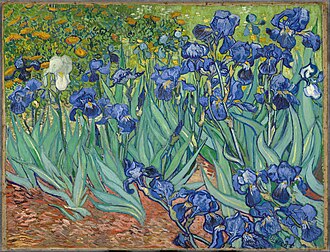 アイリス - Vincent van Gogh (1889)
関連する画家の作品
 我々はどこから来たのか 我々は何者か 我々はどこへ行くのか - Paul Gauguin (1897-1898)
%201889.jpg) 黄色いキリスト - Paul Gauguin (1889)
黄色いキリスト - Paul Gauguin (1889)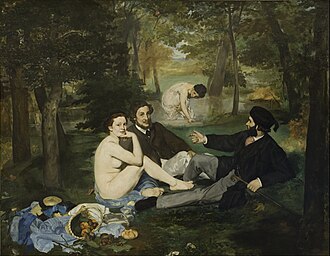 草上の昼食 - Édouard Manet (1863)
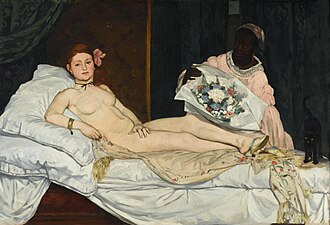 オランピア - Édouard Manet (1863)