Judith with the head of Holofernes
ルーカス・クラナッハ · 1525
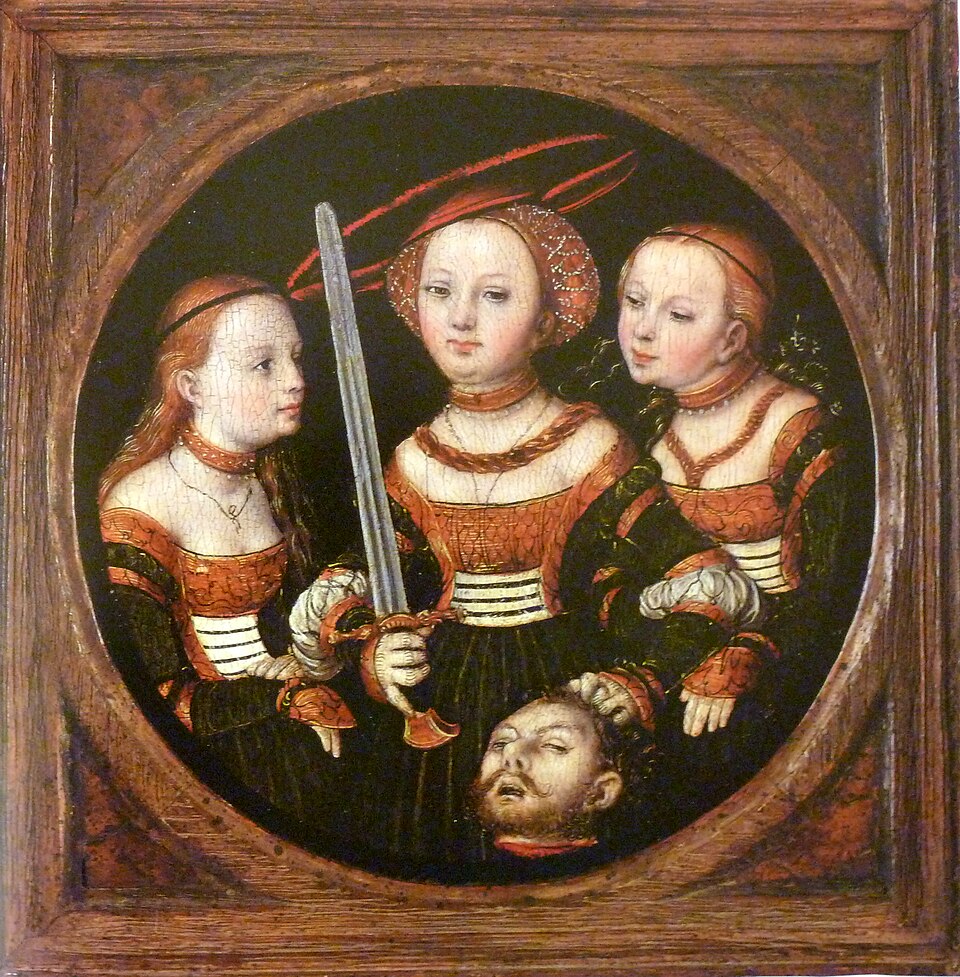
Barely 15 cm across, this round panel shows Judith flanked by two maids, sword raised with a dainty little finger, the head of Holofernes in her other hand. Cranach hid his winged serpent signature in a maid's flowing hair.
The story behind the painting
German Wikipedia calls this small picture Judith with Two Companions, while our title follows Wikidata. It was painted in 1525 by Lucas Cranach the Elder and belongs today to the Rau Collection for UNICEF Germany, shown at the Arp Museum Bahnhof Rolandseck. It is one of the cabinet pictures produced in great numbers by the Cranach workshop in the first half of the sixteenth century, most of them undated. How much of each picture was painted by Cranach himself and how much by his workshop is hard to judge. Buyers of such pictures were princely courts and the wealthy middle class.
What to look for
The painting is a tondo on wood, 14.6 cm in diameter, set in a square frame. Unlike the larger Judith pictures of the Cranach circle, Judith here stands between two maids, all three shown half length and symmetrical. She holds the sword high, little finger delicately spread, and grips the severed head by the hair. One companion lowers her eyes to the head with a sweet smile, the other gazes far away. All wear low-cut red and black dresses and pearl chokers. Judith alone has slashed sleeves with white silk billowing out, a pearl net in her hair and a wide red hat set at an angle that crowns the group. The signature and the date 1525 are almost invisible in the hair of the maid at the right edge.
Meaning and intent
Cranach dressed biblical figures in the fashion of his own day, against the growing taste of the time for historical accuracy in clothes, weapons and buildings. The workshop's cabinet pictures became increasingly sensual and erotic. The story of Judith and Holofernes, popular with other artists too as an example of killing a tyrant, has been read by some art historians as a justification of Lutheran princes resisting the Catholic central power. Princes whose lives did not always match the strict morals of the Reformers may also have felt at least excused by a story like that of the beautiful widow Judith.
Legacy
This tiny painting stands out within the Cranach output because of its three-figure, symmetrical arrangement, different from the usual larger Judith pictures. It is listed in the major Cranach catalogue by Dieter Koepplin and Tilman Falk, and in the publication Masterpieces from the Rau Collection of 2000. Today it is part of a collection that belongs to UNICEF Germany, displayed at a museum set in a former railway station in Rolandseck. Seen up close, its jewel-like detail rewards the patience it asks of the viewer.
豆知識
- Painted in 1525 by Lucas Cranach the Elder.
- A round panel on wood, 14.6 cm across.
- Signature and date hidden in a maid's hair.
- In the Rau Collection for UNICEF, Arp Museum Bahnhof Rolandseck.
画家について
ルーカス・クラナッハ (1472-1553)
宗教美術 · 剣 · ユディト · beheaded head · Collection Rau for UNICEF
同じ画家の作品: ルーカス・クラナッハ
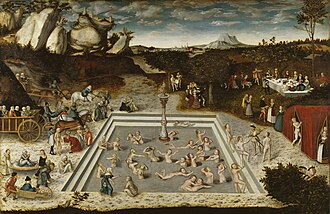 若返りの泉 - Lucas Cranach the Elder (1546)
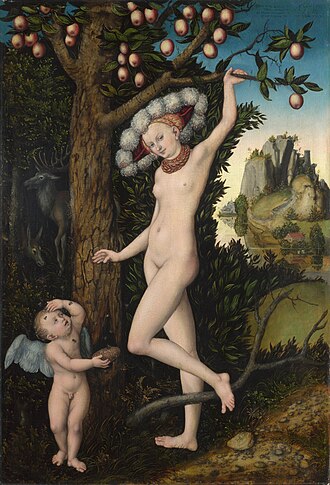 ヴィーナスに訴えるキューピッド - Lucas Cranach the Elder (1520s)
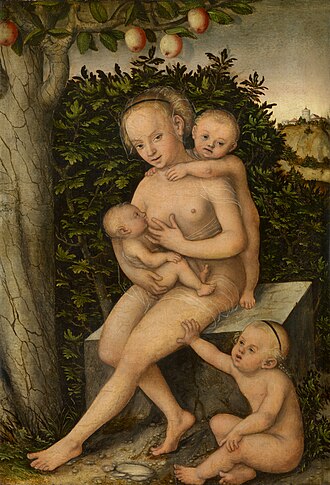 慈愛 - Lucas Cranach the Elder (1540)
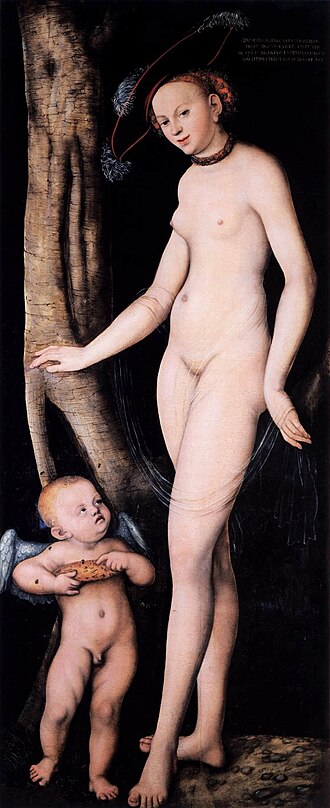 Venus and Cupid with a Honeycomb - Lucas Cranach the Elder (1531)
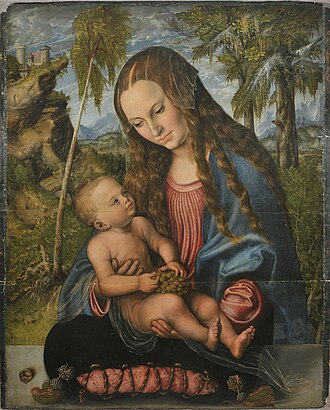 Madonna under the Fir Tree - Lucas Cranach the Elder
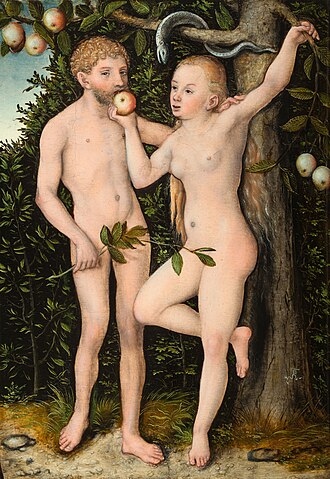 アダムとイヴ - Lucas Cranach the Elder (1538)
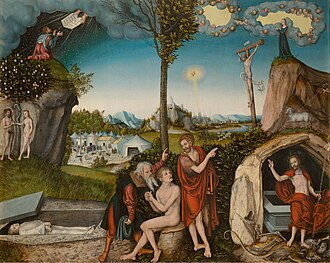 Law and Grace - Lucas Cranach the Elder (1529)
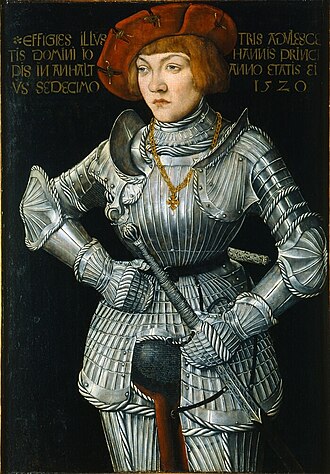 Prince Johann of Anhalt - Lucas Cranach the Elder (1520)
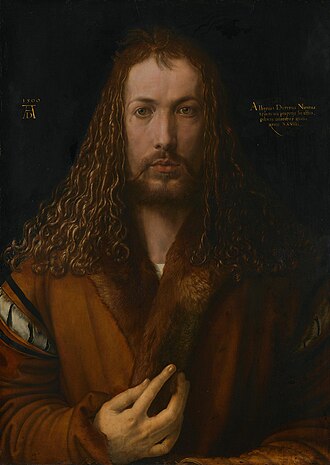 自画像
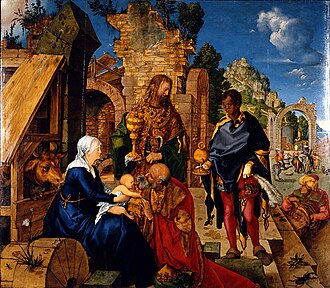 東方三博士の礼拝