Dame mit Hut und Federboa
Gustav Klimt · 1910
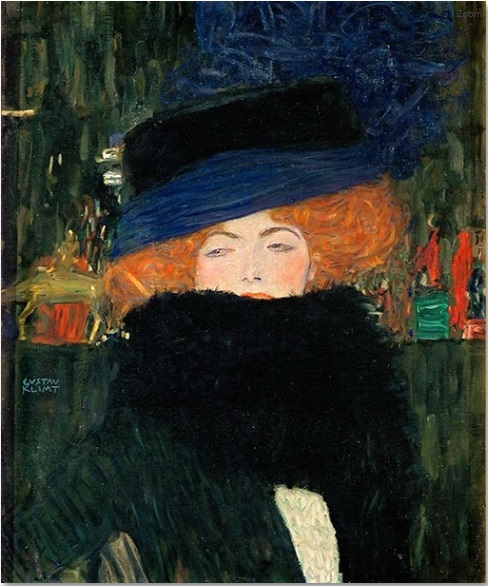
A red-haired woman half hidden behind a black feather boa and a huge purple hat glances sideways. Back from Paris, Klimt painted one picture like no other in his career.
The story behind the painting
In autumn 1909 Klimt travelled with his friend Carl Moll to Prague, Paris and Madrid, a trip that marks the end of his decorative golden period. In Madrid he studied Velázquez and Goya; in Paris he visited the Musée Guimet, admired Manet's Olympia and looked at modern art, still dominated by the Impressionists and Post-Impressionists. Back in Vienna he said modern French art did not really attract him and that he had seen many horrible works in Paris. Yet the first picture he painted on his return was this one, fully in the French manner. The Spanish Wikipedia dates it 1909, while Wikidata gives 1910.
What to look for
The young woman fills the whole foreground, close and suggestive. Her identity is almost hidden by the black feather boa and the big purple hat; only part of her elegantly made-up face and her copper hair show. Her body and head face us, but her half-closed eyes slide away to the right. Note the quick, loose brushwork, the reddish details and orange hair above against the dark areas below. It is oil on cardboard, 69 by 55 cm.
Meaning and intent
That quick sidelong glance can be read as an attempt to catch a spontaneous moment, an Impressionist trait, and the theme recalls Toulouse-Lautrec, a Paris boulevard at night. Yet the glance also has something of Klimt's earlier femmes fatales, though this woman seems nearer and more real, and so more unsettling. Klimt cared about clothes and accessories as signs of character, and through his companion, the fashion designer Emilie Flöge, he followed the latest trends. The model was only identified in 2007 as Hilde Roth, a red-haired model from Budapest.
Legacy
The change of style was brief: soon Klimt returned to ornament, from 1912 mainly with Eastern influences. The Viennese collector Georg Lasus bought the painting soon after it was finished. In the late 1930s persecution of the Jews forced the Lasus family to sell many works, and the painting passed through the Galerie St. Lucas to the Belvedere in Vienna, where it hung until 2001. That year the Austrian government returned it to the Lasus heirs, and it was then sold to a private collector.
豆知識
- Painted after Klimt's 1909 trip to Paris; dated 1909 or 1910 in the sources.
- Oil on cardboard, 69 by 55 cm.
- The model was identified in 2007 as Hilde Roth.
- Restituted to the Lasus heirs in 2001, now in a private collection.
画家について
Gustav Klimt (1862-1918)
同じ画家の作品: Gustav Klimt
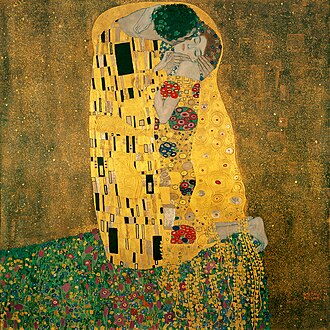 接吻 - Gustav Klimt (1907-1908)
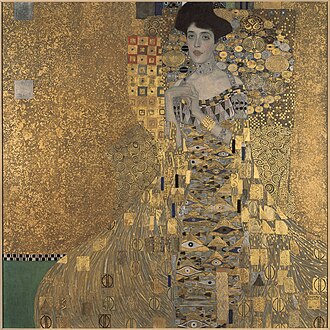 アデーレ・ブロッホ=バウアーの肖像 I - Gustav Klimt (1907)
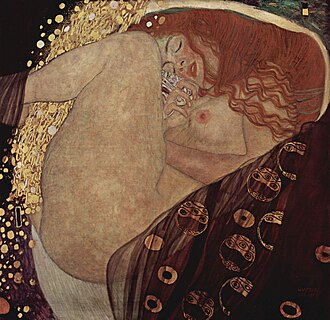 ダナエ - Gustav Klimt (1907)
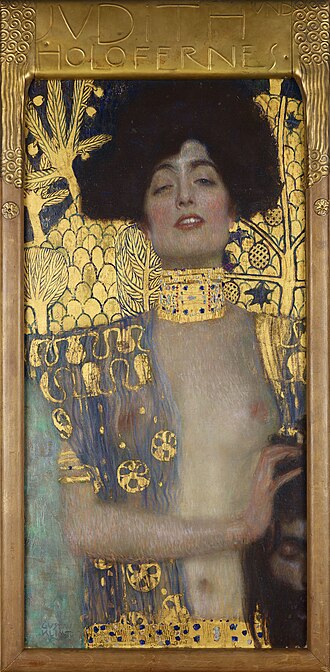 ユディト - Gustav Klimt (1901)
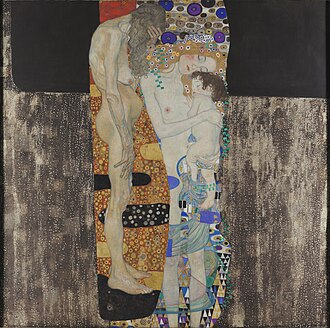 The Three Ages of Woman - Gustav Klimt (1905)
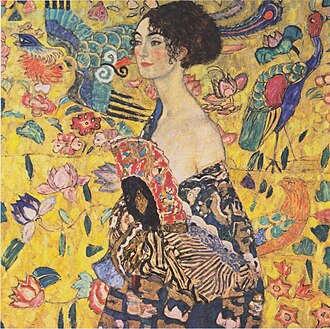 扇を持つ女 - Gustav Klimt (1917)
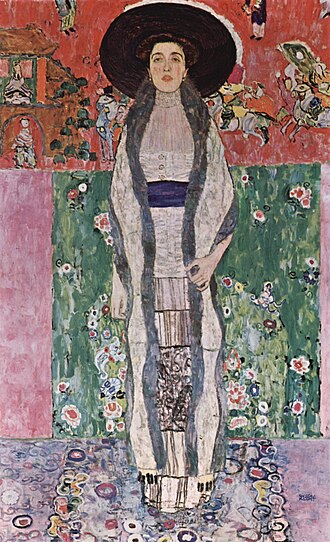 Adele Bloch-Bauer II - Gustav Klimt (1912)
 婦人の肖像 - Gustav Klimt (1910s)