Chaumes de Cordeville
Vincent van Gogh · 1890
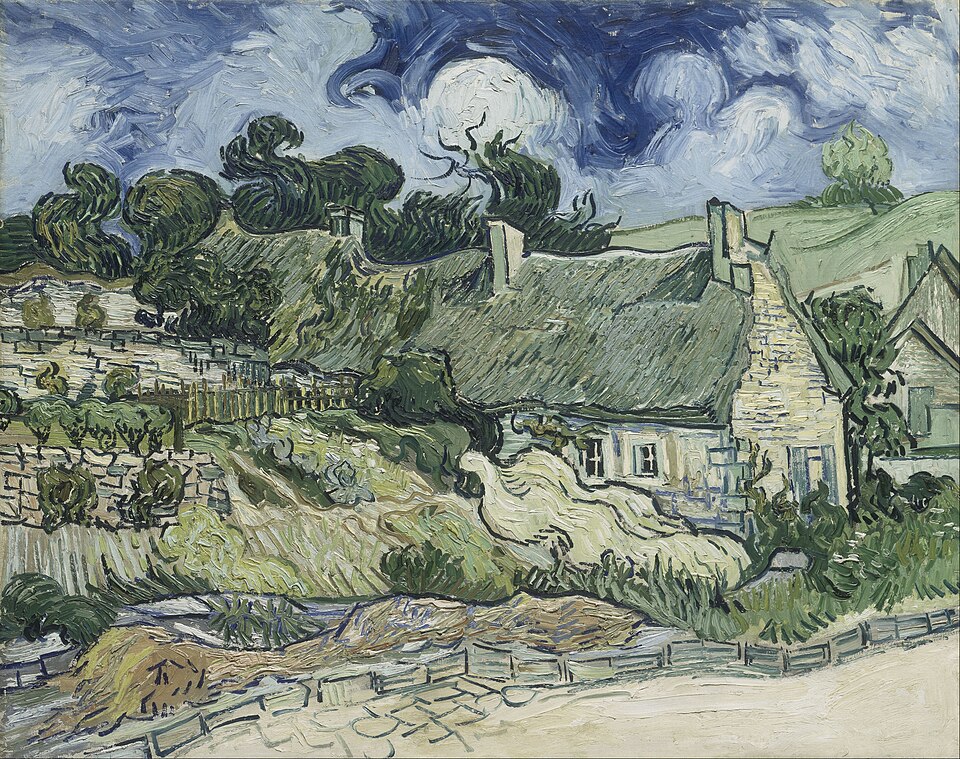
Thatched cottages heave under a dark blue sky of tangled clouds, trees and grass bending in a strong wind. Van Gogh painted them at Auvers-sur-Oise in June 1890, one month before his death.
The story behind the painting
In May 1890 Vincent van Gogh left the asylum at Saint-Rémy and went to Paris to stay with his brother Theo, where he met his sister-in-law and their baby. He then settled at Auvers-sur-Oise, about thirty kilometres north of Paris, to be looked after by Doctor Gachet. His last weeks there were a period of frantic creation. Cordeville is a hamlet a little apart from the village of Auvers. He painted these cottages in June 1890, one month before his death on 29 July 1890. The French article also gives the title Chaumes de Montcel.
What to look for
The canvas measures 73 by 92 cm. The cottages are painted in a twisting way, as if Van Gogh wanted to swell their volumes, in thick impasto that brings out cool tones: greys, verdigris and greens. Above them a dark blue sky with dishevelled clouds recalls The Starry Night. The thatched house almost disappears into the greens, and the warm tones are gone. Trees and grass seem driven by a powerful wind. Stand close and follow the paint: every roof, bush and cloud seems to be moving.
Meaning and intent
Wikipedia reads the picture as the tormented soul of the painter producing a fantastic and stormy view. It is a description, not a statement from Van Gogh himself, and the source offers no letter about this painting. What the canvas itself shows is a quiet rural subject, a group of old cottages, turned into something restless and alive, with the solid volumes of the houses swelling and the sky churning above them. Frank Herbert later gave it a voice of its own in fiction, as a picture about the wild thread in humans that cannot be suppressed.
Legacy
In 1954 Paul Gachet, son of the doctor who cared for Van Gogh in Auvers, gave the painting to the Louvre. It was shown at the Jeu de Paume before moving to the Musée d'Orsay in 1986, where it is inventory RF 1954 14. In Chapterhouse: Dune, the last book of Frank Herbert's Dune cycle, it is the favourite painting of the Reverend Mother Odrade, who sees in it the impossibility of removing the wild streak in human beings.
豆知識
- Painted at Auvers-sur-Oise in June 1890, a month before Van Gogh's death.
- Given to the Louvre in 1954 by Paul Gachet, the doctor's son.
- At the Musée d'Orsay since 1986.
- Cited in Frank Herbert's Chapterhouse: Dune.
画家について
Vincent van Gogh (1853-1890)
風景画 · オルセー美術館 · 木 · ランドスケープ · 空 · 家屋 · オーヴェル=シュル=オワーズ
同じ画家の作品: Vincent van Gogh
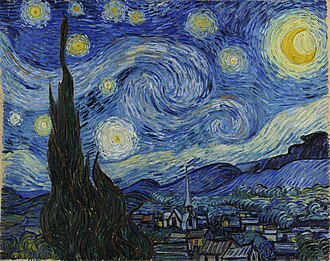 星月夜 - Vincent van Gogh (1889)
.jpg) 夜のカフェテラス - Vincent van Gogh (1888)
夜のカフェテラス - Vincent van Gogh (1888) ひまわり - Vincent van Gogh (1888)
 花咲くアーモンドの木の枝 - Vincent van Gogh (1890)
 カラスのいる麦畑 - Vincent van Gogh (1890)
 アルルの寝室 - Vincent van Gogh (1888)
 ジャガイモを食べる人々 - Vincent van Gogh (1885)
 アイリス - Vincent van Gogh (1889)
関連する画家の作品
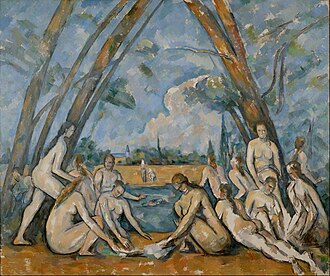 大水浴図 - Paul Cézanne (1900s)
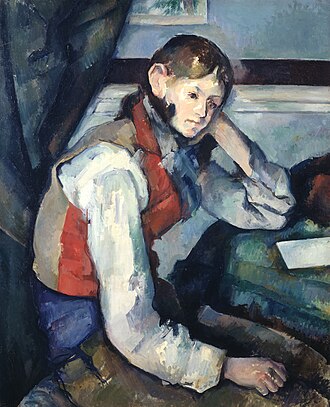 赤いチョッキの少年 - Paul Cézanne
 我々はどこから来たのか 我々は何者か 我々はどこへ行くのか - Paul Gauguin (1897-1898)
%201889.jpg) 黄色いキリスト - Paul Gauguin (1889)
黄色いキリスト - Paul Gauguin (1889).jpg) キリスト昇架 - Peter Paul Rubens (1609)
キリスト昇架 - Peter Paul Rubens (1609)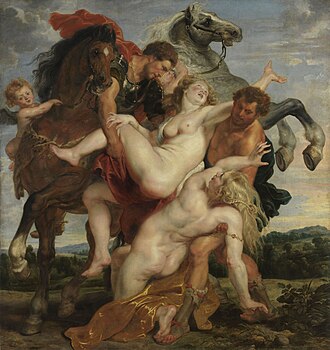 レウキッポスの娘たちの略奪 - Peter Paul Rubens (1618)
 Walk on the mountain - Joaquín Sorolla (1909)
 Sad Inheritance - Joaquín Sorolla (1898)
 ムーラン・ド・ラ・ギャレットの舞踏会 - Pierre-Auguste Renoir (1876)
 舟遊びの昼食 - Pierre-Auguste Renoir (1881)
 ムーラン・ルージュ - Henri de Toulouse-Lautrec (1892)
%20Rousse%20(La%20Toilette)%20-%201889%20-%20Henri%20de%20Toulouse-Lautrec%20-%20Mus%C3%A9e%20d'Orsay%2C%20Paris.jpg) La Toilette - Henri de Toulouse-Lautrec (1896)
La Toilette - Henri de Toulouse-Lautrec (1896)