Beata Beatrix
ダンテ・ゲイブリエル・ロセッティ · 1870s
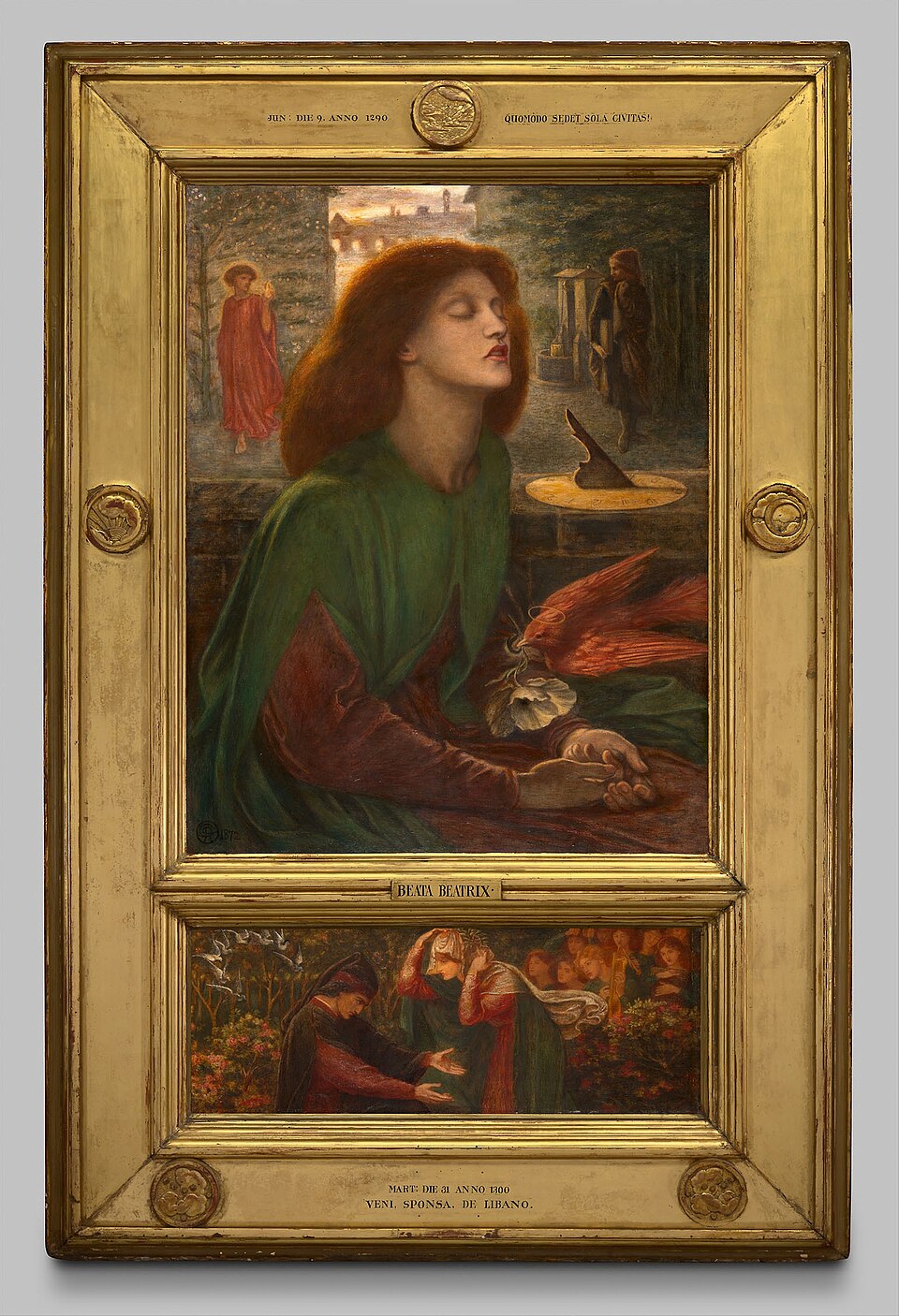
A woman sits in golden light, eyes closed, as a red bird drops a poppy into her hands. This is Rossetti's replica of his Beata Beatrix, painted for a patron who loved the first one, and finished only after the artist nearly gave up.
The story behind the painting
The first Beata Beatrix was painted between 1864 and 1870. William Graham, one of Rossetti's best clients, asked eagerly for a copy, saying the picture had appealed to his feelings beyond any other he had ever seen. Rossetti soon complained: he did not want to repeat himself and took the work on to please Graham and for money. He began in July 1871, found it too hard and set it aside, then on 5 September said he had picked it up again and finished a week later. He then painted the predella Graham had requested, probably by October. Still unsatisfied, he told Ford Madox Brown so, and Brown urged him on. He reworked it in late 1872 and early 1873. Wikidata dates the work to the 1870s; the Spanish Wikipedia article gives 1871 to 1873.
What to look for
In the replica everything is drawn with great precision: Dante and the figure of Love, the well that stands for rebirth and the New Life Beatrice is dreaming of, the Tree of Life behind Love, and a distant view of Florence. Unlike the original, Rossetti clearly shows the Ponte Vecchio and the Campanile, and less clearly the Duomo and the Palazzo Vecchio. Golden light floods the picture. The energy turns around three lines: the sundial, the line joining the dove to Love, and Beatrice's right arm, picked out in red and gold. The frame copies the original but splits into two parts, separating the main image from the predella, with inscriptions from the Vita Nuova and the Purgatorio.
Meaning and intent
Writers note that the poppy carried by the mystical bird, a figure of the Holy Spirit, stands for death and chastity. The critic Stephens, presumably agreeing with the artist, wrote that Beatrice sits on a balcony of her father's palace in Florence, half lost against the outside light, half merged with the shadows inside, while the heavenly visions of the New Life are revealed to her spirit. In the background Dante greets Love, who holds a flaming heart and seems to show him the way to follow. Compared with the original, the ideal here is centred clearly on Beatrice's face, drawn further from the likeness of Rossetti's late wife and closer to an abstract form. The predella adds Dante themes, an autobiographical meaning and a memory of medieval art.
Legacy
On 4 February 1873 Rossetti told his brother he had at last got the frame for Graham's Beatrice and predella and made them look satisfactory. The same day he thanked Brown, writing that the picture was now as good as anything of his and that it freed him from a very serious debt. The painting was first shown at the Burlington Fine Arts Club in 1883, and later at the Saint Louis World's Fair in 1904, in Buffalo, Toledo, Hartford, Pittsburgh and Toronto. It passed to Charles L. Hutchinson and was bequeathed in 1925 to the Art Institute of Chicago, where it hangs today.
豆知識
- Replica of a Beata Beatrix first painted 1864 to 1870.
- Painted for the patron William Graham, 1871 to 1873.
- Adds a predella and a clearer view of Florence.
- Bequeathed to the Art Institute of Chicago in 1925.
画家について
ダンテ・ゲイブリエル・ロセッティ (1828-1882)
同じ画家の作品: ダンテ・ゲイブリエル・ロセッティ
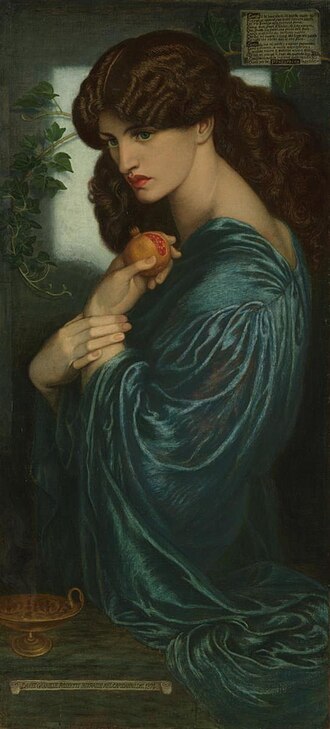 プロセルピナ - Dante Gabriel Rossetti (1874)
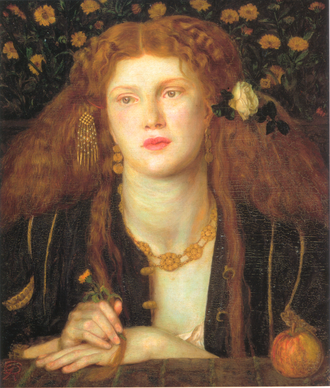 キスされた唇 - Dante Gabriel Rossetti (1859)
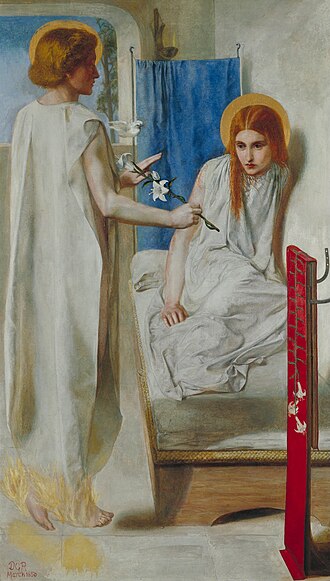 幼児のマリア - Dante Gabriel Rossetti (1850)
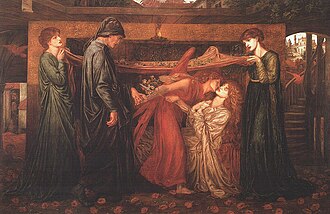 ベアトリーチェの死とダンテの夢 - Dante Gabriel Rossetti (1871)
 ヴェロニカ・ヴェロネーゼ - Dante Gabriel Rossetti (1872)
 モナ・ローザ - Dante Gabriel Rossetti (1867)
 The Girlhood of Mary Virgin - Dante Gabriel Rossetti (1840s)
 The Beloved - Dante Gabriel Rossetti (1865)
関連する画家の作品
 オフィーリア - John Everett Millais (1851)
 両親の家のキリスト - John Everett Millais (1849)
 ヒュラスとニンフたち - John William Waterhouse (1896)
 シャロットの女 - John William Waterhouse (1888)