Auditorium of the old Burgtheater
Gustav Klimt · 1888
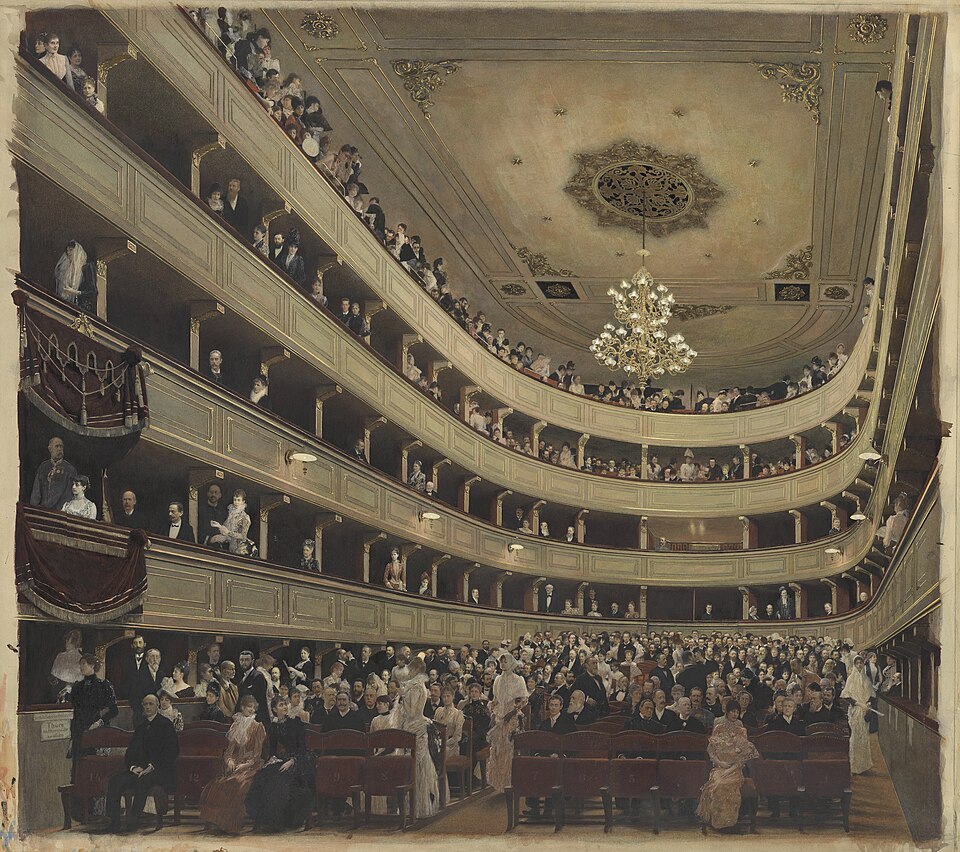
Seen from the stage, a whole theatre of Vienna's society returns to its seats, nearly 200 tiny portraits among them Brahms. Klimt painted the old Burgtheater just before it was torn down.
The story behind the painting
The original Burgtheater on Michaelerplatz was built in 1741. Viennese audiences loved the old wooden theatre despite its abysmal conditions, but once its replacement on the Ringstrasse was finished it was demolished in 1888 to make way for the St. Michael Wing of the Hofburg. A performance of Goethe's Iphigenie auf Tauris in October 1888 marked its end. That same year the City of Vienna commissioned Klimt and Franz von Matsch to paint the auditorium before demolition, as a record. Klimt worked on this gouache on paper in 1888 and 1889.
What to look for
Klimt shows the auditorium from the stage, from a low viewpoint on the right, while Matsch painted the stage from the seats. The view opens toward the Imperial box on the left, with Archduke Karl Ludwig and Archduchess Maria Theresia. Almost 200 miniature portraits fill the rows, 133 identifiable: Johannes Brahms, Karl Goldmark, Katharina Schratt, Klimt's brother Ernst, the physician Theodor Billroth, future patrons like Serena Lederer. On the upper balconies people use opera glasses or lean over the rail. When Karl Lueger, later mayor, was found missing, Klimt added him afterwards.
Meaning and intent
The commission asked for a picture as authentic and correct as possible, and Klimt delayed completion to take precise measurements of the architecture. The audience, returning after an intermission, is rendered with near-photographic realism. Marian Bisanz-Prakken notes that he surely used photographs, yet also sketched individuals and groups on site; the Vienna Museum holds 25 preparatory drawings and a sketchbook. To save costs he asked friends and relatives to pose. Jane Rogoyska finds the effect curiously stilted, like an elaborate collage, far from the styles Klimt would invent a decade later.
Legacy
Shown in preview on 17 November 1889 beside Matsch's picture, the painting met great public approval. Some sitters ordered copies, and heliogravures circulated. At the Künstlerhaus exhibition in March 1890 around 60,000 people saw it, and on 25 April Klimt received the Emperor's Prize, reserved for patriotic works. According to The Art Story the award raised his profile and led to public commissions for Ringstrasse buildings, while society portraits made him the most fashionable portraitist of the day. The Vienna Museum acquired the work in 1907 and still holds it.
豆知識
- Gouache on paper, 1888-1889, commissioned by the City of Vienna.
- Records the old Burgtheater just before its demolition.
- Nearly 200 miniature portraits, 133 of them identifiable.
- Won Klimt the Emperor's Prize in 1890; in the Vienna Museum since 1907.
画家について
Gustav Klimt (1862-1918)
同じ画家の作品: Gustav Klimt
 接吻 - Gustav Klimt (1907-1908)
 アデーレ・ブロッホ=バウアーの肖像 I - Gustav Klimt (1907)
 ダナエ - Gustav Klimt (1907)
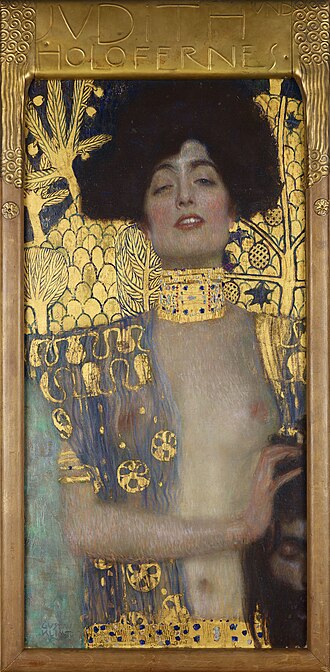 ユディト - Gustav Klimt (1901)
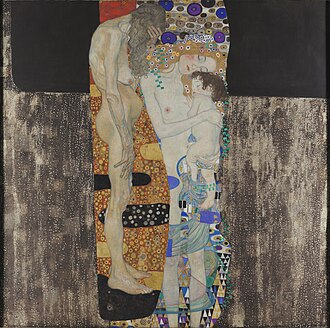 The Three Ages of Woman - Gustav Klimt (1905)
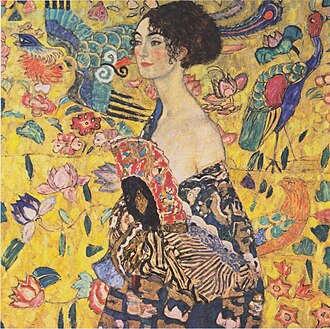 扇を持つ女 - Gustav Klimt (1917)
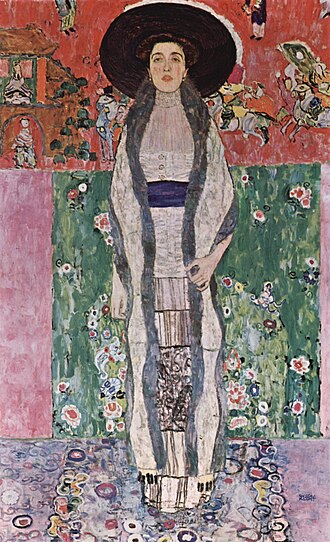 Adele Bloch-Bauer II - Gustav Klimt (1912)
 婦人の肖像 - Gustav Klimt (1910s)