Ariadne
ジョン・ウィリアム・ウォーターハウス · 1898
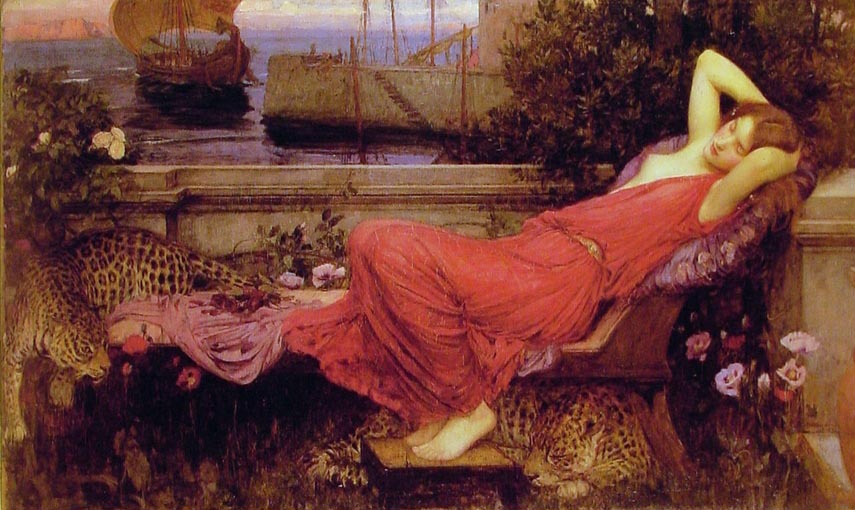
Ariadne sleeps on the island of Naxos, not yet knowing she has been left behind. Far off, the ship of Theseus slips away, and beside her two leopards wait for a god who has not yet arrived.
The story behind the painting
Waterhouse painted Ariadne in oil on canvas in 1898. He took the subject from Ovid's Heroides, which tells how Ariadne was abandoned. She had helped Theseus escape from the Labyrinth after he killed the Minotaur, yet he sailed away from Naxos while she slept. Waterhouse worked on this canvas at the same time as Flora and the Zephyrs, and both pictures appear together in a photograph of the artist in his Primrose Hill studio in London.
What to look for
The canvas measures about 91 by 151 cm, a long horizontal format that suits a reclining figure. Ariadne lies asleep in the foreground, caught in the moment just before she wakes. In the background, the departing ship of Theseus is already receding into the distance. Look also at the two leopards lying beside her. They are attributes of Dionysus, so the animals quietly tell the rest of the story while she still dreams, unaware of either loss or rescue.
Meaning and intent
The painting holds two moments at once: the betrayal that has just happened and the rescue still to come, since in the myth Dionysus finds Ariadne and marries her. The sleeping Ariadne was an established subject in ancient sculpture and later European art. Art historian Anne-Florence Gillard-Estrada places this work within the nineteenth century revival of antique sleeping figures and links it to earlier images of Ariadne asleep. Waterhouse scholar Peter Trippi connects it to the artist's recurring Symbolist treatment of mythological women.
Legacy
Waterhouse showed Ariadne at the Royal Academy summer exhibition of 1898, alongside Flora and the Zephyrs. The critic M. H. Spielmann used the phrase sweet girl-fatalist when writing about the women in both pictures. Not every response was warm: Kilian Kohn's study of Waterhouse's reception notes that some contemporary critics disliked the painting, especially what they saw as a lack of variety among his female figures. The Studio's 1898 record named H. W. Henderson as owner, and the work is now in a private collection.
豆知識
- Painted in 1898 and shown at the Royal Academy that year.
- Based on Ovid's Heroides.
- The leopards point to Dionysus, who will find Ariadne.
- Now in a private collection.
画家について
ジョン・ウィリアム・ウォーターハウス (1849-1917)
同じ画家の作品: ジョン・ウィリアム・ウォーターハウス
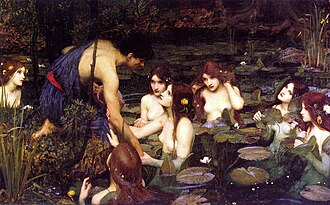 ヒュラスとニンフたち - John William Waterhouse (1896)
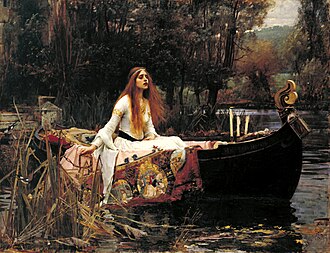 シャロットの女 - John William Waterhouse (1888)
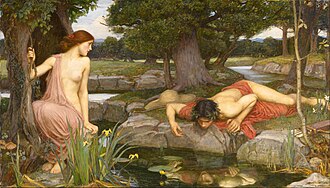 エーコーとナルキッソス - John William Waterhouse (1903)
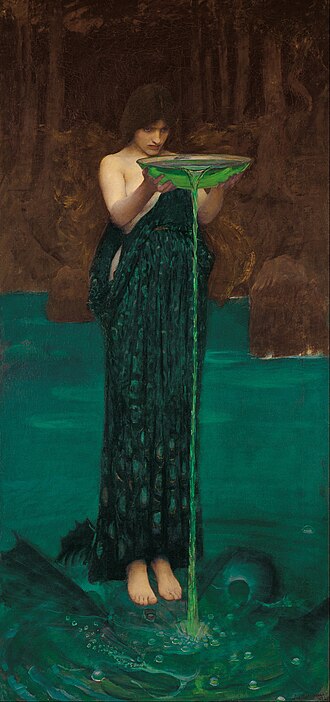 Circe Invidiosa - John William Waterhouse (1892)
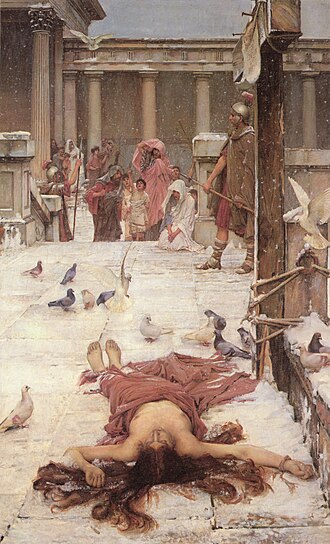 聖エウラリア - John William Waterhouse (1885)
 Ulysses and the Sirens - John William Waterhouse (1891)
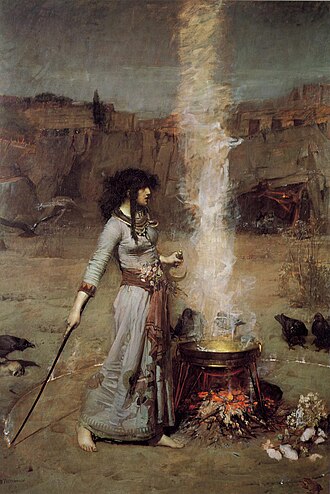 魔法円 - John William Waterhouse (1886)
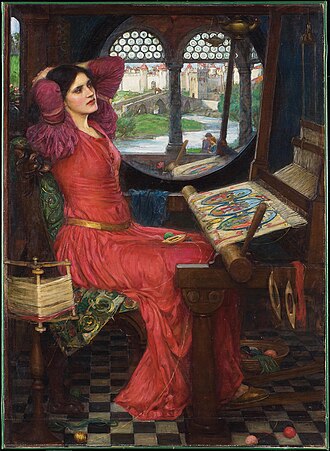 "I am half sick of shadows" said the Lady of Shalott - John William Waterhouse (1916)
 オフィーリア
 両親の家のキリスト
 プロセルピナ
 キスされた唇