Young Woman in Oriental Garb
Édouard Manet · 1871
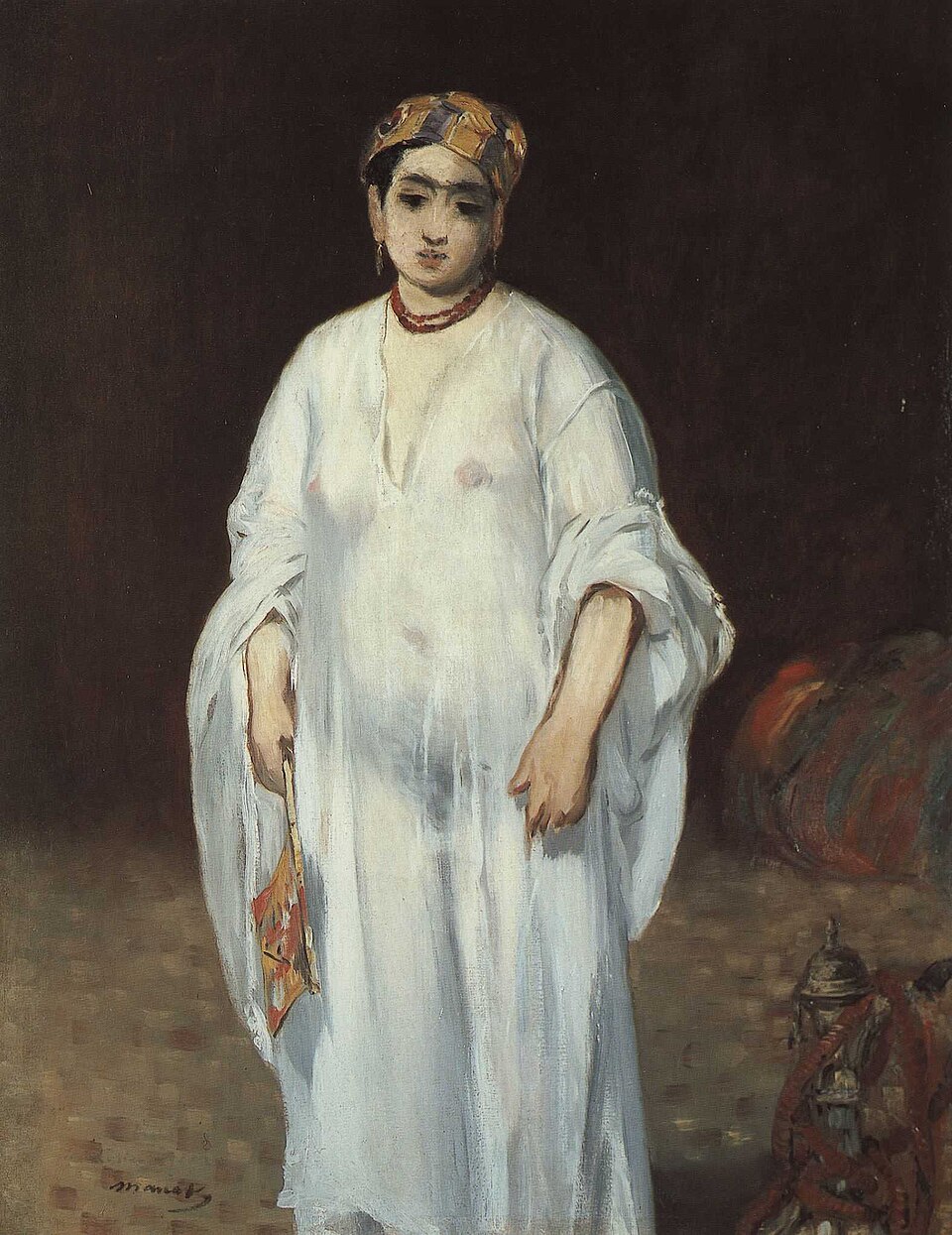
A young woman stands in a long white gown so sheer it hides almost nothing, a water pipe at her feet. Manet rarely touched Orientalism, and no one agrees on when he painted this one.
The story behind the painting
The painting, also called La Sultane, is undated. Early writers such as Théodore Duret and Julius Meier-Graefe placed it in 1876, but in 1926 Étienne Moreau-Nélaton published Manet's own inventory from early 1872 listing works of 1861 to 1871, including Une Sultane. He then dated it around 1871, followed by the catalogue raisonné and the Bührle Foundation. Others say around 1870, while Stéphane Guégan says surely before 1871. Eduard Hüttinger and Eugenia Querci argue for the 1860s, Querci even the early 1860s, comparing Manet's single figures with objects beside them.
What to look for
She stands facing us, feet cut off by the lower edge, arms hanging, in a long white gown with a V neckline. The transparent fabric barely veils her body. A colourful cloth is tied around her head over black hair, with a double coral necklace and long gold earrings. Her lips are closed, her brows almost meet, her dark eyes look down. In her right hand is a stick with a square of coloured paper, perhaps a kind of fan. A brass water pipe stands beside her, a cushion or sofa behind. It is signed Manet at lower left but not dated.
Meaning and intent
This is not a real scene from a foreign culture but an erotic fantasy staged in the studio, in line with the Orientalism of Ingres, Delacroix and Gérôme that pleased Salon audiences. The handling avoids academic polish, with rough features close to Realism and dabbed colour hinting at Impressionism. Querci notes the bright light that seems to dazzle her and Manet's interest in the dialectic of black and white, the gown absorbed by the deep black ground. Guégan praised its charming freshness and bittersweet sensuality. Ronald Pickvance found the model closest to a figure in a later Manet.
Legacy
The canvas belongs to the Foundation E. G. Bührle Collection and is on long-term loan to the Kunsthaus Zürich. Until 1937 it belonged to the Jewish collector Max Silberberg, and it is suspected of being Nazi-looted art. In 2025 the question of ownership was settled by agreement between Silberberg's heirs and the Bührle Foundation. In 1931 the critic Karl Scheffler wrote that the picture holds much of Manet's mysterious, barely analysable mastery.
Lo sapevi?
- Dating is disputed, from the early 1860s to 1871.
- Listed as Une Sultane in Manet's 1872 inventory.
- Owned by Max Silberberg until 1937; settled with his heirs in 2025.
- On loan to the Kunsthaus Zürich from the Bührle Foundation.
L'artista
Édouard Manet (1832-1883)
Kunsthaus Zürich · Foundation E.G. Bührle Collection
Altre opere di Édouard Manet
 Luncheon on the Grass - Édouard Manet (1863)
 Olympia - Édouard Manet (1863)
 Un bar ai Folies-Bergère - Édouard Manet (1882)
 Il balcone - Édouard Manet (1868)
 Music in the Tuileries - Édouard Manet (1862)
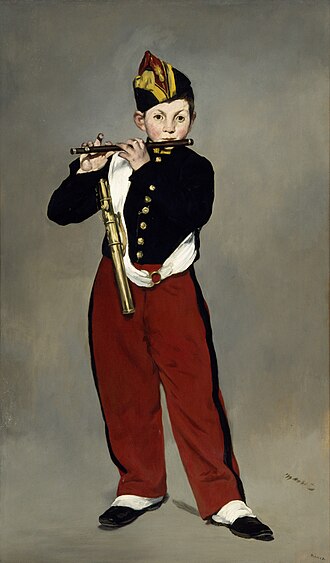 The Fif - Édouard Manet (1866)
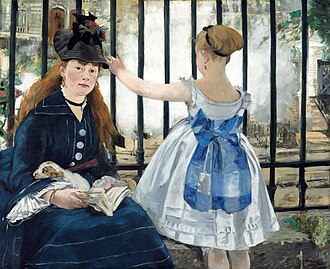 The Railway - Édouard Manet (1873)
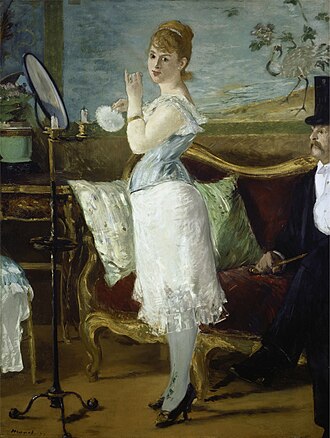 Nana - Édouard Manet (1877)
Dipinti di artisti collegati
 Impression, Sunrise - Claude Monet (1872)
 Water Lilies - Claude Monet (1906)
 Dance at Le Moulin de la Galette - Pierre-Auguste Renoir (1876)
 Luncheon of the Boating Party - Pierre-Auguste Renoir (1881)
 The Cradle - Berthe Morisot (1872)
 Summer's Day - Berthe Morisot (1879)
 L'Absinthe - Edgar Degas (1875)
 The Bellelli Family - Edgar Degas (1858)
 The Canal du Loing at Moret - Alfred Sisley (1892)
 The Watering Pond at Marly with Hoarfrost - Alfred Sisley (1876)
 Paris Street; Rainy Day - Gustave Caillebotte (1877)
 Les raboteurs de parquet - Gustave Caillebotte (1875)