The Red Christ
Lovis Corinth · 1922
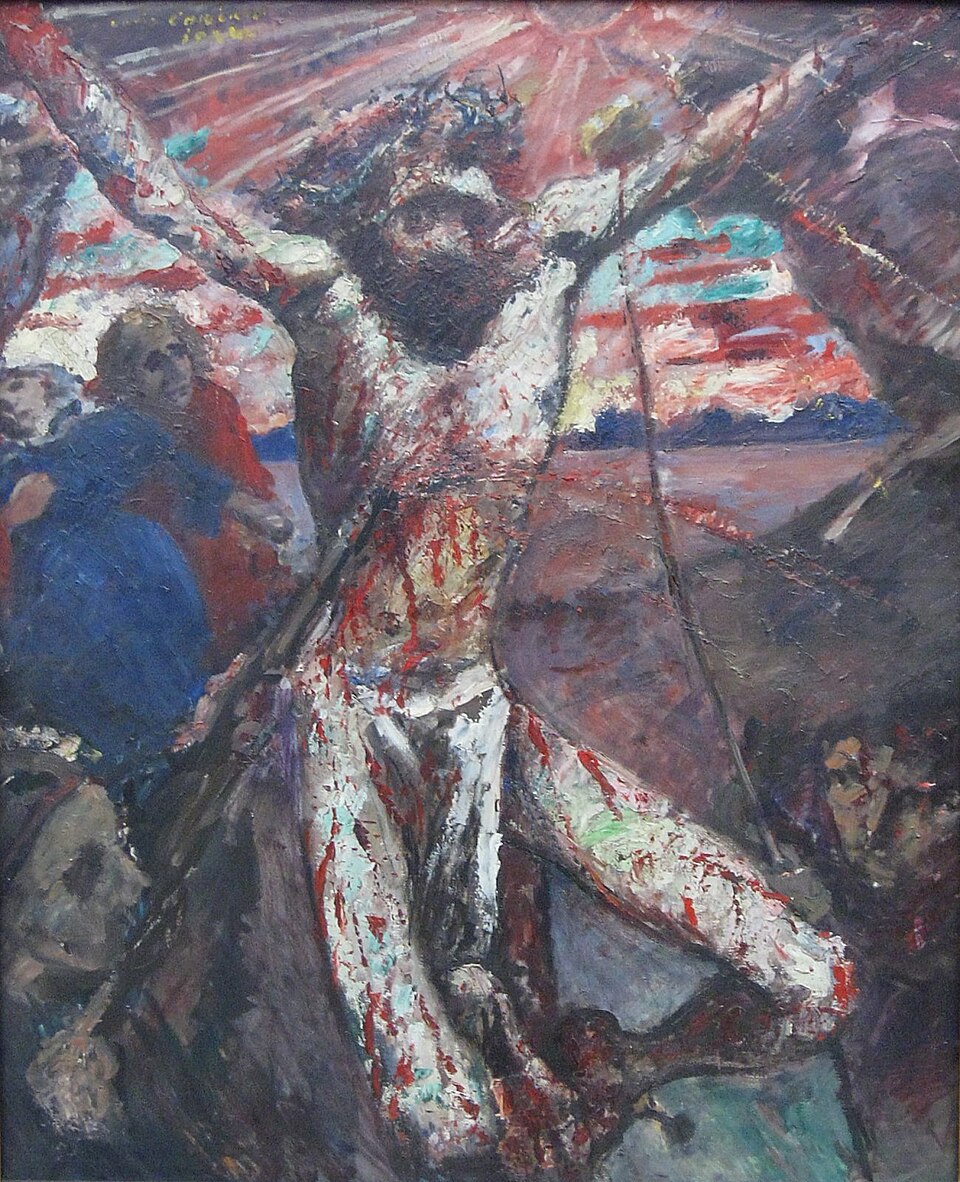
Christ hangs in a world drowned in red, his hands pushed beyond the frame, a lance driven into his side. Lovis Corinth painted this on wood in 1922, a year of crisis for Germany and for himself, and one historian called it the most horrific version of the theme.
The story behind the painting
Lovis Corinth was 64 when he painted The Red Christ in 1922, signing and dating it in yellow at the upper left. It belongs to a long line of works on the Passion of Christ that runs through his career, from a Descent from the Cross in 1895 to his last painting, a 1925 self-portrait as the suffering Christ, Ecce Homo. Over those years his style moved from naturalism to expressionism. That year Germany faced severe inflation, and Corinth's physical health and state of mind were at a low point. He chose to paint on wood, like the altarpieces of old German and Dutch masters.
What to look for
Christ fills the centre, tilting left towards us with bent knees, his head with its crown of thorns fallen onto his shoulder, his eyes looking out. Neither his hands nor the crossbeam are visible; his feet touch the lower edge. Below left, a man, probably Longinus, drives a lance under his breast and blood spurts out. Above him stand John in red and the fainting Mary in blue. On the right a figure raises a sponge on a staff. Instead of the hill of Golgotha there is a lake, and between the outstretched arms a sun throws rays, everything soaked in a twilight red.
Meaning and intent
The scene follows the Gospel of John, compressing several moments into one. Andrea Bärnreuther calls it the most horrific interpretation of the theme, showing the horror of martyrdom brutally. She argues that Corinth chose expressionism because naturalism fails where it must show what the senses cannot reach, and speaks of an aesthetic of the ugly: the all-present red that breaks every rule of good taste, the thick patches of paint, the rough work with palette knife and brush, an attack on perception. Sonja de Puinef sees Christ's uncertain face as a projection of the artist's suffering and, beyond him, of a whole nation.
Legacy
The Red Christ was first shown at the Berlin Secession in 1922. It then stayed with Corinth's wife, the painter Charlotte Berend-Corinth, who took it with her when she emigrated to the United States in 1939. In 1956 it entered the Bavarian State Painting Collections, and it now hangs in the Pinakothek der Moderne in Munich. It stands as one of the major late works of an artist who, near the end of his life, turned an ancient subject into a cry of personal shock that still feels raw a century later.
Lo sapevi?
- Painted on wood by Lovis Corinth in 1922, signed in yellow.
- Painted during a year of severe inflation in Germany.
- First shown at the Berlin Secession in 1922.
- In the Bavarian State Painting Collections since 1956, shown in the Pinakothek der Moderne.
L'artista
Lovis Corinth (1858-1925)
religious art · Jesus Christ · Bavarian State Painting Collections
Altre opere di Lovis Corinth
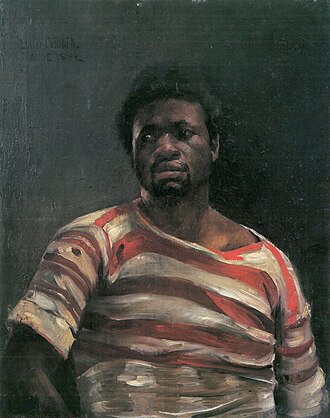 Black Othello - Lovis Corinth (1884)
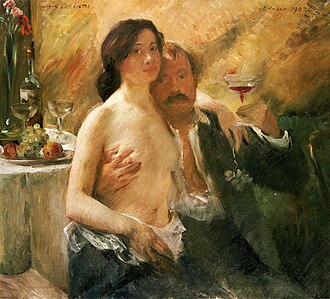 Self portrait with his wife Charlotte Berend-Corinth and a sekt glass - Lovis Corinth (1902)
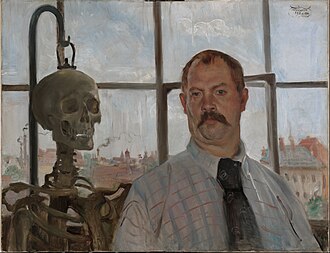 Self-portrait with Skeleton - Lovis Corinth (1896)
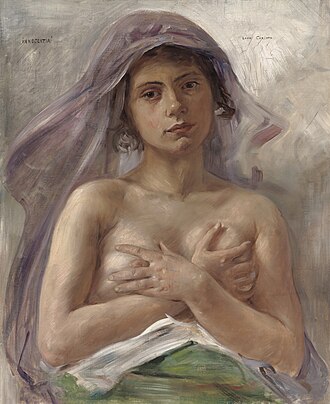 Innocentia - Lovis Corinth (1890)
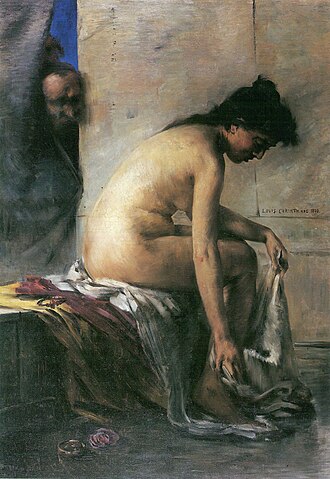 Susanna in the Bath - Lovis Corinth (1890)
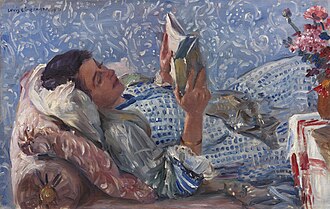 Reading Woman - Lovis Corinth (1911)
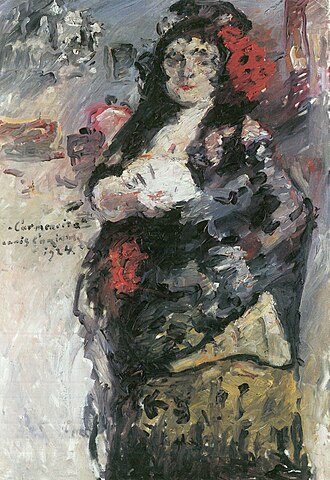 Carmencita - Lovis Corinth (1924)
 Self-portrait with a Tyroler hat - Lovis Corinth (1913)