Sunrise with Sea Monsters
J. M. W. Turner · 1845
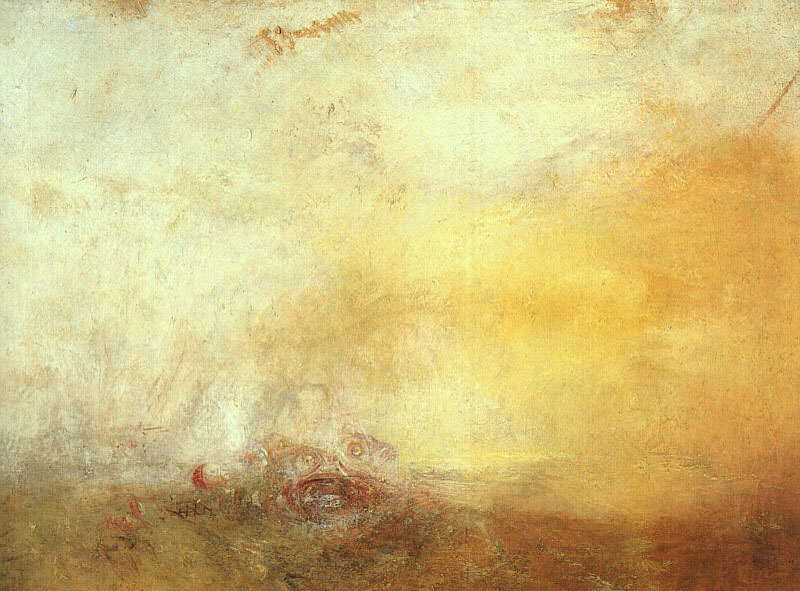
A hazy yellow sun rises over a grey, restless sea, and in the lower left something pink and red is stirring. Fish, a monster, or only steam? Turner never finished it, and nobody agrees what lurks there.
The story behind the painting
Turner made this canvas in the coastal town of Margate around 1845, near the end of his career, and left it unfinished. It measures 91.4 by 121.9 centimetres. When the title was first given, it named only a single monster; the plural came later. The picture first went on public display only in 1906. It now belongs to the permanent collection of Tate Britain in London, and Wikidata also lists the National Gallery as a holder. Its unfinished state is part of its strange power: forms appear, half form, and dissolve again.
What to look for
Start with the two broad zones: a warm, hazy yellow sky and a cold, turbulent grey sea. Then look to the lower left corner, where swirls of pink and red are usually read as the sea monsters. Nearby, four or five small black cross-hatches might be part of a fishing net, according to Tate. A larger patch of red and white may be a marine float, and a 1907 museum catalogue saw icebergs in the distance. The writer Michael Bockemuhl even finds a dog's head in a shape to the left of the monster. The longer you look, the more the paint seems to invent.
Meaning and intent
Tate maintains that the monsters are simply fish. James Hamilton suggests the mist may hide a steam paddleboat being consumed by giant fish or whales, a reading that ties the work to Turner's late responses to the Industrial Revolution. Bockemuhl sees a single behemoth with large eyes and open mouth swimming toward us. Gunnar Schmidt argues there is nothing solid there at all, only drifting steam where warm sky meets cold water, compared to the monstrous power of engines. Elizabeth Ermarth calls such late works almost entirely abstract, space as pure atmosphere and light. The painting holds all these readings at once.
Legacy
Sunrise with Sea Monsters has become a key example of the varied and fantastic imagery critics find in Turner's late work. It is often compared with the creatures in the water of his famous Slavers Throwing Overboard the Dead and Dying, and with abstract late canvases such as Mountain Landscape and Seascape with Storm Coming On. A paper in the Journal of the Royal Society of Medicine has even linked such visions to Turner's possession of acetate of morphia, perhaps used for toothache. Whether one sees fish, monsters or vapour, the unfinished canvas keeps inviting viewers to look again.
Lo sapevi?
- Painted in Margate around 1845 and left unfinished.
- First put on public display in 1906.
- The original title mentioned only one monster.
- Tate says the monsters are probably fish.
L'artista
J. M. W. Turner (1775-1851)
Altre opere di J. M. W. Turner
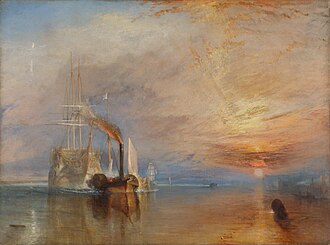 The Fighting Temeraire - J. M. W. Turner (1839)
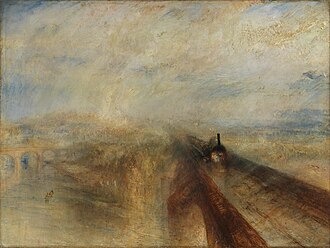 Rain, Steam and Speed - The Great Western Railway - J. M. W. Turner (1844)
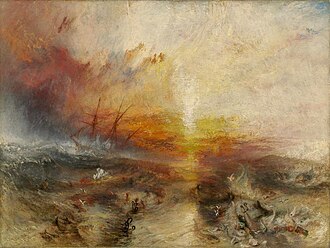 The Slave Ship - J. M. W. Turner (1840)
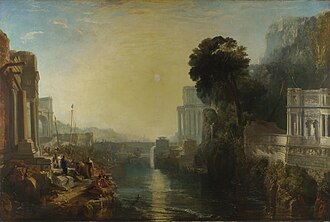 Dido building Carthage - J. M. W. Turner (1815)
.jpg) The Battle of Trafalgar - J. M. W. Turner (1820s)
The Battle of Trafalgar - J. M. W. Turner (1820s)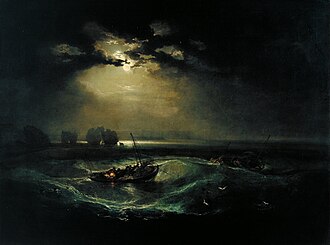 Fishermen at Sea - J. M. W. Turner (1796)
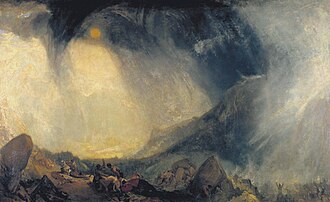 Snow Storm: Hannibal and his Army Crossing the Alps - J. M. W. Turner (1812)
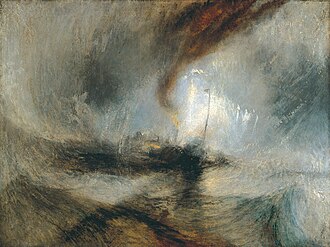 Snow Storm: Steam-Boat off a Harbour's Mouth - J. M. W. Turner (1842)
Dipinti di artisti collegati
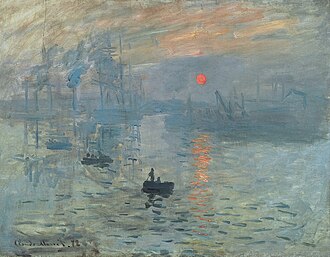 Impression, Sunrise - Claude Monet (1872)
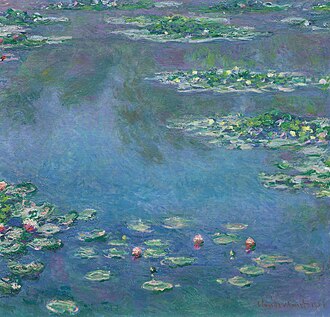 Water Lilies - Claude Monet (1906)
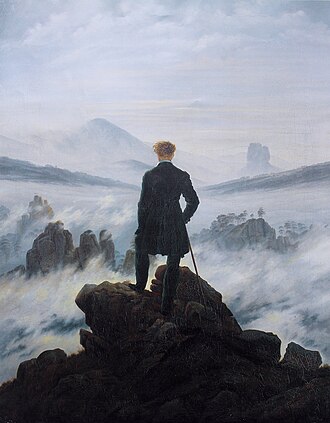 Wanderer above the Sea of Fog - Caspar David Friedrich (c. 1818)
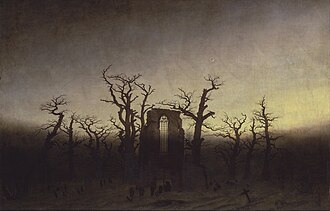 The Abbey in the Oakwood - Caspar David Friedrich (1800s)
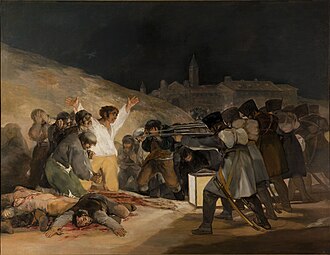 The Third of May 1808 - Francisco Goya (1814)
.jpg) La maja nuda - Francisco Goya (1800)
La maja nuda - Francisco Goya (1800)