Still Life with Compotier
Paul Cézanne · 1879
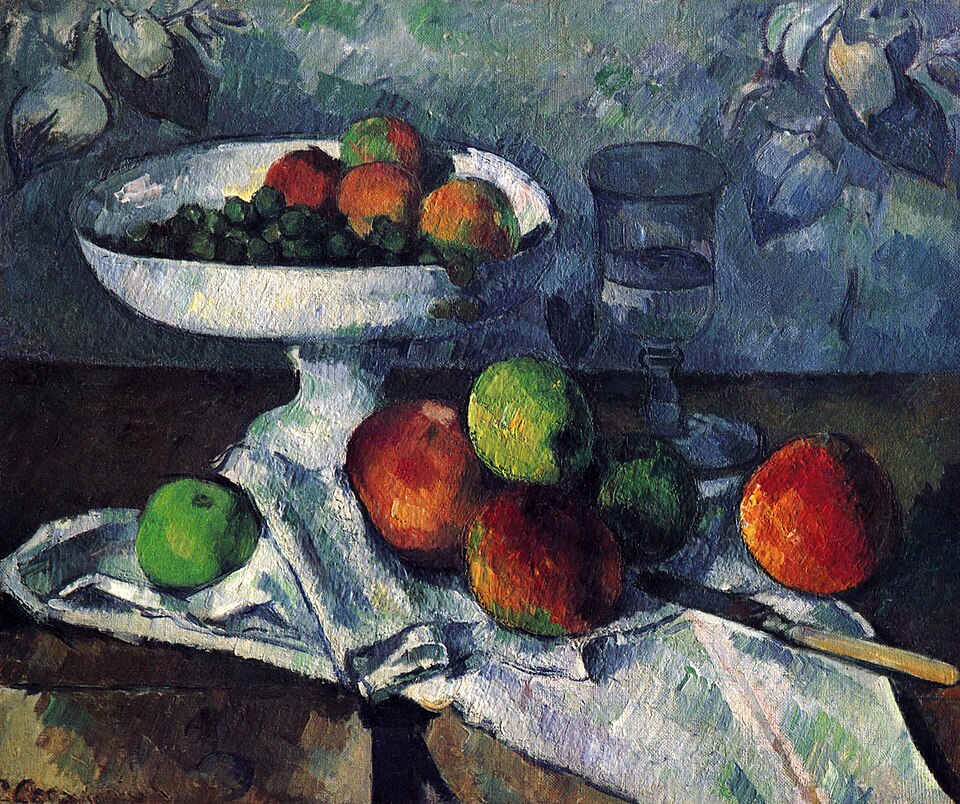
A fruit bowl, a half full glass and a scatter of apples. Gauguin loved this Cézanne so much he called it the apple of his eye, and still had to sell it.
The story behind the painting
Cézanne painted Fruit Bowl, Glass and Apples between 1879 and 1880. He treated still life as a genre in its own right at a time when many academically trained painters saw it mainly as an exercise. It suited his slow way of working and helped him temper his moody character. He spent hours arranging objects before he began to paint, always seeking balance through alternating shapes, textures and colours. The sources disagree on where it is now: French Wikipedia says a private collection in Paris, while Wikidata lists the Museum of Modern Art.
What to look for
Cézanne arranged the fruit bowl, glass and apples from several viewpoints at once. The dark outlines of the fruit flow into one another, forming a whole and tying foreground to background. The dark background seems strangely close to the viewer. A knife set diagonally on the table adds depth, a device he had copied from Chardin in the Louvre. The brushstrokes are strong and parallel, laid diagonally, which blurs the colour in the wallpaper flowers and the glass. The white of the napkin and the bowl brings light and leads the eye to the centre, while blue builds shadows.
Meaning and intent
Paul Gauguin was so struck by this painting that he bought it directly from Cézanne and used it to study his secret. He dissected it in every aspect and copied it several times, adopting in particular the brushstrokes laid in a single direction. In the 1880s he painted a whole series of still lifes clearly inspired by Cézanne, and in 1890 he used this very still life as the background of a Portrait of a Young Woman. For Gauguin it was a lesson in how a picture can be built.
Legacy
Gauguin often called the painting the apple of his eye and the pearl of his collection. Yet after he left France for Tahiti in 1895 and needed money for medical care, he sold it. Maurice Denis recorded the moment it was offered at Ambroise Vollard's gallery in his 1900 painting Homage to Cézanne, where this still life stands at the centre. That homage marks Denis's own turn from Gauguin's cloisonnism towards a style strongly shaped by Cézanne, and it shows how much one small table of fruit meant to a generation.
Lo sapevi?
- Painted between 1879 and 1880.
- Owned by Gauguin, who copied it several times.
- Shown at the centre of Maurice Denis's Homage to Cézanne (1900).
- Location differs by source: private collection in Paris, or MoMA.
L'artista
Paul Cézanne (1839-1906)
table · still life · apple · Museum of Modern Art · cup · knife
Altre opere di Paul Cézanne
 Les Grandes Baigneuses - Paul Cézanne (1900s)
 The Boy in the Red Vest - Paul Cézanne
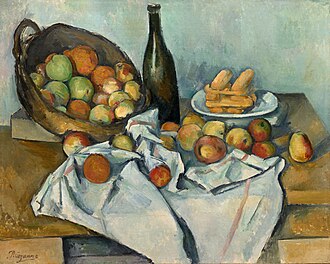 The Basket of Apples - Paul Cézanne (1893)
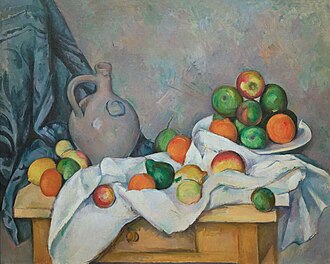 Rideau, Cruchon et Compotier - Paul Cézanne (1890s)
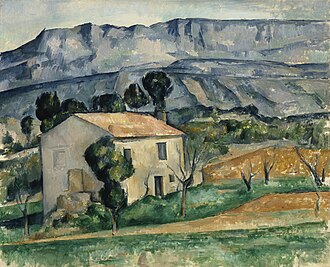 Maison devant la Sainte-Victoire près de Gardanne - Paul Cézanne (1880s)
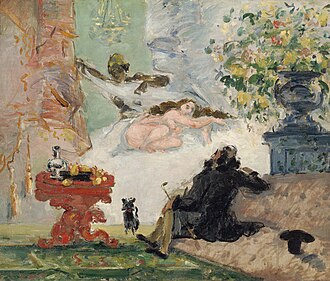 A Modern Olympia - Paul Cézanne (1873)
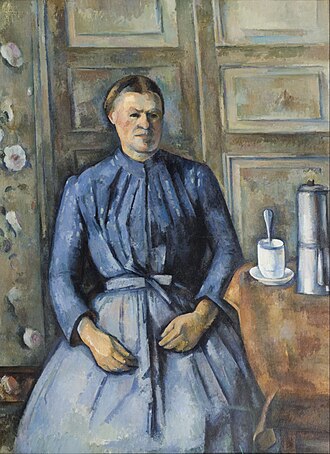 La Femme à la cafetière - Paul Cézanne (1895)
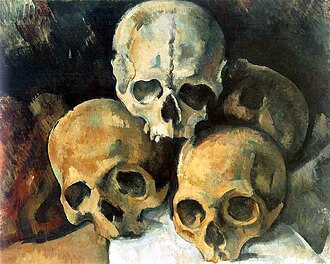 Pyramid of Skulls - Paul Cézanne (1899)
Dipinti di artisti collegati
 The Starry Night - Vincent van Gogh (1889)
 Café Terrace at Night - Vincent van Gogh (1888)
 Where Do We Come From? What Are We? Where Are We Going? - Paul Gauguin (1897-1898)
 Cristo giallo - Paul Gauguin (1889)
 Walk on the mountain - Joaquín Sorolla (1909)
 Sad Inheritance - Joaquín Sorolla (1898)
 Dance at Le Moulin de la Galette - Pierre-Auguste Renoir (1876)
 Luncheon of the Boating Party - Pierre-Auguste Renoir (1881)
 At the Moulin Rouge - Henri de Toulouse-Lautrec (1892)
 La Toilette - Henri de Toulouse-Lautrec (1896)