Portrait of Henri Rochefort
Édouard Manet · 1881
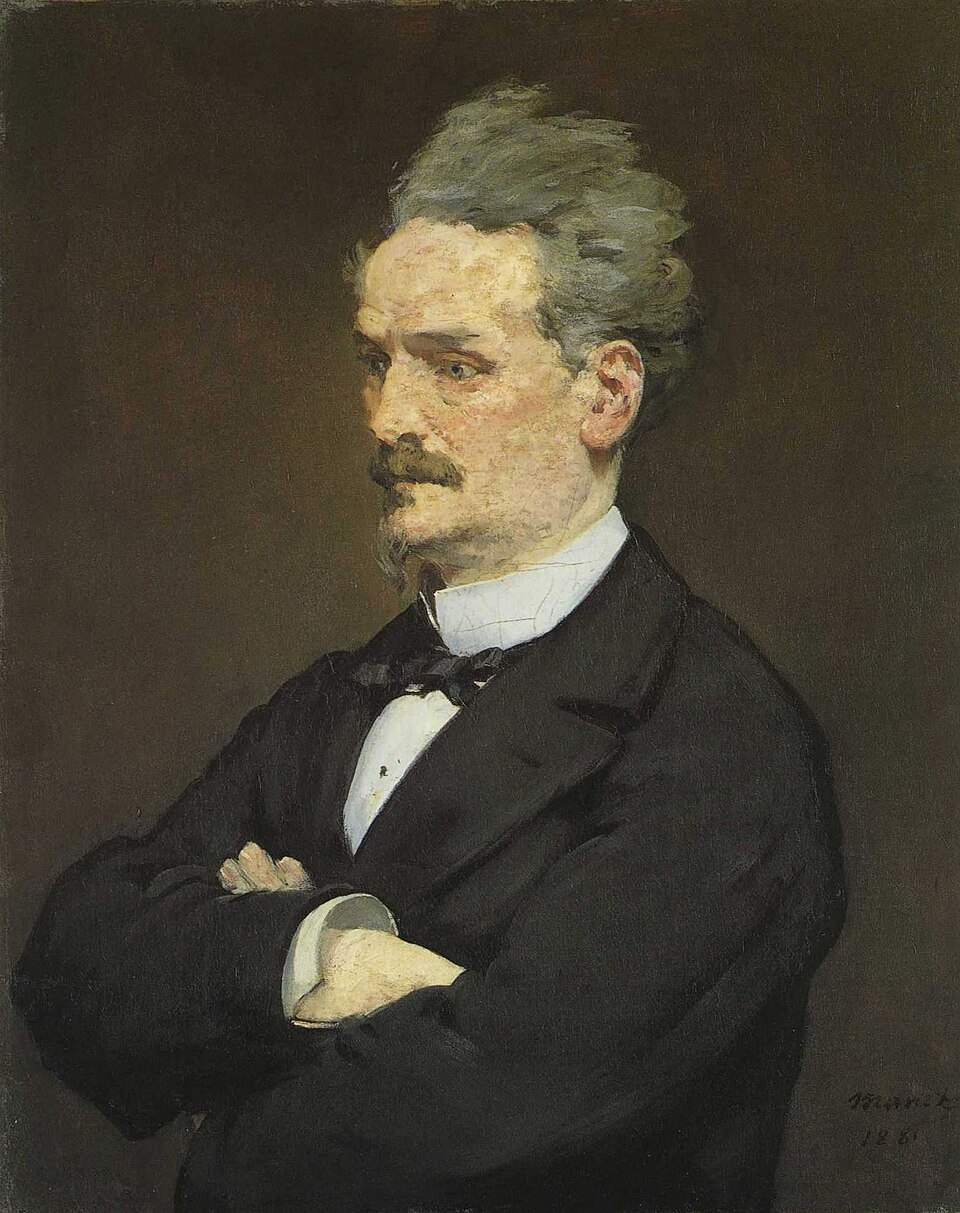
Arms crossed, hair flying back, a scarred face turned aside: Manet painted the firebrand journalist Henri Rochefort in 1881, just after his return from exile. Rochefort agreed only reluctantly, and refused the painting as a gift.
The story behind the painting
Henri Rochefort was a famous pamphleteer and a fierce opponent of Napoleon III. Deported to a penal colony in New Caledonia in 1873 for his part in the Paris Commune, he made a sensational escape in 1874 and returned to France only after the amnesty of 1880. Manet, delighted, decorated a letter with two French flags and the cry Vive l'amnistie. He wanted to paint the escape, and the etcher Marcellin Desboutin, a relative of Rochefort, arranged a meeting. No friendship followed. Manet offered to paint Rochefort's portrait, and he agreed only reluctantly.
What to look for
This bust length portrait, 81.5 by 66.5 cm, shows Rochefort turned to the left with arms crossed, in a black jacket, a white stand up collar and a bow. Of his hands we see only part of the right arm and three fingertips. The body is painted in a fairly academic, realistic way, but the face shows a looser, Impressionist touch: dabs of grey and blue describe skin marked by pockmarks. Note the thick moustache, the thin goatee in fine strokes, and the hair swept up and back in long grey and brown strokes. The background is a dark ochre grey. Signed Manet, 1881.
Meaning and intent
The art historian Josef Kern describes the pose as insistent, the arms crossed energetically and a little defiantly. Courbet and Boldini also painted Rochefort facing left against a dark ground in the same clothes, but neither showed the crossed arms or the scarred skin. Rochefort later joined the Boulangists and wrote with virulent nationalism and antisemitism. Françoise Cachin saw a hint of this in Manet's portrait: one of his more conventional ones, yet catching a touch of charlatanry, the hero hiding the firebrand, the republican hiding the Boulangist.
Legacy
Manet offered the finished portrait to Rochefort as a gift, but he refused it; he preferred more traditional art. The painting was later sold to the baritone Jean-Baptiste Faure, one of Manet's greatest collectors. In 1906 the dealer Paul Cassirer offered it in Berlin, where Alfred Lichtwark, director of the Hamburger Kunsthalle, saw it and said that given a choice he would prefer it. In 1907 it became the first Manet in the Kunsthalle, and Lichtwark called it the most spiritual thing he knew by Manet.
Lo sapevi?
- Painted by Manet in 1881, oil on canvas, 81.5 by 66.5 cm.
- Rochefort agreed to sit only reluctantly and refused the painting as a gift.
- Once owned by the baritone Jean-Baptiste Faure.
- The first Manet acquired by the Hamburger Kunsthalle, in 1907.
L'artista
Édouard Manet (1832-1883)
portrait · brown hair · moustache · Hamburger Kunsthalle · white hair · goatee
Altre opere di Édouard Manet
 Luncheon on the Grass - Édouard Manet (1863)
 Olympia - Édouard Manet (1863)
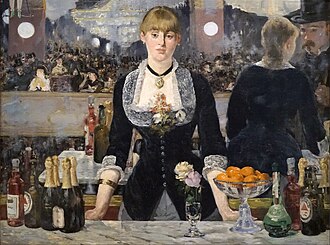 Un bar ai Folies-Bergère - Édouard Manet (1882)
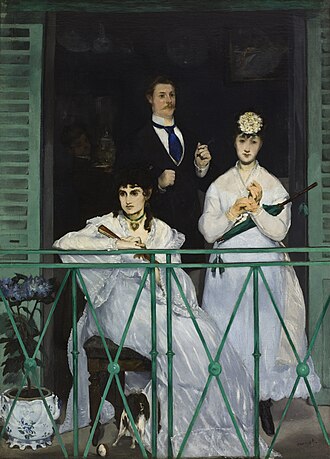 Il balcone - Édouard Manet (1868)
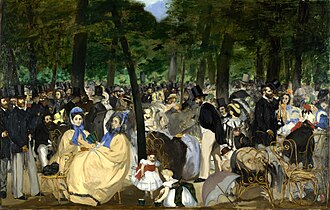 Music in the Tuileries - Édouard Manet (1862)
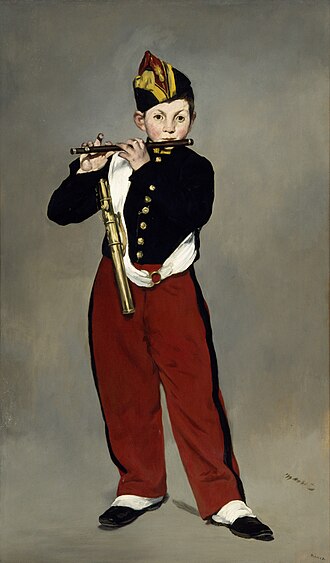 The Fif - Édouard Manet (1866)
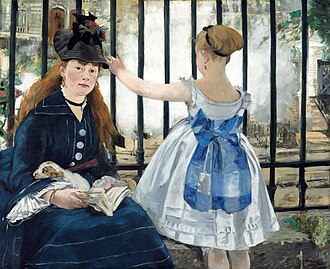 The Railway - Édouard Manet (1873)
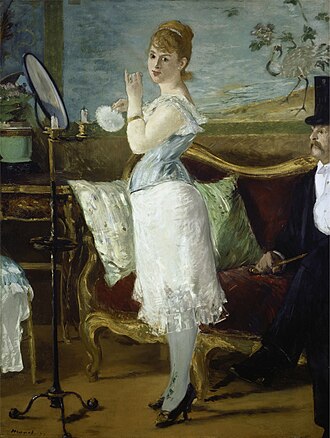 Nana - Édouard Manet (1877)
Dipinti di artisti collegati
 Impression, Sunrise - Claude Monet (1872)
 Water Lilies - Claude Monet (1906)
 Dance at Le Moulin de la Galette - Pierre-Auguste Renoir (1876)
 Luncheon of the Boating Party - Pierre-Auguste Renoir (1881)
 The Cradle - Berthe Morisot (1872)
 Summer's Day - Berthe Morisot (1879)
 L'Absinthe - Edgar Degas (1875)
 The Bellelli Family - Edgar Degas (1858)
 The Canal du Loing at Moret - Alfred Sisley (1892)
 The Watering Pond at Marly with Hoarfrost - Alfred Sisley (1876)
 Paris Street; Rainy Day - Gustave Caillebotte (1877)
 Les raboteurs de parquet - Gustave Caillebotte (1875)