Portrait of a Young Fürleger with Loose Hair
Albrecht Dürer · 1497
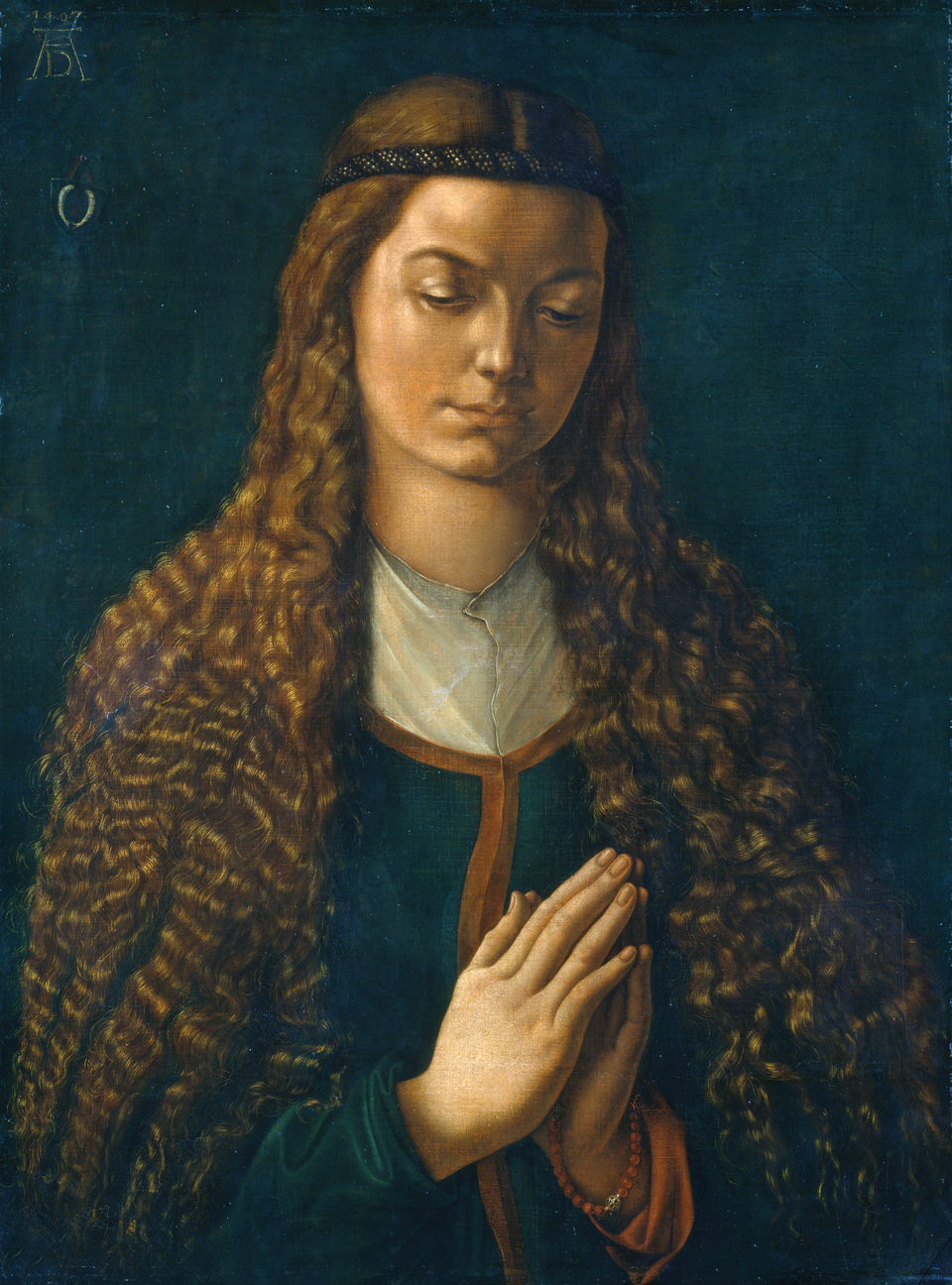
A young woman bows her eyes in prayer, rosary in her hands, her loose curls catching the light. Dürer painted her and her sister in the same year, as their lives were about to part.
The story behind the painting
After portraying Frederick the Wise in 1496, Albrecht Dürer became a sought-after painter among the Nuremberg elite. In 1497 he was commissioned to paint two portraits of the Fürleger sisters, of similar size. This oil on panel, 56 by 43 cm and signed with his well-known monogram, is one of them; it hangs in the Städel Museum in Frankfurt. Its companion, the Fürleger with braided hair, is in the Gemäldegalerie in Berlin. Because their backgrounds differ, the two were probably not made as a single diptych.
What to look for
She appears against a plain green background, gathered in prayer, holding a rosary, her gaze humbly lowered. The great wonder of the panel is her hair: long, loose curls whose shining highlights Dürer captured with a detailed realism the source compares to the best Flemish painters. Look also for the small coat of arms. On one of the sisters' portraits a little cross sits between two heraldic fish, marking a young woman bound for a religious order; on the other a lily takes its place, marking a woman of a burgher family.
Meaning and intent
Both sisters were painted close to a turning point. One was about to enter a convent as a novice, the other about to become a wife. Dürer showed these two destinies not only through posture but through contrasting colour, and through the emblems in their coats of arms. Here the lowered eyes, the rosary and the quiet green make a picture of inward devotion. Her loose hair falls freely, while her sister's is bound in thick braids, as if the paintings were a conversation between two different futures.
Legacy
Painted in 1497, the portrait belongs to the years when Dürer's reputation in Nuremberg was rising quickly after his work for Frederick the Wise. The two sister portraits are now divided between Frankfurt and Berlin, so the dialogue Dürer set up between them can only be followed across two museums. The source praises the rendering of the curls as extraordinary, and it is that hair, glowing against the green, that people still come to see in the Städel today.
Lo sapevi?
- Oil on panel, 56 by 43 cm, 1497.
- Signed with Dürer's monogram.
- Companion to the braided-hair portrait of her sister in Berlin.
- Held by the Städel Museum, Frankfurt.
L'artista
Albrecht Dürer (1471-1528)
woman · portrait · High Renaissance · German Renaissance · brown hair · Städel Museum · prayer · headband
Altre opere di Albrecht Dürer
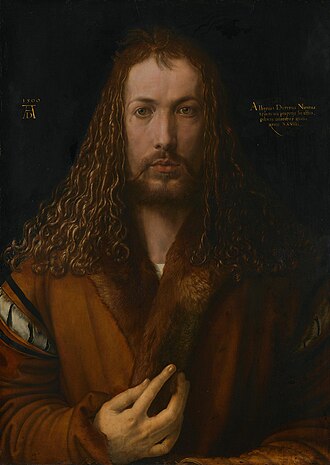 Self-Portrait with Fur-Trimmed Robe - Albrecht Dürer (1500)
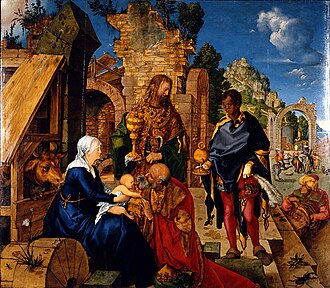 Adoration of the Magi - Albrecht Dürer (1504)
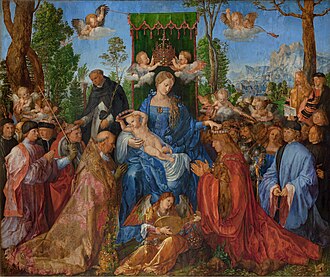 Feast of the Rosary - Albrecht Dürer (1506)
 Self-Portrait - Albrecht Dürer (1498)
 Portrait of the Artist Holding a Thistle - Albrecht Dürer (1493)
 Heller Altarpiece - Albrecht Dürer (1500s)
 Martyrdom of the Ten Thousand - Albrecht Dürer (1508)
 Adoration of the Trinity - Albrecht Dürer (1511)
Dipinti di artisti collegati
 The fountain of youth - Lucas Cranach the Elder (1546)
 Cupid Complaining to Venus - Lucas Cranach the Elder (1520s)