Philip IV as a Huntsman
Diego Velázquez · 1630s
.jpg)
The king of Spain stands under an oak in hunting clothes, gun in hand, a dog at his feet and a cap on his head. Velázquez worked on this picture and a twin version side by side, and the changes he made reveal how he thought.
The story behind the painting
Philip IV of Spain commissioned Velázquez to paint a series of hunting pictures for his new hunting lodge, the Torre de la Parada, on the Monte del Pardo near Madrid. The lodge, open only to the court, soon became one of the most important picture galleries, holding a long series of canvases by Rubens on Ovid's Metamorphoses. For it Velázquez painted three hunters: the king, the Cardinal-Infante Ferdinand and the young Prince Baltasar Carlos. The French Wikipedia article dates this portrait to 1634 to 1636, while Wikidata gives the 1630s. It has been in the Prado since 1828.
What to look for
The king wears a brown tabard with a flannel collar, dark breeches and stockings. In his right hand he holds a gun, a dog sits at his feet, and he wears a cap. The main element of the landscape is an oak that keeps him company. Behind lies the forest of El Pardo and, far away, the bluish mountains near Madrid, under a grey, cloudy sky typical of an autumn afternoon. The three hunting portraits share a narrow format, a three-quarter view of the sitter, a gun in hand, hunting dress and, essentially, the cap on the head.
Meaning and intent
Studies by the Prado and the Louvre showed that Velázquez worked on this canvas and a second version at the same time, changing one and then the other. The pentimenti, the visible corrections, reveal the process. In the first version the king held his cap in his hand. Velázquez then put the cap on his head for the royal commission and did the same in the other two hunting portraits, to harmonise the set. The source adds that the cap further accentuates the unflattering features of the king's face, attributed to the strong inbreeding in his family. The painting is less a heroic image than an honest one.
Legacy
The other version, with the cap in the king's hand, was acquired by the Louvre in 1862 from the critic and dealer Otto Mündler. For a long time it was considered a workshop piece, which is why René Huyghe sent it in 1949 to the Goya museum in Castres. Jean-Louis Augé and Guillaume Kientz, head of Spanish painting at the Louvre, later re-evaluated it as autograph. Besides the pentimenti, Kientz pointed to the quality of certain details and to what he called the painter's signature gesture: vertical brush marks near the top of the canvas, where Velázquez wiped his brush.
Lo sapevi?
- Painted for the Torre de la Parada hunting lodge.
- Dated 1634 to 1636 by French Wikipedia, the 1630s by Wikidata.
- Painted alongside a second version now in Castres.
- In the Prado since 1828.
L'artista
Diego Velázquez (1599-1660)
portrait · Museo del Prado · Philip IV of Spain · shotgun · hunting
Altre opere di Diego Velázquez
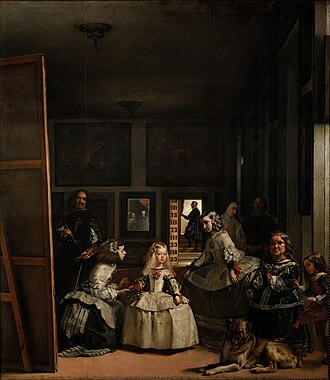 Las Meninas - Diego Velázquez (1656)
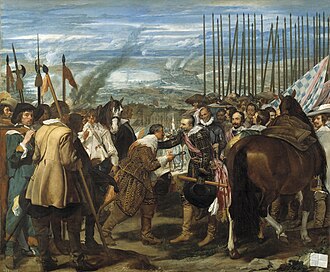 The Surrender of Brea - Diego Velázquez (1635)
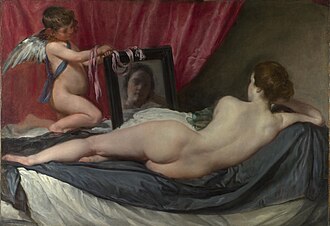 Rokeby Venus - Diego Velázquez (1644)
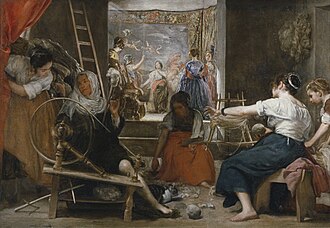 Las Hilanderas - Diego Velázquez
.jpg) Portrait of Innocent X - Diego Velázquez
Portrait of Innocent X - Diego Velázquez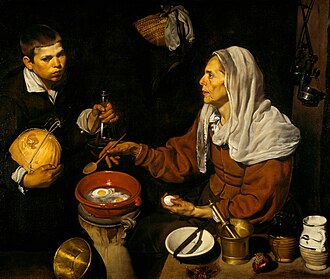 Old Woman Cooking Eggs - Diego Velázquez (1618)
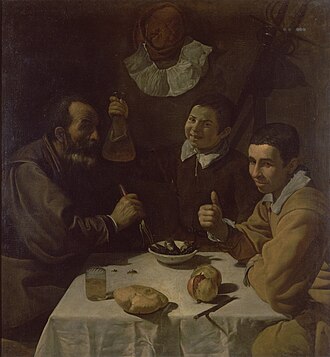 Il pranzo - Diego Velázquez (1617)
.jpg) Il trionfo di Bacco - Diego Velázquez (1628)
Il trionfo di Bacco - Diego Velázquez (1628)
Dipinti di artisti collegati
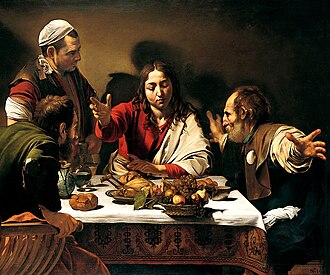 Supper at Emmaus - Caravaggio (1601)
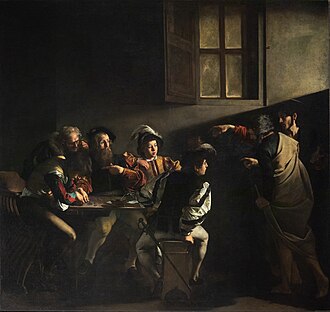 La vocazione di San Matteo - Caravaggio (1609)
.jpg) The Elevation of the Cross - Peter Paul Rubens (1609)
The Elevation of the Cross - Peter Paul Rubens (1609)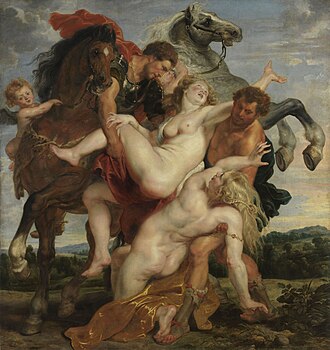 The Rape of the Daughters of Leucippus - Peter Paul Rubens (1618)
%20-%20Google%20Art%20Project.jpg) Charles I in Three Positions - Anthony van Dyck (1635)
Charles I in Three Positions - Anthony van Dyck (1635)%20with%20M.%20de%20St%20Antoine%20-%20Google%20Art%20Project.jpg) Charles I (1600-1649) with M. de St Antoine - Anthony van Dyck (1636)
Charles I (1600-1649) with M. de St Antoine - Anthony van Dyck (1636) The Night Watch - Rembrandt van Rijn (1642)
 Self-Portrait - Rembrandt van Rijn (1659)
 Girl with a Pearl Earring - Johannes Vermeer (1665)
 The Milkmaid - Johannes Vermeer (c. 1658)