Méry Laurent in a Black Hat
Édouard Manet · 1882
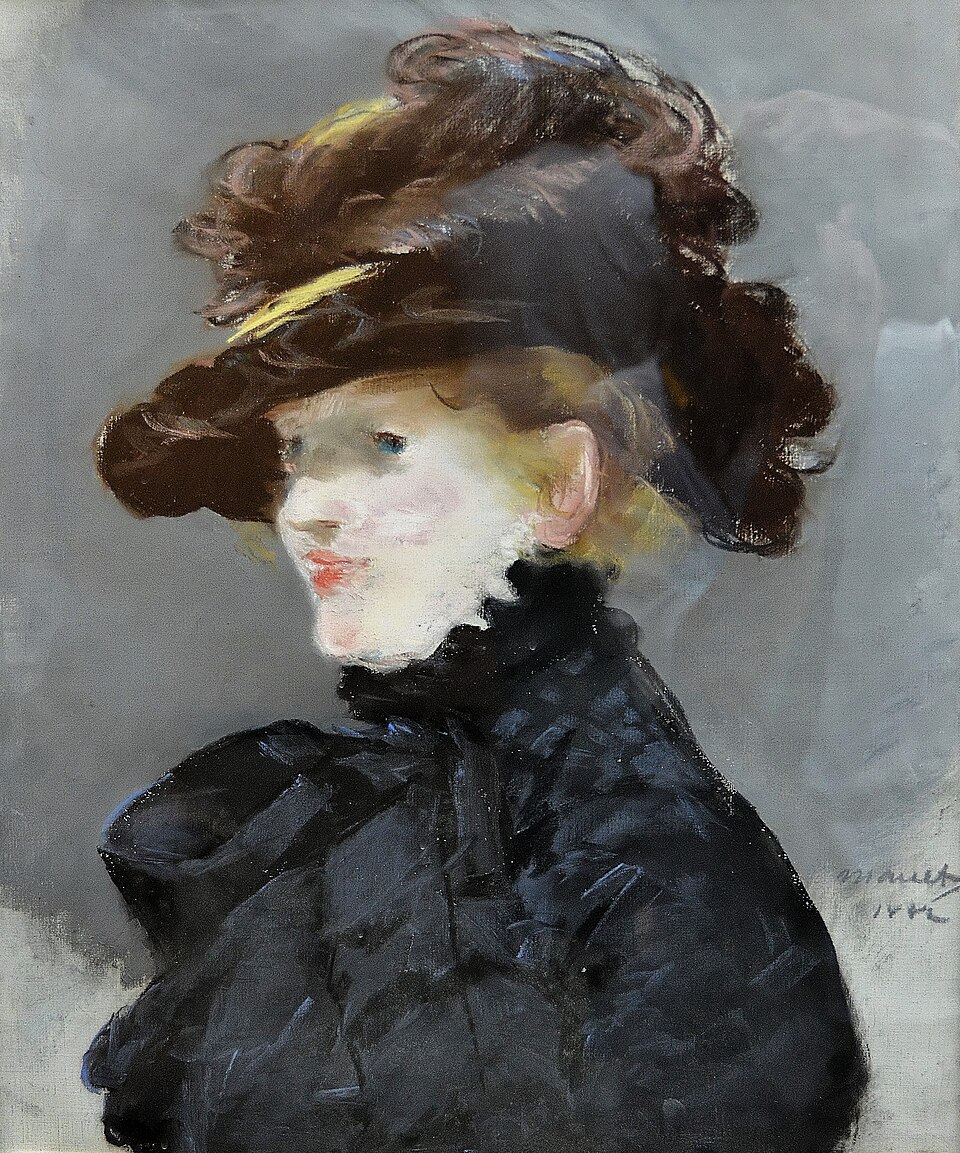
A pale face under a huge black velvet hat, a flash of vermilion lips and turquoise eyes. Manet made this pastel of his friend Mery Laurent in 1882, only months before he died.
The story behind the painting
Mery Laurent, born Anne-Rose Louviot in Nancy, was a well-known courtesan of her day. Her admirers included Dr Thomas Evans, once dentist to the family of Napoleon III, and writers such as Stephane Mallarme. Manet first met her in 1876, when she visited an exhibition of his work in his studio. Tender letters from Manet to her survive, but an intimate relationship between them is not proven. In his last years she became one of his favourite models. The German Wikipedia article gives the size as 56 by 47 cm, while Wikidata records 54 by 44 cm.
What to look for
She is shown half-length, her body turned toward the left edge. Her dress or coat shimmers like silk between dark blue and black, with a large bow of the same material and a ruffled collar up to the chin. Manet drew her white-powdered face with a thin layer of chalk, touching only cheek and chin with pink, then set off the lips in strong vermilion and the eyes in bright turquoise. Golden-blond hair half hides her ear beneath a wide velvet brim crowned with yellow, blue and pink feathers. Near the shoulder he signed and dated it Manet 1882.
Meaning and intent
Manet portrayed Mery Laurent many times, in the oil Autumn, where she wears very similar clothes, and in a series of pastels, with a little dog, a veil, an otter fur or a flowered hat. In all of them her elaborate wardrobe matters. He enjoyed showing the most elegant women of Paris. The art historian Francoise Cachin noted that, unlike Degas, Manet's pastel portraits make no attempt at psychological reading: he painted his women visitors like flowers, attentive to their elegance and refinement, Parisiennes above all.
Legacy
The picture was shown in 1884, at the memorial exhibition held after Manet's death, simply titled Portrait, lent by Albert Robin, a doctor who was a friend of both Manet and Mery Laurent. Robin bequeathed it with other works to the Musee des Beaux-Arts in his home town of Dijon, where it has been on view since 1930. It was exhibited in Paris in 1932 for Manet's hundredth birthday, but because of its fragile condition it is no longer lent.
Lo sapevi?
- A pastel on canvas made in 1882, months before Manet's death.
- Mery Laurent was one of Manet's favourite late models.
- Bequeathed by Dr Albert Robin to the Dijon museum, on view since 1930.
- Too fragile to be lent today.
L'artista
Édouard Manet (1832-1883)
Altre opere di Édouard Manet
 Luncheon on the Grass - Édouard Manet (1863)
 Olympia - Édouard Manet (1863)
 Un bar ai Folies-Bergère - Édouard Manet (1882)
 Il balcone - Édouard Manet (1868)
 Music in the Tuileries - Édouard Manet (1862)
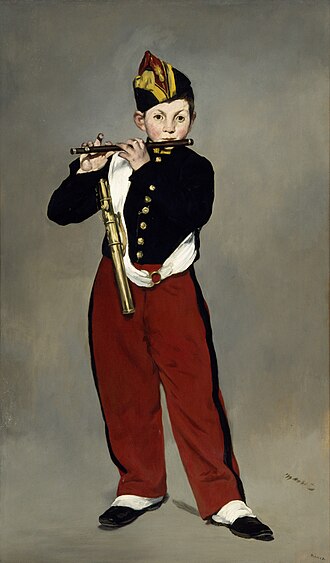 The Fif - Édouard Manet (1866)
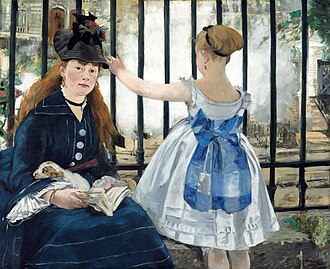 The Railway - Édouard Manet (1873)
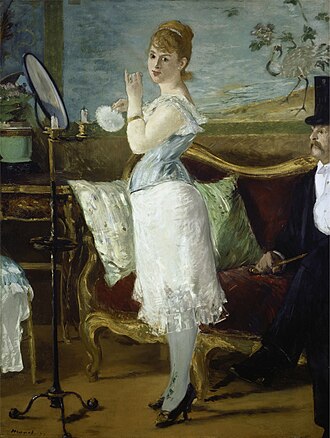 Nana - Édouard Manet (1877)
Dipinti di artisti collegati
 Impression, Sunrise - Claude Monet (1872)
 Water Lilies - Claude Monet (1906)
 Dance at Le Moulin de la Galette - Pierre-Auguste Renoir (1876)
 Luncheon of the Boating Party - Pierre-Auguste Renoir (1881)
 The Cradle - Berthe Morisot (1872)
 Summer's Day - Berthe Morisot (1879)
 L'Absinthe - Edgar Degas (1875)
 The Bellelli Family - Edgar Degas (1858)
 The Canal du Loing at Moret - Alfred Sisley (1892)
 The Watering Pond at Marly with Hoarfrost - Alfred Sisley (1876)
 Paris Street; Rainy Day - Gustave Caillebotte (1877)
 Les raboteurs de parquet - Gustave Caillebotte (1875)