Madame du Paty
Édouard Manet · 1880
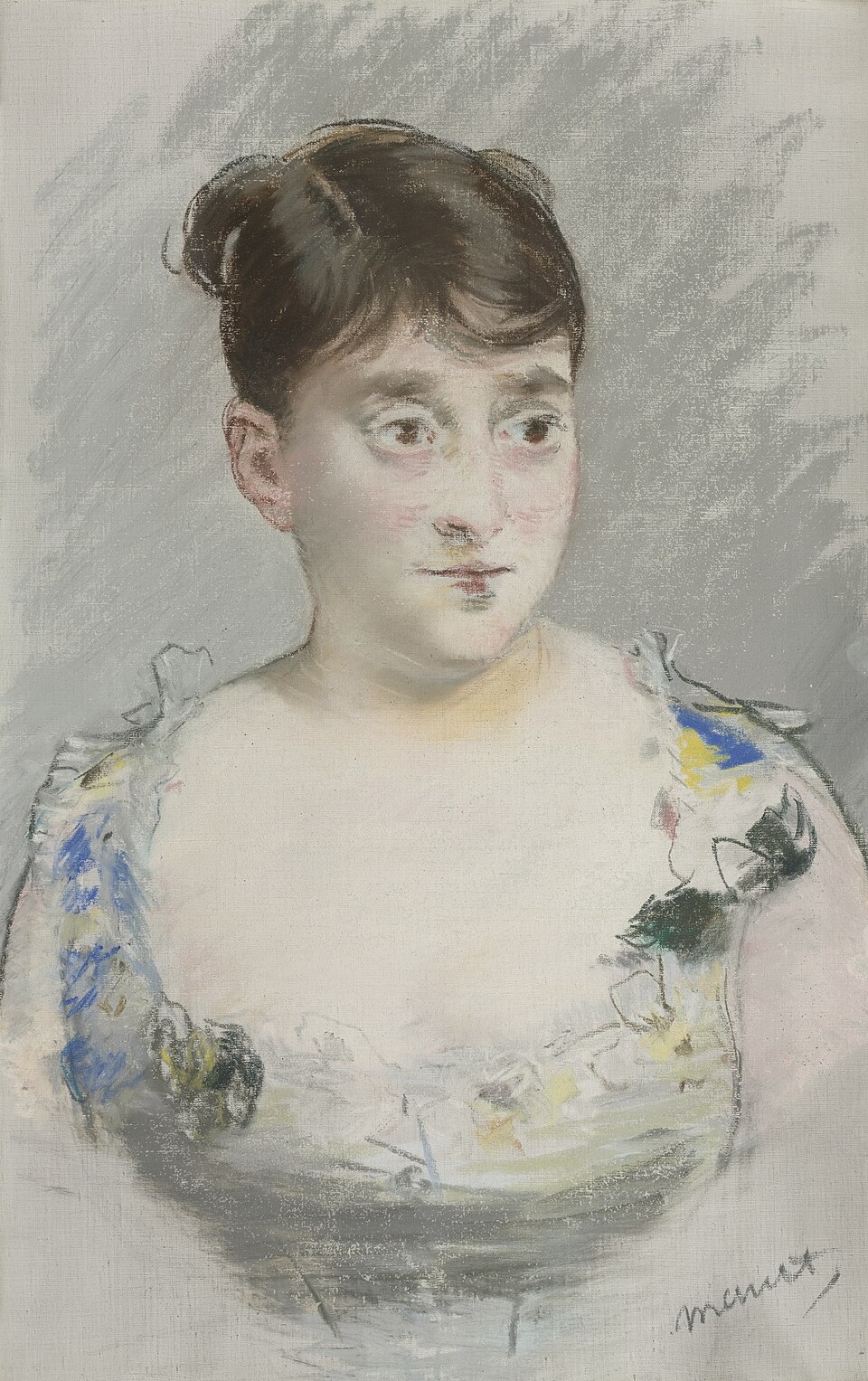
A young woman glances over her shoulder, sketched in pastel in a single sitting. Manet, ill and struggling to stand at the easel, made this quick, bright portrait of a friend's wife in 1880.
The story behind the painting
Madame Du Paty and her husband, the painter Léon Du Paty, belonged to the circle of friends of the Manet family. Léon Du Paty showed history paintings with success at the Paris Salon, but he and Manet had little in common artistically. Perhaps Manet invited him to his studio at 77 Rue d'Amsterdam to see his latest works, and perhaps Madame Du Paty came along, and the portrait was made on such a visit. Manet valued how fast pastel allowed him to work, and this portrait was surely made in one sitting on a single day. It is a pastel on canvas, 54 cm high and 34 cm wide.
What to look for
The portrait shows her down to the shoulders, body facing us and head turned toward her left shoulder, her eyes fixed on a point beyond the right edge. She wears a sleeveless grey-brown dress, sketchily drawn, with a yellow tone glowing through at the chest, a large square neckline, blue and yellow straps edged with ruffles and brown ornaments that may be flowers. Her skin shifts between white, pink and greys. Her brown eyes are wide open, her mouth small and closed, and perhaps a shy smile is suggested. The background is grey hatching that only partly covers the canvas, left bare in the corners. It is signed Manet but not dated.
Meaning and intent
Manet's last years were marked by illness. Paralysis in his leg caused pain, especially when standing, and working at the easel became hard. From about 1878 until his death in 1883 he turned more and more to pastel, less demanding than oil. Almost all his known pastels date from those five years, and many show young women, all friends and acquaintances. This one closely resembles his Portrait of Mme Zola, also the wife of a friend: the same bust-shaped dress, the glance over the shoulder to the edge, a similar hairstyle and background. Seen this way, the light, quick touch is also the sign of a painter adapting to his body.
Legacy
In April 1880 the publisher Georges Charpentier showed this portrait, with those of Madame Zola and Mademoiselle Isabelle Lemonnier, in a Manet exhibition at the offices of the magazine La Vie moderne. The critic Gustave Goetschy praised the three pastels as marvels of finesse and grace. When the picture was seen in Germany in 1910, the art historian Emil Waldmann praised the dazzling creature and called the portrayal lively. Manet's other late portraits of women include Marie Colombier, from the same year, and Madame Michel-Lévy of 1882, which share the neckline and hairstyle. The portrait of Madame Du Paty is now in a private collection.
Lo sapevi?
- Pastel on canvas by Édouard Manet, 1880, 54 x 34 cm.
- Shows the wife of the painter Léon Du Paty, friends of the Manet family.
- Shown at La Vie moderne in April 1880.
- In a private collection.
L'artista
Édouard Manet (1832-1883)
Altre opere di Édouard Manet
 Luncheon on the Grass - Édouard Manet (1863)
 Olympia - Édouard Manet (1863)
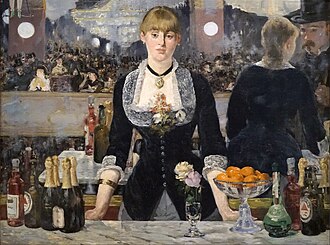 Un bar ai Folies-Bergère - Édouard Manet (1882)
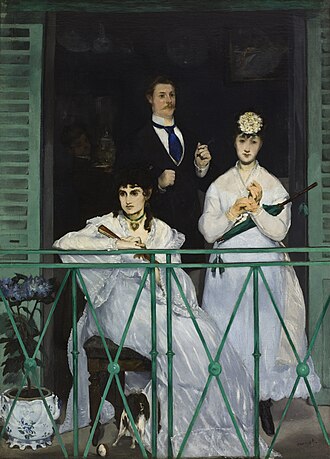 Il balcone - Édouard Manet (1868)
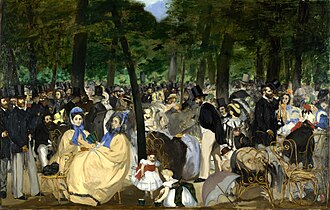 Music in the Tuileries - Édouard Manet (1862)
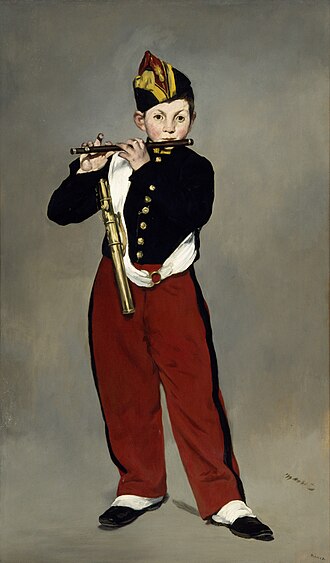 The Fif - Édouard Manet (1866)
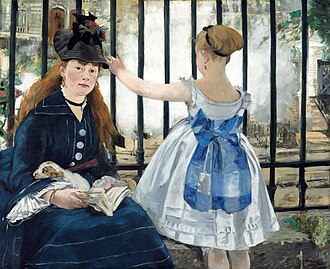 The Railway - Édouard Manet (1873)
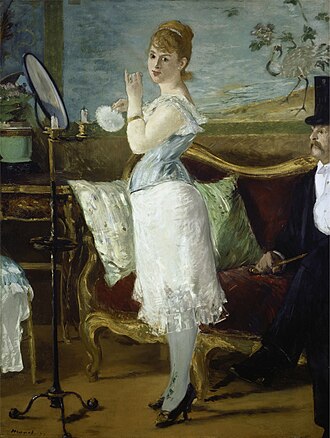 Nana - Édouard Manet (1877)
Dipinti di artisti collegati
 Impression, Sunrise - Claude Monet (1872)
 Water Lilies - Claude Monet (1906)
 Dance at Le Moulin de la Galette - Pierre-Auguste Renoir (1876)
 Luncheon of the Boating Party - Pierre-Auguste Renoir (1881)
 The Cradle - Berthe Morisot (1872)
 Summer's Day - Berthe Morisot (1879)
 L'Absinthe - Edgar Degas (1875)
 The Bellelli Family - Edgar Degas (1858)
 The Canal du Loing at Moret - Alfred Sisley (1892)
 The Watering Pond at Marly with Hoarfrost - Alfred Sisley (1876)
 Paris Street; Rainy Day - Gustave Caillebotte (1877)
 Les raboteurs de parquet - Gustave Caillebotte (1875)