Ligeia Siren
Dante Gabriel Rossetti · 1873
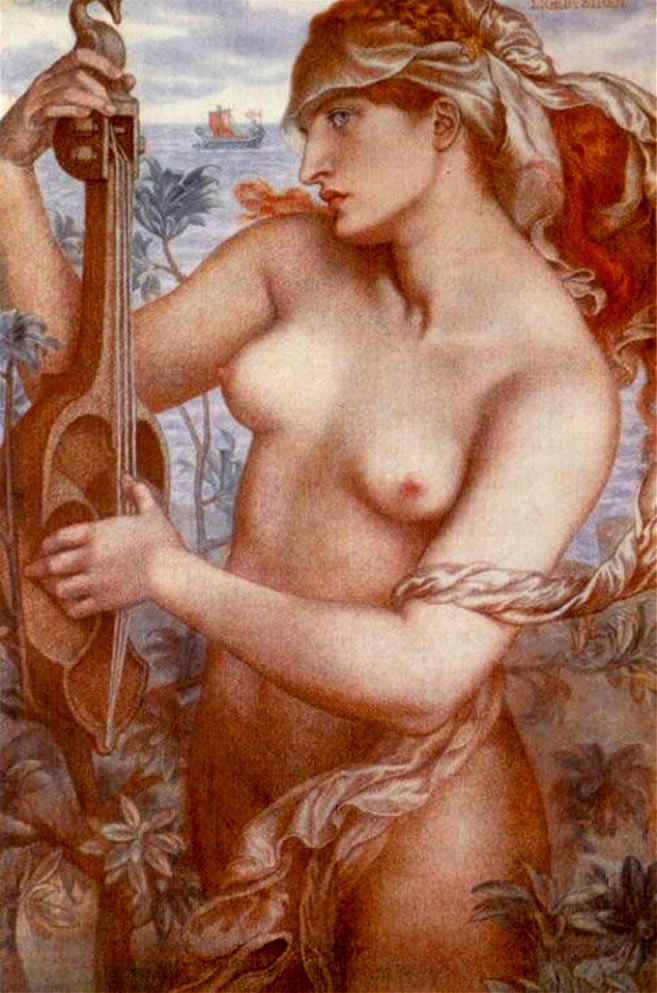
A siren stands among leaves with a strange instrument, staring past her doomed listeners as if they were not there. Rossetti drew her in chalk in 1873 and called her certainly one of his best things.
The story behind the painting
Ligeia Siren is a chalk drawing that Dante Gabriel Rossetti completed in 1873. It grew mainly out of his own libretto of 1869, The Doom of the Sirens, in which Ligeia is one of three siren sisters on a remote island. With her song of love she claims the lives of a king and queen, but their son is rescued by a hermit. The dying queen curses Ligeia to love and die for it, and years later the prince returns to bring about the sirens' doom. The libretto was published only after Rossetti's death, by his brother William.
What to look for
Ligeia stands among vegetation holding an exotic instrument and stares into the distance. The bird on the headstock of the instrument identifies her as a siren of antiquity, since sirens were often shown with wings or as birds inhabited by the souls of the dead. The body is that of an unknown woman, but the face belongs to the model Alexa Wilding, whom Rossetti drew and painted often in these years, for La Ghirlandata and Veronica Veronese among others. In the background are her intended victims. Rossetti wrote that, though only in chalk, it was quite an elaborate picture.
Meaning and intent
Rossetti does not show the usual moment of attack, as Waterhouse and Draper later did. He chooses a timeless moment in which Ligeia appears calm and indifferent to her victims, unlike the siren of his libretto. The libretto and drawing explore themes close to him: the clash between a pagan mythical being and a Christian prince, and above all the survival of love when death is near or has already come. Wikipedia also places the work within his lifelong fascination with the femme fatale and with the female figure.
Legacy
Rossetti had stopped exhibiting in public after harsh criticism of his Ecce Ancilla Domini! and sold mostly to friends and patrons, so his works were rarely seen together in his lifetime. Ligeia Siren was meant to go to the collector William Graham with La Ghirlandata, but Graham passed it over because of the nudity. It sold in August 1873 to Charles Howell, then passed between several owners as payment of debts, and vanished from sight after 1880. It resurfaced only in 1973, when Christie's sold it to a private collector. Wikidata gives its size as 78.7 by 47 cm.
Lo sapevi?
- Chalk drawing completed in 1873.
- Based on Rossetti's 1869 libretto The Doom of the Sirens.
- The face is that of the model Alexa Wilding.
- Lost from view after 1880, it resurfaced in 1973.
L'artista
Dante Gabriel Rossetti (1828-1882)
Altre opere di Dante Gabriel Rossetti
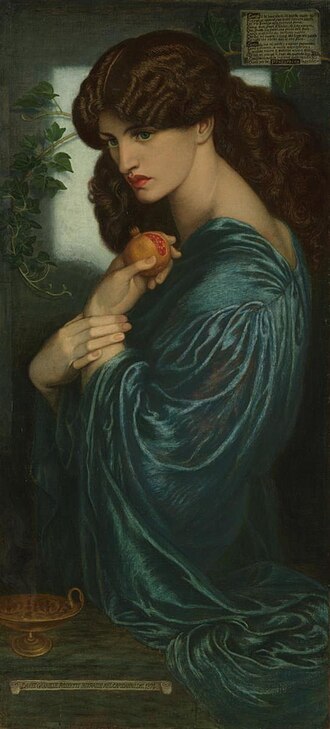 Proserpine - Dante Gabriel Rossetti (1874)
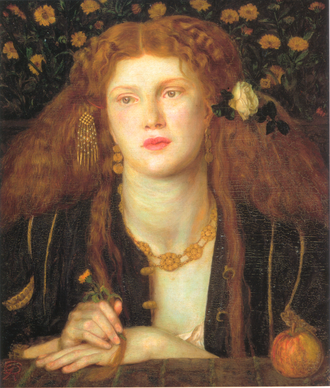 Bocca Baciata - Dante Gabriel Rossetti (1859)
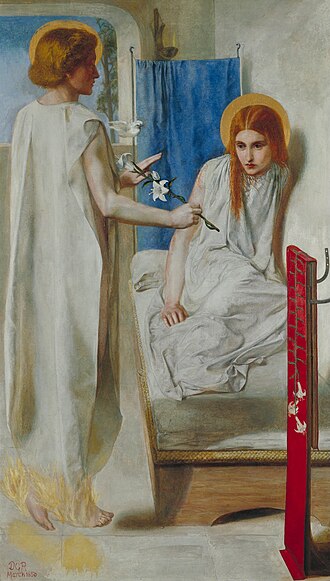 Ecce Ancilla Domini - Dante Gabriel Rossetti (1850)
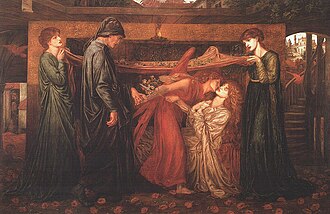 Dante's Dream - Dante Gabriel Rossetti (1871)
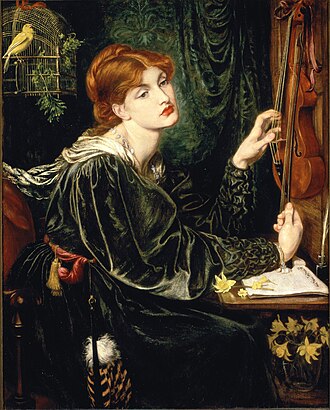 Veronica Veronese - Dante Gabriel Rossetti (1872)
 Monna Rosa - Dante Gabriel Rossetti (1867)
 The Girlhood of Mary Virgin - Dante Gabriel Rossetti (1840s)
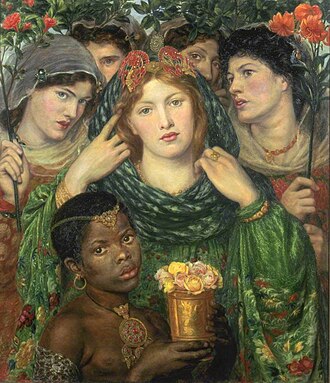 The Beloved - Dante Gabriel Rossetti (1865)
Dipinti di artisti collegati
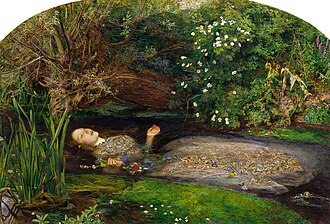 Ophelia - John Everett Millais (1851)
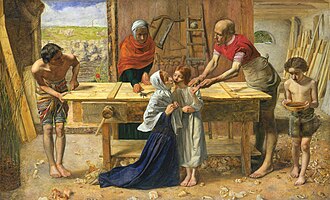 Christ in the House of His Parents - John Everett Millais (1849)
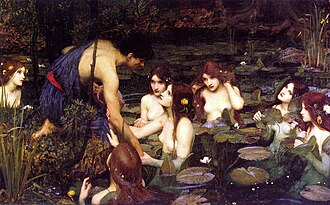 Hylas and the Nymphs - John William Waterhouse (1896)
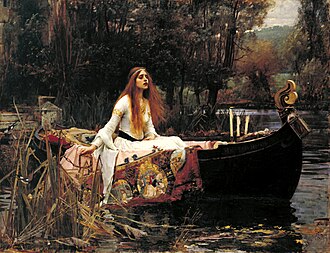 The Lady of Shalott - John William Waterhouse (1888)