Christ Crucified
Diego Velázquez · 1632
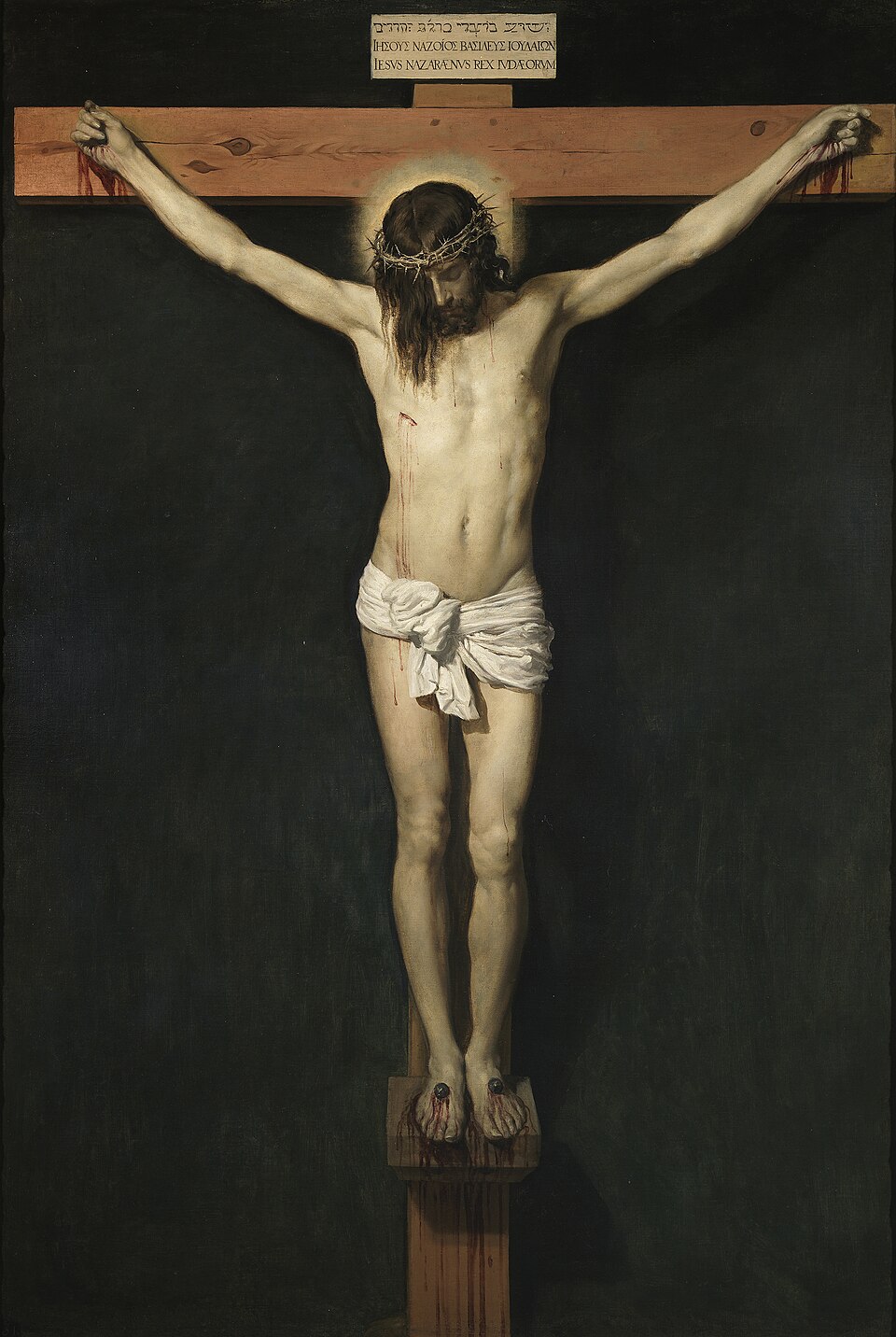
No crowd, no landscape, no grieving figures: only Christ on the cross, glowing against a dark green-gray ground. Velázquez made silence itself the subject.
The story behind the painting
Christ Crucified, also known as the Christ of Saint Placid, was painted by Diego Velázquez in 1632 for the Benedictine nuns of the Convent of San Plácido in Madrid. It is thought to have been donated by the convent's founder, Jerónimo de Villanueva, one of King Philip IV's secretaries. Velázquez had recently returned from his first visit to Rome, between 1629 and 1631, where he studied the great Italian masters, and their lessons on the nude figure can be felt here. As official court painter he had no need to chase commissions, so his religious works are few. Yet in those few, he showed a great ability to convey intense religious feeling.
What to look for
The composition is very simple: Christ alone on the cross against a dark green background, the canvas about 248 by 169 cm. His arms draw a subtle curve, his slender body barely shows its wounds, and a small white loincloth covers him. A narrow halo seems to come from the figure itself. His head rests on his chest, and long straight hair covers much of the face. Light from the left makes the body seem to come forward toward you, casting a shadow on the greenish-gray ground. Look closely at the hair over the shoulders: Velázquez scratched the still-damp paint with the tip of his brush to create its special texture.
Meaning and intent
Velázquez followed the iconography used by his master Francisco Pacheco: four nails, with the feet side by side, each pierced, rather than one foot over the other as in many other traditions. Pacheco's insistence on four nails stirred real controversy in its day. The calm posture and idealized face reflect classicist painting, while the strong chiaroscuro shows the influence of Caravaggism. The body, supported on its two feet, seems more reposed than dead. Scholars also link the painting's spare drama to the Council of Trent, which wanted religious art to educate the faithful and inspire devotion. Pacheco served as overseer of religious painting for the Inquisition in Seville.
Legacy
Wikipedia calls this the most famous religious painting in Spain. Its spirituality and mystery have inspired much religious writing, above all the long poem El Cristo de Velázquez by the Spanish poet and philosopher Miguel de Unamuno. Its reach has crossed the ocean too: in St. Louis, Missouri, the Basilica of St. Louis, King of France, displays a replica above its altar, commissioned by Cardinal Joseph Ritter in 1959 and painted by Charles F. Quest at three times the size of the original. The painting itself now hangs in the Museo del Prado in Madrid, where its quiet, solitary figure still holds visitors in stillness.
Lo sapevi?
- Painted in 1632 for the Convent of San Plácido, Madrid.
- Follows Pacheco's four-nail iconography.
- Inspired Miguel de Unamuno's poem El Cristo de Velázquez.
- Now in the Museo del Prado.
L'artista
Diego Velázquez (1599-1660)
religious art · man · Museo del Prado · Jesus Christ
Altre opere di Diego Velázquez
 Las Meninas - Diego Velázquez (1656)
 The Surrender of Brea - Diego Velázquez (1635)
 Rokeby Venus - Diego Velázquez (1644)
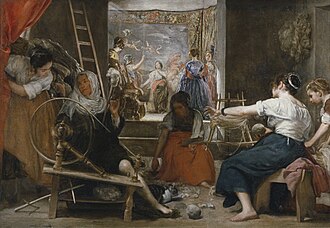 Las Hilanderas - Diego Velázquez
.jpg) Portrait of Innocent X - Diego Velázquez
Portrait of Innocent X - Diego Velázquez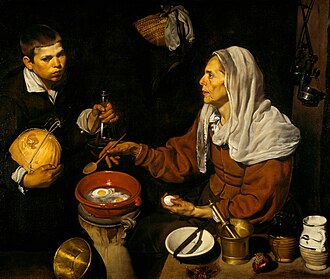 Old Woman Cooking Eggs - Diego Velázquez (1618)
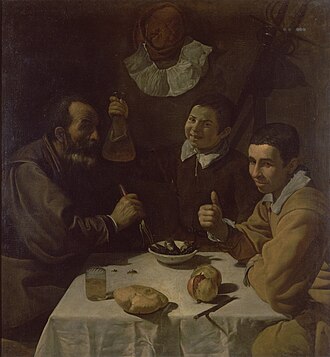 Il pranzo - Diego Velázquez (1617)
.jpg) Il trionfo di Bacco - Diego Velázquez (1628)
Il trionfo di Bacco - Diego Velázquez (1628)
Dipinti di artisti collegati
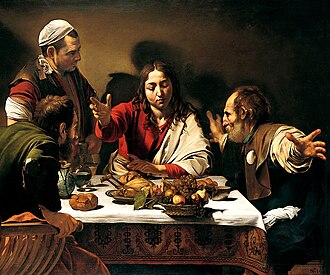 Supper at Emmaus - Caravaggio (1601)
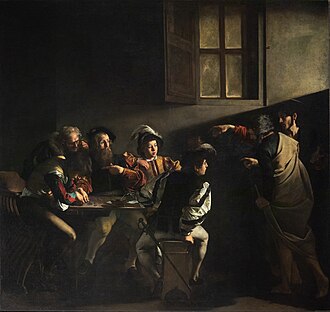 La vocazione di San Matteo - Caravaggio (1609)
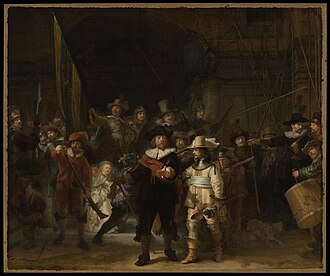 The Night Watch - Rembrandt van Rijn (1642)
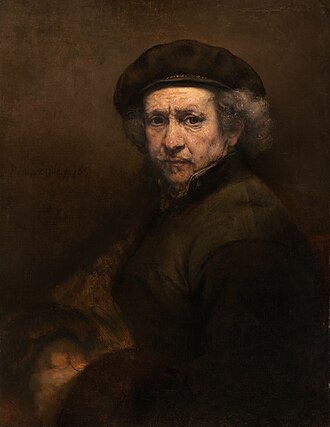 Self-Portrait - Rembrandt van Rijn (1659)
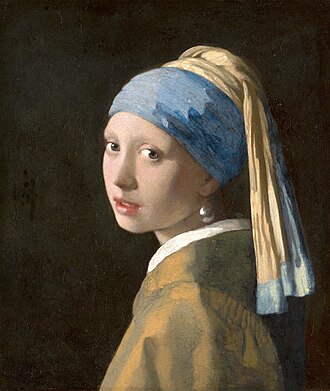 Girl with a Pearl Earring - Johannes Vermeer (1665)
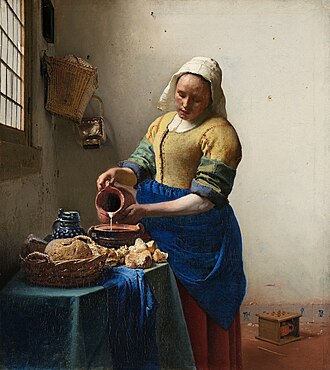 The Milkmaid - Johannes Vermeer (c. 1658)