Yvonne et Christine Lerolle au piano
Pierre-Auguste Renoir · 1897
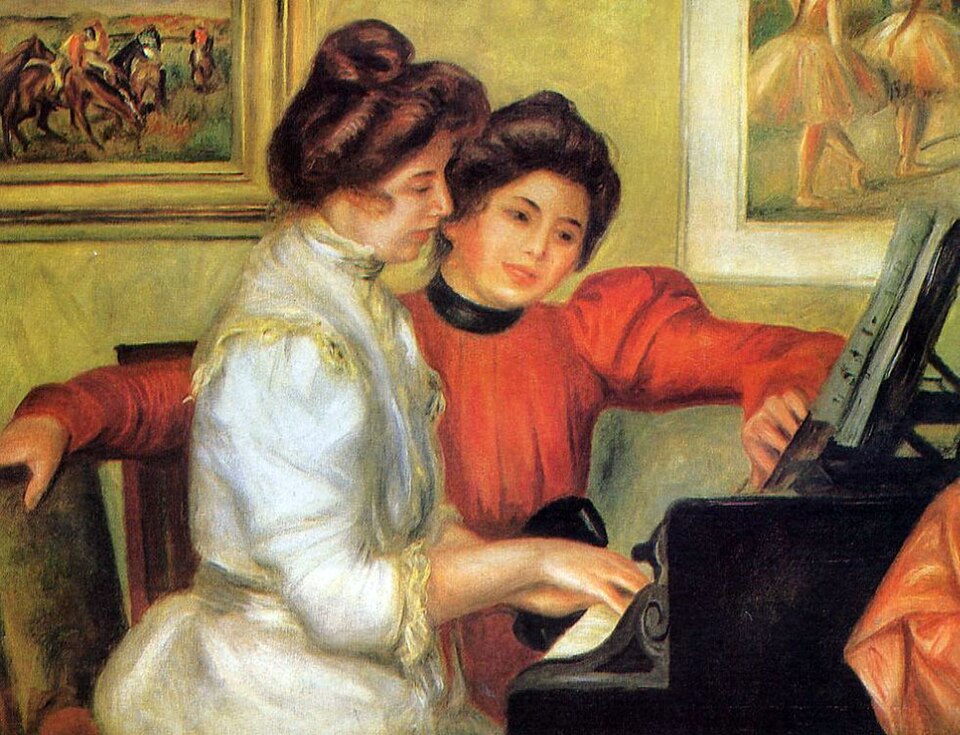
One sister in white tries to play a piece at the piano, the other leans in to follow the score. Behind them on the wall hang two Degas pictures. Renoir painted the Lerolle girls at home in 1897.
The story behind the painting
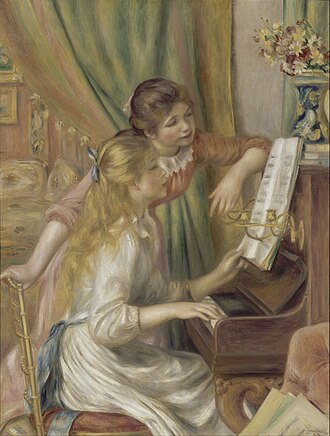
Renoir painted this oil in 1897, in the late period of his career. By then his portraits had made him a favourite painter of the French bourgeoisie. The Lerolle family were great supporters of new artists, above all Edgar Degas. The canvas measures 73 by 92 cm. Wikipedia sets it beside Girls at the Piano of 1892, an earlier picture of young women making music, and reads the two together as a return to a fresher, more colourful manner.
What to look for
Yvonne, dressed in white, works at a piece on the piano while her sister Christine follows the score like an accomplice. Renoir still cares about natural light and colour, but he is especially interested in modelling and drawing the figures, whose contours the atmosphere does not dissolve as Monet's would. Look at the wall: he paints two Degas works precisely, Before the Race and A Group of Dancers. The white dress in the foreground dominates, but without the soft glow of Girls at the Piano, so the overall mood is rather cool.
Meaning and intent
Girls at home, playing, reading or making music, was a cheerful theme much loved by bourgeois collectors. The scene echoes Berthe Morisot's domestic pictures, from a century when the home became a refuge from the frenzy of modern life, and also the quiet Dutch interiors of the 17th century, especially Vermeer. After the severe line of the previous decade, the paint here regains the fresh colour harmonies of Renoir's impressionist years.
Legacy
Wikipedia says this was the first work of Renoir's acquired by the French State, bought by Henry Roujon, who, urged by Stéphane Mallarmé, wanted a collection of living artists at the Luxembourg Palace. Wikipedia also places it at the Musée de l'Orangerie, while Wikidata names the Jean Walter-Paul Guillaume Collection, the collection that the Orangerie shows. For Wikipedia the purchase proves that by the end of the 19th century Renoir had become one of the most famous French artists, a painter whose joyful, slightly romantic scenes had won over the public.
Le saviez-vous ?
- Painted by Renoir in 1897.
- Shows the sisters Yvonne and Christine Lerolle.
- Two Degas paintings appear on the wall.
- Linked by Wikipedia to the Musée de l'Orangerie, Paris.
À propos de l'artiste
Pierre-Auguste Renoir (1841-1919)
robe · chignon · double portrait · pianiste
Autres œuvres de Pierre-Auguste Renoir
 Bal du moulin de la Galette - Pierre-Auguste Renoir (1876)
 Le Déjeuner des canotiers - Pierre-Auguste Renoir (1881)
 La Balançoire - Pierre-Auguste Renoir (1876)
 Les Grandes Baigneuses - Pierre-Auguste Renoir (1884)
 Jeunes Filles au piano - Pierre-Auguste Renoir (1892)
 Les Parapluies - Pierre-Auguste Renoir (1880s)
%20(46499625955).jpg) La Loge - Pierre-Auguste Renoir (1874)
La Loge - Pierre-Auguste Renoir (1874)%20-%201933.455%20-%20Art%20Institute%20of%20Chicago.jpg) Les Deux Sœurs - Pierre-Auguste Renoir (1881)
Les Deux Sœurs - Pierre-Auguste Renoir (1881)
Œuvres d'artistes liés
 Impression, soleil levant - Claude Monet (1872)
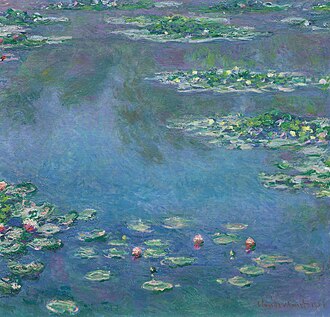 Nymphéas - Claude Monet (1906)
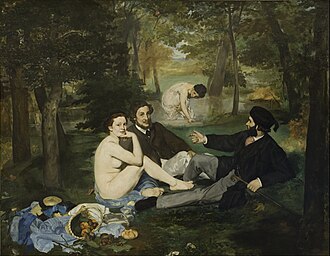 Le Déjeuner sur l'herbe - Édouard Manet (1863)
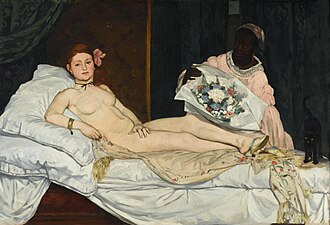 Olympia - Édouard Manet (1863)
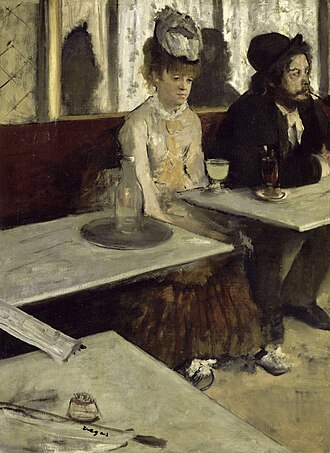 L'Absinthe - Edgar Degas (1875)
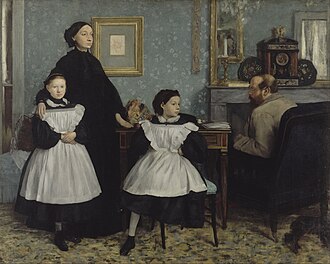 La Famille Bellelli - Edgar Degas (1858)
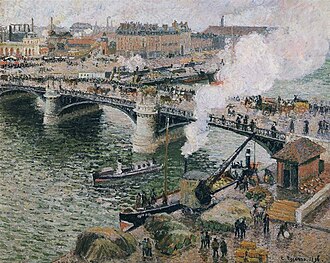 Le Pont Boieldieu à Rouen, temps mouillé - Camille Pissarro (1896)
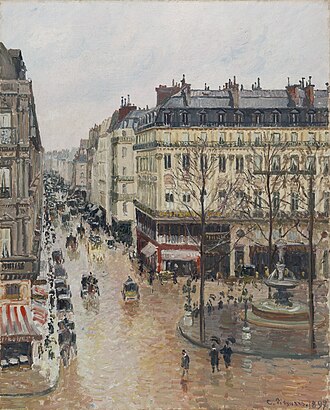 Rue Saint-Honoré, Après-midi, Effet de Pluie - Camille Pissarro (1897)
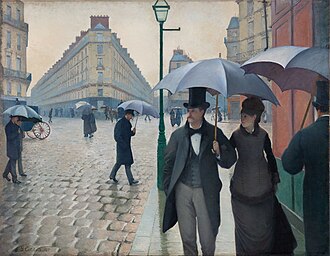 Rue de Paris, temps de pluie - Gustave Caillebotte (1877)
 Les Raboteurs de parquet - Gustave Caillebotte (1875)
 Promenade au bord de la mer - Joaquín Sorolla (1909)
 Triste héritage - Joaquín Sorolla (1898)