Portrait d'un homme jeune
Diego Velázquez · 1620s
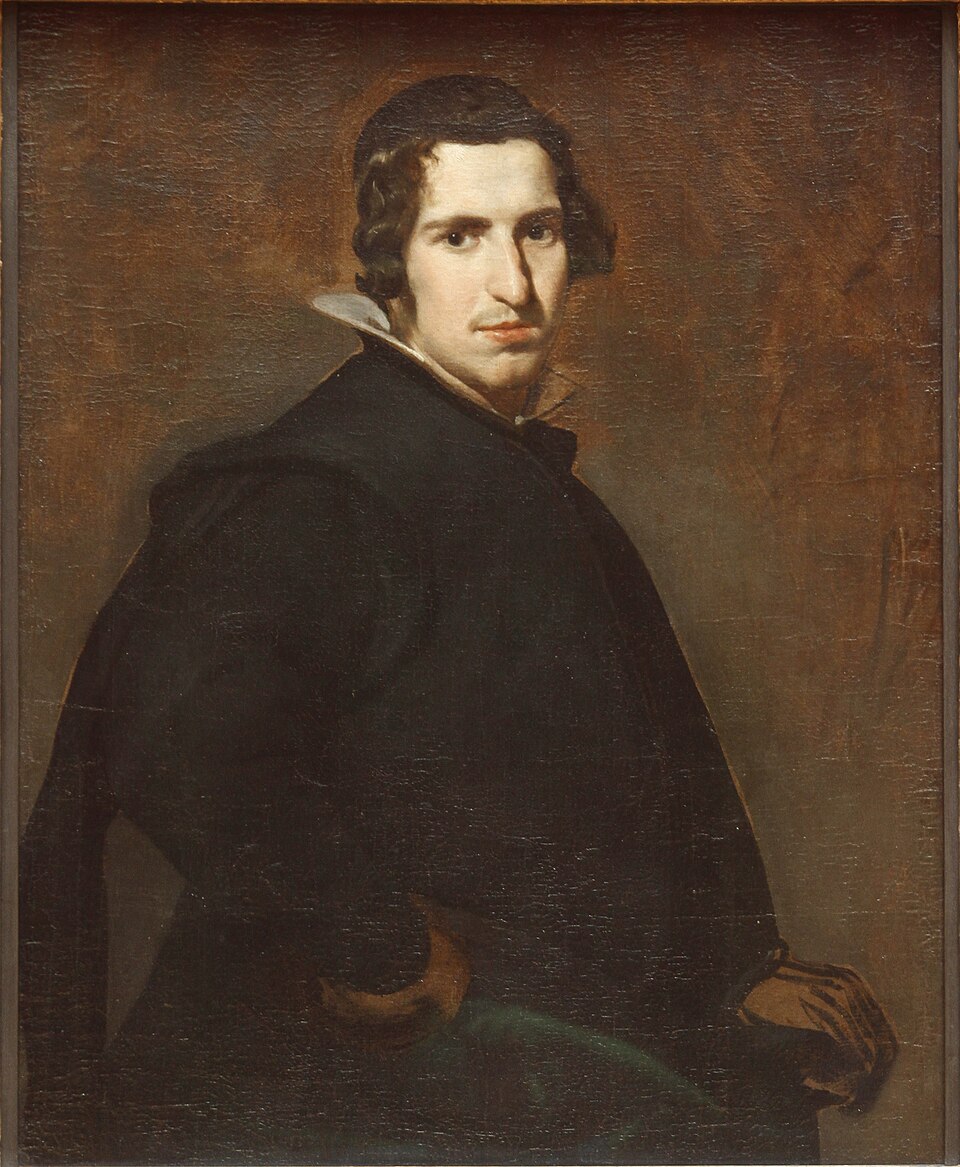
A young man in black looks out calmly, one hand on his hip. His other hand is only a few rough black strokes. Velázquez left this portrait unfinished, and it lets us watch him think with a brush.
The story behind the painting
The date of this portrait is not known. Part of the criticism places it before Velázquez's first trip to Italy, between 1623 and 1629, while José López-Rey sets it in 1630 to 1631 and Fernando Marías in 1626 to 1630. Attempts to identify the sitter, even as a youthful self-portrait, have failed. Jonathan Brown suggests he may be a gentleman, because of the arm on the hip and the sketched hand on a sword, both aristocratic signs. The prince elector Johann Wilhelm bought it in 1694 for his collection in Düsseldorf.
What to look for
The young man wears a black costume with a white collar. His right hand rests on his belt, while the left is only sketched in broad black strokes on the ground layer and seems to rest on a sword's pommel. The head was finished first. Then came touches of light that suggest folds and shape forms while correcting the contours. The background was painted last, leaving a nearly continuous outline where the base layer shows through. Random spots on the right seem to be where Velázquez wiped his brush to test colours. It measures about 89 by 70 cm.
Meaning and intent
Because it is unfinished, the canvas reveals Velázquez's working method, from quick rough drawing to the final light. López-Rey argues it can still be seen as complete by Velázquez's own standards, since he sometimes left parts unfinished on purpose to stress the essence of a picture. For Marías, it may have served to test new ideas of composition and lighting that he later used in official portraits, which by their nature left less room for such experiments. Either way, the sketched hand draws the eye back to the face.
Legacy
From Düsseldorf the portrait moved in 1806 to the Hofgarten gallery in Munich, and since 1836 it has hung in the Alte Pinakothek, part of the Bavarian State Painting Collections. It has appeared in major Velázquez scholarship, from López-Rey's catalogue raisonné to exhibitions at the Prado. For visitors it remains one of the rare chances to see the bare bones of a Velázquez portrait, the moment before polish, with the painter's own brush tests still sitting on the canvas.
Le saviez-vous ?
- Date unknown: estimates run from 1623 to 1631.
- Unfinished; the left hand is only sketched.
- The sitter has never been identified.
- In Munich's Alte Pinakothek since 1836.
À propos de l'artiste
Diego Velázquez (1599-1660)
portrait · homme · Collection de peintures de l'État de Bavière
Autres œuvres de Diego Velázquez
 Les Ménines - Diego Velázquez (1656)
 La Reddition de Bréda - Diego Velázquez (1635)
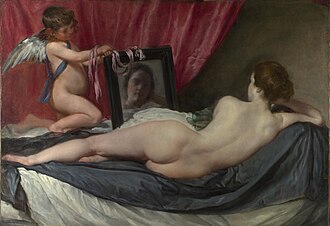 Vénus à son miroir - Diego Velázquez (1644)
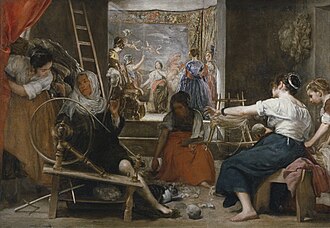 Les Fileuses - Diego Velázquez
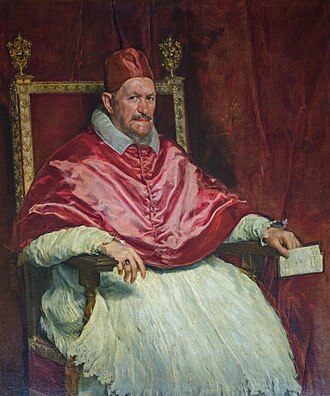 Innocent X - Diego Velázquez
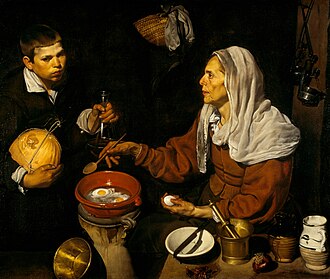 Vieille faisant frire des œufs - Diego Velázquez (1618)
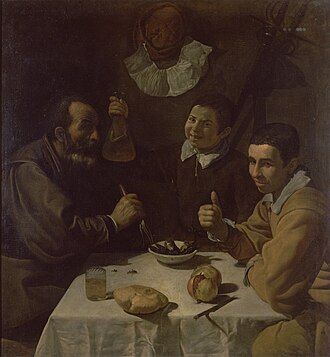 Trois hommes à table, le déjeuner - Diego Velázquez (1617)
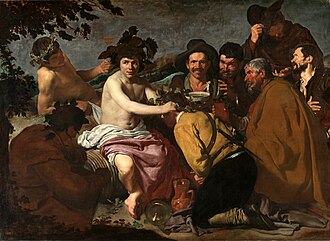 Le Triomphe de Bacchus - Diego Velázquez (1628)
Œuvres d'artistes liés
 Le Souper à Emmaüs - Caravaggio (1601)
 La Vocation de saint Matthieu - Caravaggio (1609)
 Saint Francis in Meditation - Francisco de Zurbarán (1639)
 The Immaculate Conception - Francisco de Zurbarán (1661)
 Triple portrait de Charles Ier - Anthony van Dyck (1635)
 Charles Ier à cheval avec Monsieur de Saint Antoine - Anthony van Dyck (1636)
 L'Érection de la croix - Peter Paul Rubens (1609)
 L'Enlèvement des filles de Leucippe - Peter Paul Rubens (1618)
 La Ronde de nuit - Rembrandt van Rijn (1642)
 Autoportrait - Rembrandt van Rijn (1659)
 Le Joyeux Buveur - Frans Hals (1620s)
 Le Cavalier riant - Frans Hals (1624)