Traite des Blanches
Joaquín Sorolla · 1894
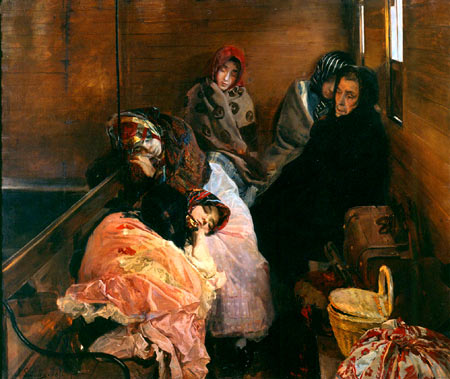
Young women in peasant shawls doze on the hard benches of a train carriage. Only the old woman in black stays awake, watching them. Sorolla painted a quiet scene with a dark subject: girls being taken into prostitution.
The story behind the painting
Joaquin Sorolla painted White Slave Trade, Trata de blancas in Spanish, in 1894 and signed it in 1895. It belongs to a group of pictures made for competitions at a time when social realism was in fashion, and it takes on the theme of prostitution. Wikidata gives the date as 1894, the year it was painted. The canvas measures 166.5 by 195 cm. It is owned by the Sorolla Museum in Madrid and is regularly lent to other museums, among them the Prado.
What to look for
The scene is a railway compartment, recognisable from its benches and the narrow room. A group of young women, dressed as country girls with mantillas and scarves over their heads, seem to have fallen asleep. Only the oldest, dressed in black, stays awake and alert beside them. She watches over the girls, and the source names her role plainly: she is the procuress. Commentators also see the influence of Velazquez in Sorolla's work, alongside his naturalism.
Meaning and intent
The painting sets out to denounce a social wrong. The narrow space, a claustrophobic third-class carriage, stands for imprisonment and for the impossibility of escaping one's fate. The sleeping girls do not know where they are going; the woman in black does. The allusion to prostitution and the sexual exploitation of young women is delicate and veiled, which the French Wikipedia article attributes, without doubt as it says, to the painter's deep piety.
Legacy
The work won a prize at the Paris Salon of 1897, yet it drew heavy criticism. Some Catholics of Sorolla's time judged it harshly, saying the painter was so good that he had stained his fine, brilliant brush with the soot of brothels. For those critics, this canvas and his other works on the theme left an indelible stain on his career. The painting nonetheless travelled: it was lent to a museum in Buenos Aires in 1898, and it still leaves the Sorolla Museum for exhibitions.
Le saviez-vous ?
- Painted in 1894, signed in 1895.
- Rewarded at the Paris Salon of 1897.
- Lent to a museum in Buenos Aires in 1898.
- Owned by the Sorolla Museum in Madrid.
À propos de l'artiste
Joaquín Sorolla (1863-1923)
Autres œuvres de Joaquín Sorolla
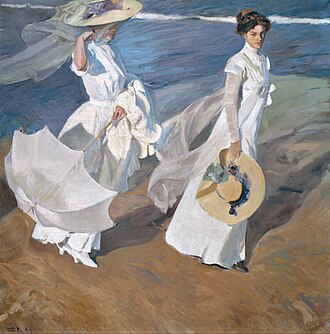 Promenade au bord de la mer - Joaquín Sorolla (1909)
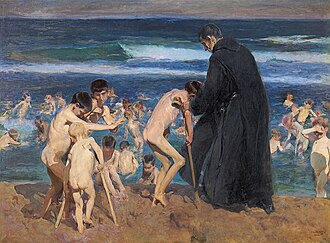 Triste héritage - Joaquín Sorolla (1898)
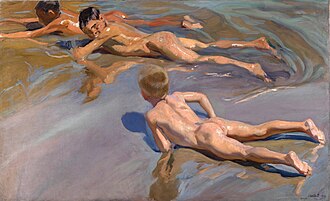 Enfants à la plage - Joaquín Sorolla (1910)
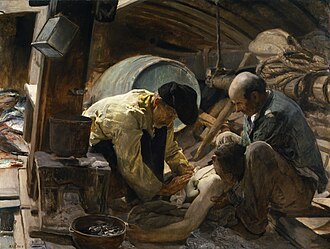 Et en plus elles disent que le poisson est cher ! - Joaquín Sorolla (1894)
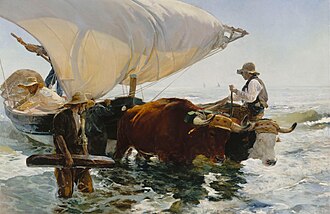 Retour de la pêche : halage de la barque - Joaquín Sorolla (1894)
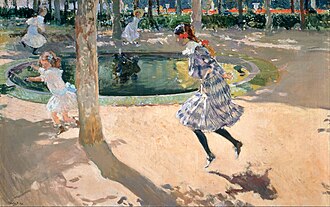 Le Saut à la corde - Joaquín Sorolla (1911)
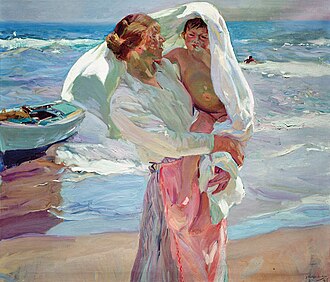 La Sortie du bain - Joaquín Sorolla (1915)
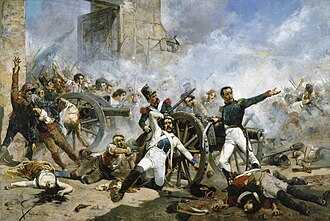 Défense du Parc d'artillerie de Montéléon - Joaquín Sorolla (1886)
Œuvres d'artistes liés
 Impression, soleil levant - Claude Monet (1872)
 Nymphéas - Claude Monet (1906)
 Le Déjeuner sur l'herbe - Édouard Manet (1863)
 Olympia - Édouard Manet (1863)
 Bal du moulin de la Galette - Pierre-Auguste Renoir (1876)
 Le Déjeuner des canotiers - Pierre-Auguste Renoir (1881)
 L'Absinthe - Edgar Degas (1875)
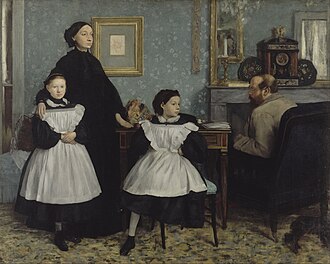 La Famille Bellelli - Edgar Degas (1858)
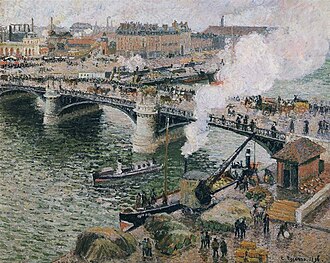 Le Pont Boieldieu à Rouen, temps mouillé - Camille Pissarro (1896)
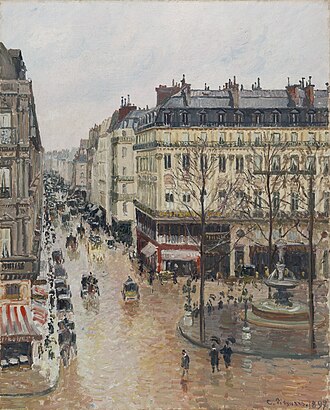 Rue Saint-Honoré, Après-midi, Effet de Pluie - Camille Pissarro (1897)
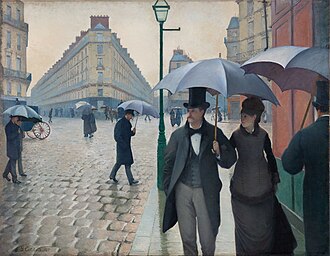 Rue de Paris, temps de pluie - Gustave Caillebotte (1877)
 Les Raboteurs de parquet - Gustave Caillebotte (1875)