Vue sur le jardin de la villa Médicis à Rome
Diego Velázquez · 1630
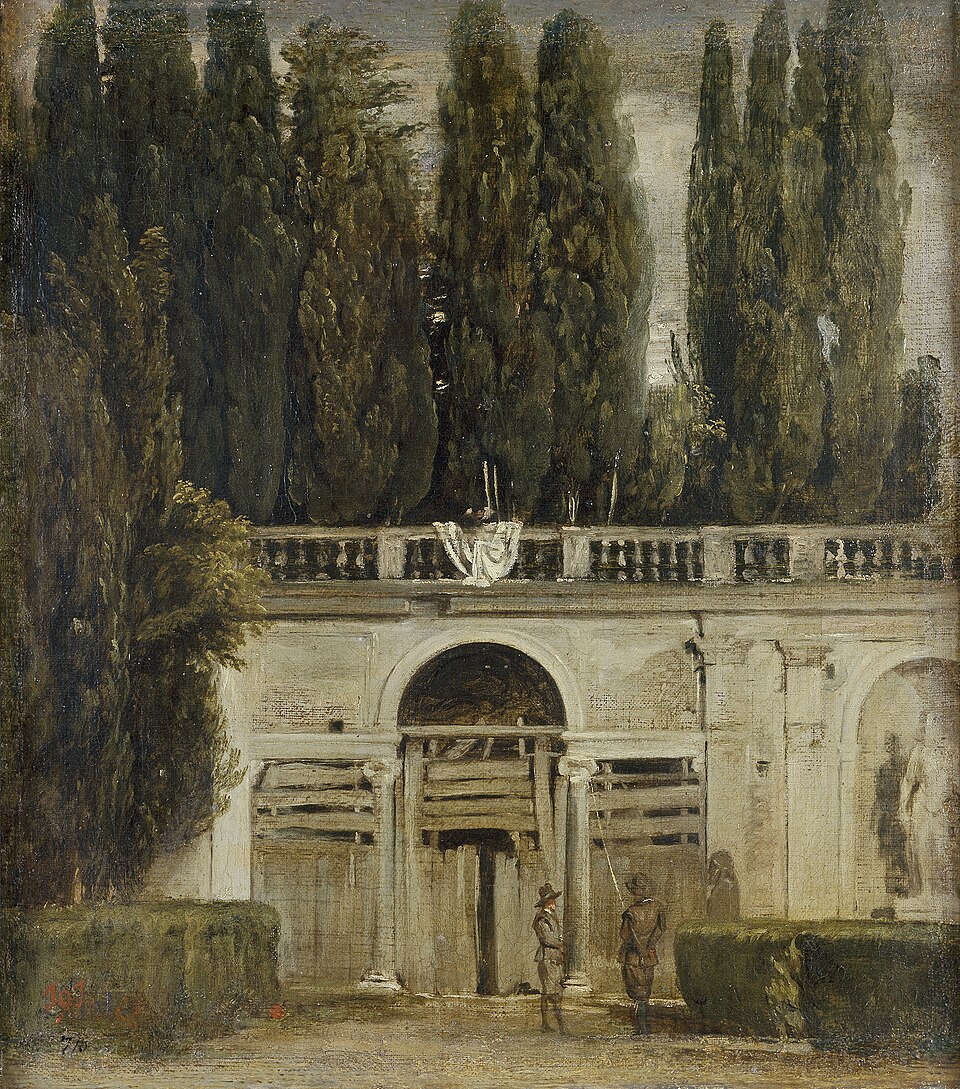
Two men talk beside a boarded-up stone arch in a Roman garden. No myth, no saint, no story: Velazquez simply set up his easel outdoors and painted the afternoon light.
The story behind the painting
Velazquez went to Italy twice, in 1629 to 1630 and 1649 to 1651, and this view had to be painted on one of those trips because it was made from life. Wikidata dates it 1630, but Wikipedia sets out the debate. In 1981 Enriqueta Harris, building on Glenn Andres, pointed to documents of February and March 1649 describing repairs to a structure called the grotto at the Villa Medici: a collapsing roof reinforced, walls and entrances refurbished. Velazquez reached Rome in May 1649, probably while work went on, and the boarded entrance in this picture fits that date, between May 1649 and November 1650.
What to look for
This canvas, known as Afternoon, measures about 48 by 43 cm and was painted over a brown primer. Two men stand talking near a Serlian portal, an arch flanked by openings, boarded up as if under repair; behind it lies the dark grotto, which still exists. On the terrace above, a figure, either a woman or a servant, leans over a wrinkled cloth draped on the balustrade. Dark cypresses rise behind. Below, boxwood or myrtle frames a bust that looks like a bearded Hermes, and to the right a wall with pilasters holds a statue in a vaulted niche.
Meaning and intent
Roman landscape painters of the time, such as Poussin and Claude, built their scenes around stories and messages. Velazquez offers no clear storyline and no identifiable characters. Antonio Ortiz suggests the paintings challenge the belief that a painter must first be an architect, letting the Serlian gates change with the viewpoint. The Prado stresses Velazquez's belief in lived experience, with light and shadow catching a passing moment. Many painters sketched outdoors, but they used the sketches for studio oils; painting in oil on site was a practice that 19th-century Impressionists later embraced.
Legacy
This painting has a smaller pendant, Midday, with a different Serlian gate, a gardener and a cleric; nothing links the figures of the two works. Both hung in the Alcazar of Madrid, listed in inventories of 1666, 1686 and 1700. On Christmas Eve 1734 fire broke out in the Alcazar and both were rescued. They moved to the Buen Retiro Palace, appearing in inventories of 1772, 1789 and 1794, then to the Royal Palace, and in 1819 to the Museo del Prado in Madrid, where they remain.
Le saviez-vous ?
- Painted outdoors in the gardens of the Villa Medici in Rome.
- The boarded-up grotto suggests a date of 1649-1650; Wikidata says 1630.
- Rescued from the Alcazar fire of 1734.
- In the Museo del Prado since 1819.
À propos de l'artiste
Diego Velázquez (1599-1660)
homme · paysage · musée du Prado · arbre · peinture de personnage · cyprès
Autres œuvres de Diego Velázquez
 Les Ménines - Diego Velázquez (1656)
 La Reddition de Bréda - Diego Velázquez (1635)
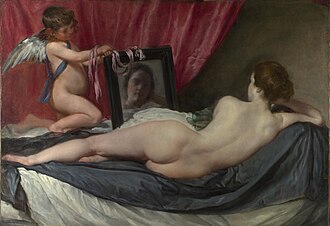 Vénus à son miroir - Diego Velázquez (1644)
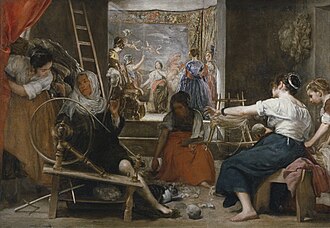 Les Fileuses - Diego Velázquez
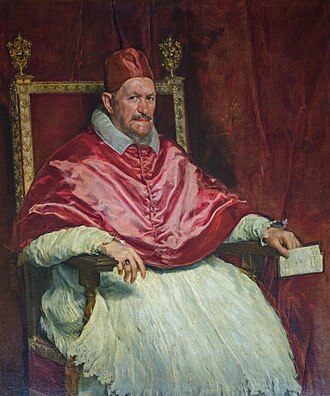 Innocent X - Diego Velázquez
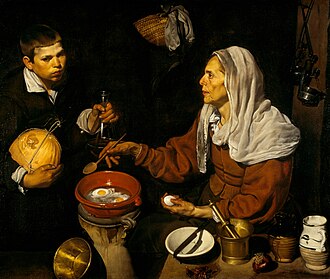 Vieille faisant frire des œufs - Diego Velázquez (1618)
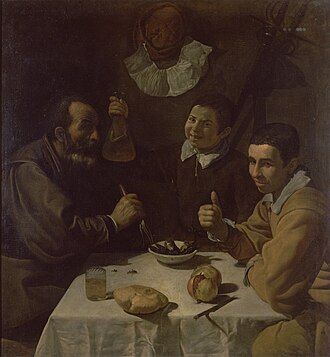 Trois hommes à table, le déjeuner - Diego Velázquez (1617)
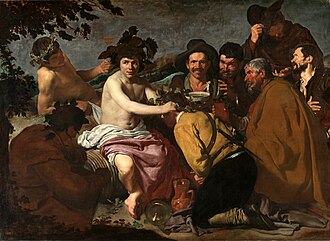 Le Triomphe de Bacchus - Diego Velázquez (1628)
Œuvres d'artistes liés
 Le Souper à Emmaüs - Caravaggio (1601)
 La Vocation de saint Matthieu - Caravaggio (1609)
 Saint Francis in Meditation - Francisco de Zurbarán (1639)
 The Immaculate Conception - Francisco de Zurbarán (1661)
 Triple portrait de Charles Ier - Anthony van Dyck (1635)
 Charles Ier à cheval avec Monsieur de Saint Antoine - Anthony van Dyck (1636)
 L'Érection de la croix - Peter Paul Rubens (1609)
 L'Enlèvement des filles de Leucippe - Peter Paul Rubens (1618)
 La Ronde de nuit - Rembrandt van Rijn (1642)
 Autoportrait - Rembrandt van Rijn (1659)
 Le Joyeux Buveur - Frans Hals (1620s)
 Le Cavalier riant - Frans Hals (1624)