Vénus et Mars
Pierre Paul Rubens · 1630s
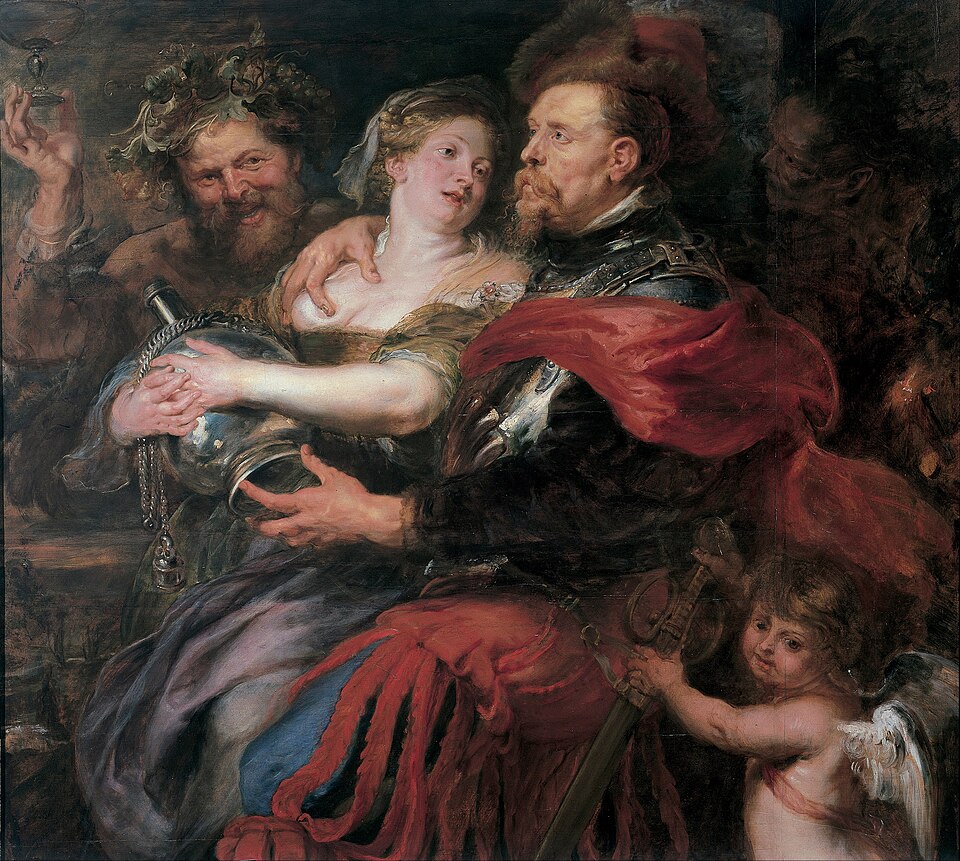
The god of war, dressed as a mercenary soldier of Rubens's own day, gives in to Venus while Cupid quietly takes away his weapons. Painted as war tore Europe apart, it dreams of love disarming violence.
The story behind the painting
Rubens painted this oil on panel late in his mature years, and the source dates it between 1632 and 1635, while Wikidata simply gives the 1630s. After his death the panel appeared in the inventory of his possessions under a plain description, a Swiss soldier with his mistress, accompanied by a satyr, an unfinished work on a wooden ground. In 1668 it was listed in Madrid among the goods of Luis de Benavides Carrillo, Marquis of Caracena and governor of Milan and Flanders, and in 1691 in the inventory of the Admiral of Castile.
What to look for
Mars, the god of war, is dressed as a lansquenet, a mercenary foot soldier, and Venus too wears contemporary clothes. At the lower right Cupid is disarming him. Bacchus offers Mars a cup of wine poured from a silver flask. In the upper right corner, barely visible, an old woman watches, a symbol of the fury of war, as Mars turns toward a pleasure stronger than battle. The panel is painted in Rubens's usual technique of rapid touches of paint full of intense colour, and the painting measures 133 by 142 cm.
Meaning and intent
The traditional allegorical reading is clear: love overcomes war. The god of battle yields to the sensual charm of Venus while his weapons are quietly taken away. The choice to dress Mars as a lansquenet was shaped by the wars devastating Europe at the time, in particular the Thirty Years War, which tore the old continent apart from 1618 to 1648. By bringing the gods into the clothing of his own day, Rubens made the myth speak directly to people living through that war, and set the hidden figure of Fury against the warmth of the couple.
Legacy
By 1735 the painting was explicitly recorded in Genoa, at the Palazzo Rosso, as the property of Gian Francesco II Brignole Sale. Critics suppose it reached the city from Madrid some thirty years earlier, through Francesco de Mari. It passed to the last heir of the family, Maria Brignole Sale De Ferrari, Duchess of Galliera, and was taken to the family's Paris residence, the Hotel de Matignon. In 1889, by her own wish, it was brought back to Genoa and given to the city's collections. It is now one of the most important works at the Palazzo Bianco.
Le saviez-vous ?
- Painted by Rubens, dated 1632 to 1635 by the source.
- Mars wears the clothes of a lansquenet, a mercenary soldier.
- Read as a reflection of the Thirty Years War.
- Given to the city of Genoa in 1889; now at the Palazzo Bianco.
À propos de l'artiste
Pierre Paul Rubens (1577-1640)
homme · peinture mythologique · Vénus · armure · portrait historié
Autres œuvres de Pierre Paul Rubens
 L'Érection de la croix - Peter Paul Rubens (1609)
 L'Enlèvement des filles de Leucippe - Peter Paul Rubens (1618)
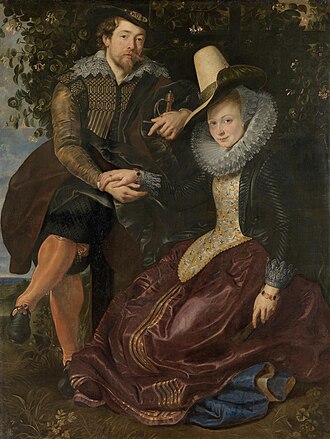 Sous la tonnelle de chèvrefeuille - Peter Paul Rubens (1600s)
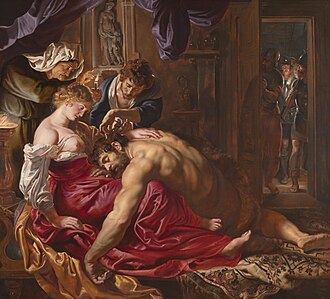 Samson et Dalila - Peter Paul Rubens (1600s)
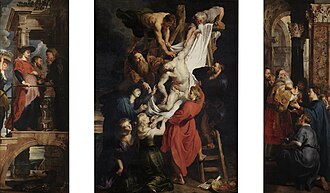 La Descente de Croix - Peter Paul Rubens (1611)
 Tête de Méduse - Peter Paul Rubens (1618)
 Hélène Fourment sortant du bain - Peter Paul Rubens (1638)
 Le Jardin d'Amour - Peter Paul Rubens (1632)
Œuvres d'artistes liés
 La Nuit étoilée - Vincent van Gogh (1889)
 Terrasse du café le soir - Vincent van Gogh (1888)
 Le Souper à Emmaüs - Caravaggio (1601)
 La Vocation de saint Matthieu - Caravaggio (1609)
 Les Ménines - Diego Velázquez (1656)
 La Reddition de Bréda - Diego Velázquez (1635)
 Saint Francis in Meditation - Francisco de Zurbarán (1639)
 The Immaculate Conception - Francisco de Zurbarán (1661)
 Triple portrait de Charles Ier - Anthony van Dyck (1635)
 Charles Ier à cheval avec Monsieur de Saint Antoine - Anthony van Dyck (1636)
 La Ronde de nuit - Rembrandt van Rijn (1642)
 Autoportrait - Rembrandt van Rijn (1659)