Le Retour des paysans des champs
Pierre Paul Rubens · 1640
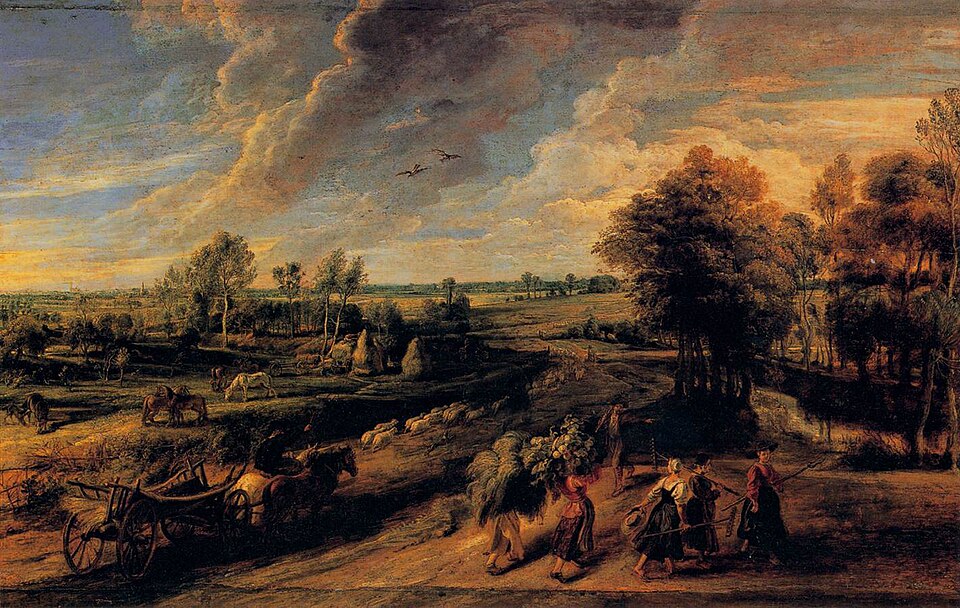
Seen from a height, a wide Flemish countryside glows in golden light while small figures head home from work and a cart halts for a flock of sheep. In this Rubens, the landscape itself is the hero.
The story behind the painting
The date of this painting has moved around. Estimates range from 1620 to 1635, the year a copy of it was signed and dated by its maker. The most convincing hypotheses place it in the early 1630s: some say 1632 to 1634, perhaps in collaboration with Lucas van Uden, others put it in Rubens's last phase, around 1640, which is the date Wikipedia and Wikidata use. For the cart Rubens used two preparatory drawings, one at Chatsworth House with a reaper and one in the Kupferstichkabinett in Berlin showing two carts.
What to look for
The view looks out from a high point over countryside dotted with trees, the horizon falling roughly at the middle of the picture. Small figures, in the manner of Pieter Bruegel the Elder's genre scenes, tell us the time of day: peasants returning from the fields, and a wagon with a man on horseback that seems to stop for a flock of sheep on the road. Between the two women carrying hay and the rams, look for a pentimento, a visible trace of the artist changing his mind. In the sky, streaks of bare canvas echo the diagonal lines in the lower half.
Meaning and intent
The real subject is the landscape; the rural scene is little more than a pretext. The land is probably around Mechelen, shown as a serene vision of nature bathed in golden light. The people are kept small so that the wide view, the trees and the light can dominate. It is a picture about the end of a working day in a peaceful countryside, and about the pleasure of looking far across it. Wikidata gives the panel's size as 121 by 194 cm.
Legacy
For a long time the painting was paired with Odysseus on the Island of the Phaeacians as a companion piece. Both were in the collection of the Duke of Richelieu in 1677 and, after a period in the Habsburg collection, came to Florence in 1765 on the initiative of the Lorraine family. French commissioners took both panels to Paris in March and April 1799, and they stayed in France until the end of 1815; even the restitution reports by Canova and Karcher describe them together. The painting is now in the Galleria Palatina in Florence.
Le saviez-vous ?
- Dated variously between 1620 and 1640; usually given as about 1640.
- Long paired with Odysseus on the Island of the Phaeacians.
- Arrived in Florence in 1765.
- Taken to Paris in 1799 and returned after 1815.
À propos de l'artiste
Pierre Paul Rubens (1577-1640)
femme · homme · paysage · cheval · Galerie Palatine · paysan ou paysanne · mouton · gardien de troupeau
Autres œuvres de Pierre Paul Rubens
.jpg) L'Érection de la croix - Peter Paul Rubens (1609)
L'Érection de la croix - Peter Paul Rubens (1609)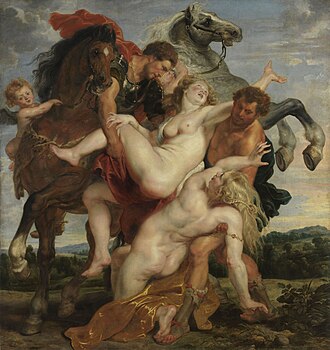 L'Enlèvement des filles de Leucippe - Peter Paul Rubens (1618)
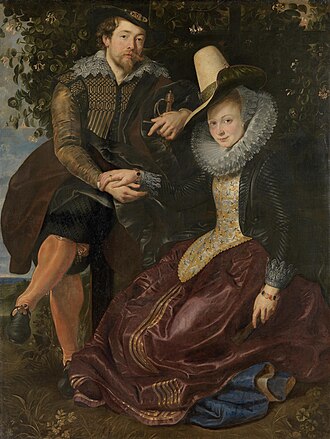 Sous la tonnelle de chèvrefeuille - Peter Paul Rubens (1600s)
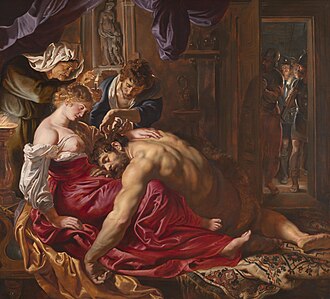 Samson et Dalila - Peter Paul Rubens (1600s)
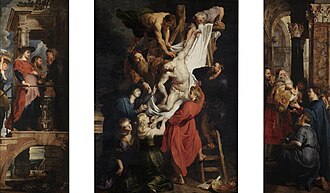 La Descente de Croix - Peter Paul Rubens (1611)
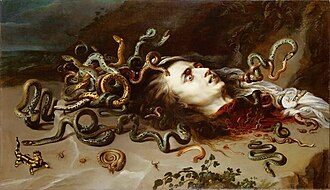 Tête de Méduse - Peter Paul Rubens (1618)
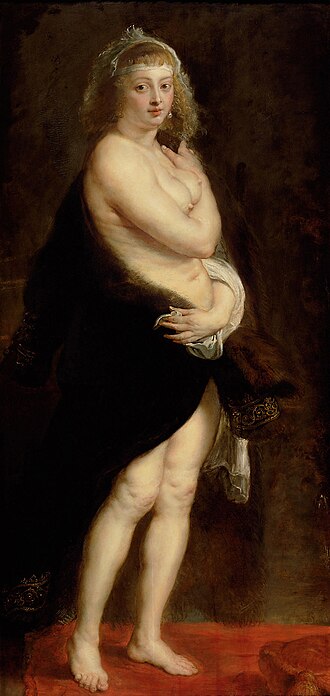 Hélène Fourment sortant du bain - Peter Paul Rubens (1638)
.jpg) Le Jardin d'Amour - Peter Paul Rubens (1632)
Le Jardin d'Amour - Peter Paul Rubens (1632)
Œuvres d'artistes liés
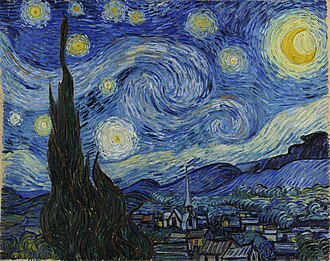 La Nuit étoilée - Vincent van Gogh (1889)
.jpg) Terrasse du café le soir - Vincent van Gogh (1888)
Terrasse du café le soir - Vincent van Gogh (1888) Le Souper à Emmaüs - Caravaggio (1601)
 La Vocation de saint Matthieu - Caravaggio (1609)
 Les Ménines - Diego Velázquez (1656)
 La Reddition de Bréda - Diego Velázquez (1635)
%20-%20Google%20Art%20Project.jpg) Triple portrait de Charles Ier - Anthony van Dyck (1635)
Triple portrait de Charles Ier - Anthony van Dyck (1635)%20with%20M.%20de%20St%20Antoine%20-%20Google%20Art%20Project.jpg) Charles Ier à cheval avec Monsieur de Saint Antoine - Anthony van Dyck (1636)
Charles Ier à cheval avec Monsieur de Saint Antoine - Anthony van Dyck (1636)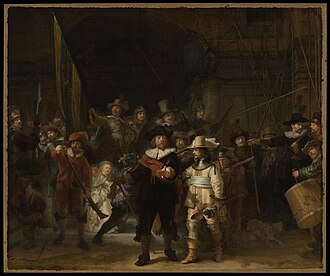 La Ronde de nuit - Rembrandt van Rijn (1642)
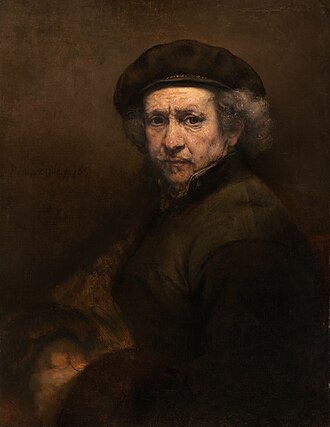 Autoportrait - Rembrandt van Rijn (1659)
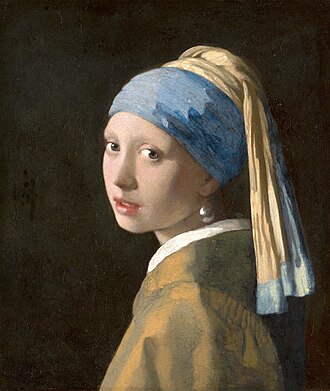 La Jeune Fille à la perle - Johannes Vermeer (1665)
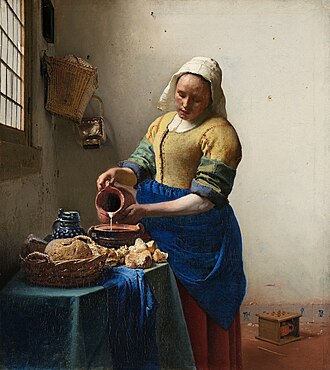 La Laitière - Johannes Vermeer (c. 1658)