La lamentation sur le corps du Christ mort
Lucas Cranach l'Ancien · 1530s
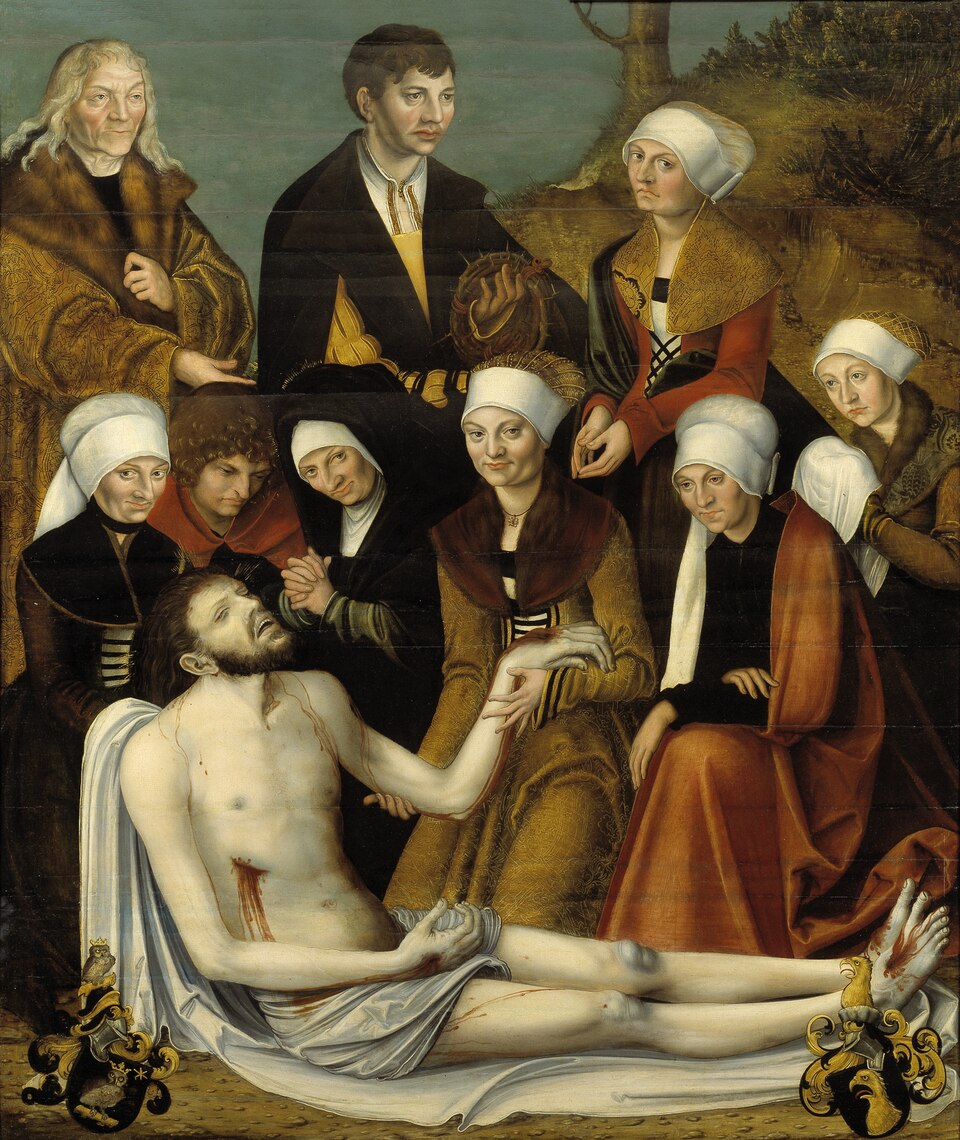
A family of patrons stands among the mourners around the dead Christ. Painted in Cranach's circle in the 1530s, this panel vanished from Wroclaw after the Second World War, surfaced in Sweden, and came home in 2022.
The story behind the painting
Wikipedia describes this oil on wood panel as the work of a follower of Lucas Cranach the Elder, completed in the 1530s, while Wikidata lists it under Cranach himself; with over four hundred paintings coming from Cranach and his studio, exact authorship is often hard to settle. Cranach was court painter to John Frederick I, Elector of Saxony, in Wittenberg, ran a large workshop that included his sons Hans and Lucas the Younger, and was a friend of Martin Luther. The panel was most likely commissioned by the merchant Konrad von Guenterode and his wife Anna, born von Alnpeck, whose coat of arms appears in the lower half.
What to look for
The scene shows the moment after the body of Jesus has been taken down from the cross. Beside the Virgin Mary, Mary Magdalene and John the Evangelist stand the two patrons and their four children, not off to the side as onlookers but as participants in the mourning. Look for the family coat of arms in the lower part of the composition. The panel is large, about 156 by 131.5 cm. The Lamentation was a popular Renaissance subject because it let artists capture a deeply pious, emotional moment, and Cranach and his studio painted several versions in the early decades of the sixteenth century.
Meaning and intent
Made after the Reformation, the work is said to stress the importance of personal spiritual experience. The Polish art historian Piotr Oszczanowski notes that the painter blurs the usual hierarchy among the figures and captures the individuality of each person's religious and emotional response. Placing a merchant family inside a sacred scene, grieving alongside the saints, fits that idea: faith here is something each believer lives directly. Cranach, a major supporter of the Protestant Reformation, worked at its very centre in Wittenberg.
Legacy
Its early history is only partly known. In the late eighteenth century it was in the Cistercian monastery at Lubiaz, and in 1880 it moved to the museum in Breslau, now the National Museum in Wroclaw. In November 1945 it was sent with 252 works to Kamieniec Zabkowicki Palace for safekeeping, listed as number 28. By February 1946 hundreds of those works had vanished. The Lamentation reappeared in Mariefred, Sweden, with the businessman Sigfrid Haggberg, whose family said he was only keeping it for someone else. After his death it was bought at auction in 1970 by the Nationalmuseum in Stockholm. After a long Polish investigation, it was returned to Wroclaw in 2022.
Le saviez-vous ?
- Painted in the 1530s, attributed to a follower of Cranach (Wikidata names Cranach himself).
- The patrons and their four children appear among the mourners.
- Missing from Poland after 1946, bought by Stockholm's Nationalmuseum in 1970.
- Restituted to the National Museum in Wroclaw in 2022.
À propos de l'artiste
Lucas Cranach l'Ancien (1472-1553)
art religieux · Jésus-Christ · Nationalmuseum
Autres œuvres de Lucas Cranach l'Ancien
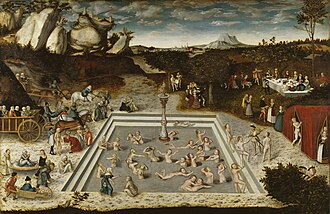 Fontaine de jouvence - Lucas Cranach the Elder (1546)
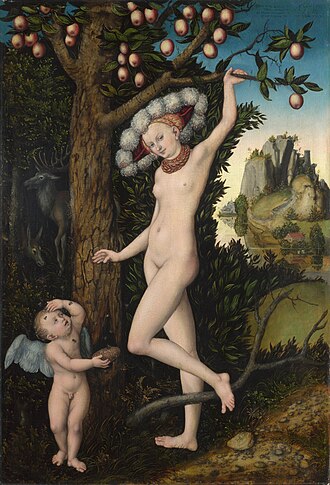 Vénus avec Cupidon le voleur de miel - Lucas Cranach the Elder (1520s)
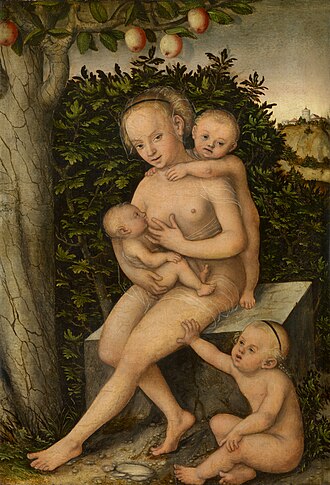 Charité - Lucas Cranach the Elder (1540)
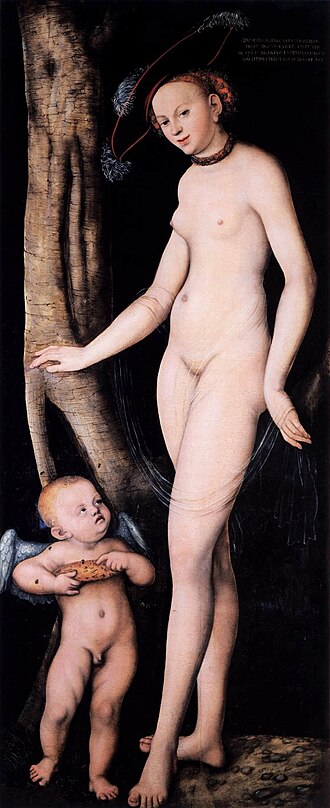 Vénus avec Cupidon voleur de miel - Lucas Cranach the Elder (1531)
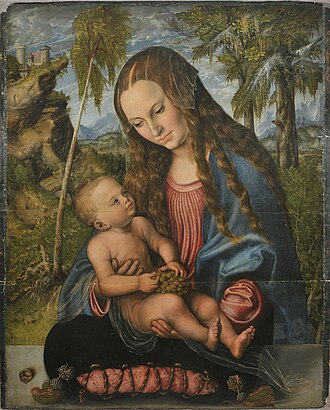 Madonna sous le sapin. - Lucas Cranach the Elder
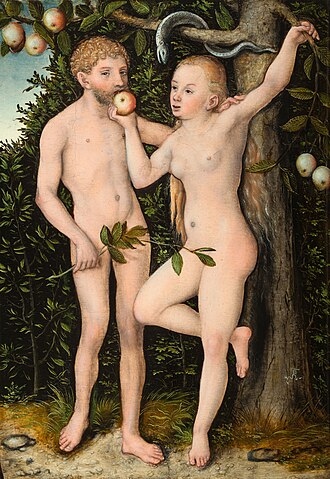 Adam et Eve - Lucas Cranach the Elder (1538)
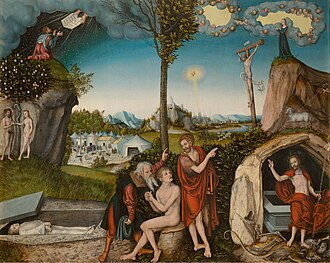 Loi et Évangile - Lucas Cranach the Elder (1529)
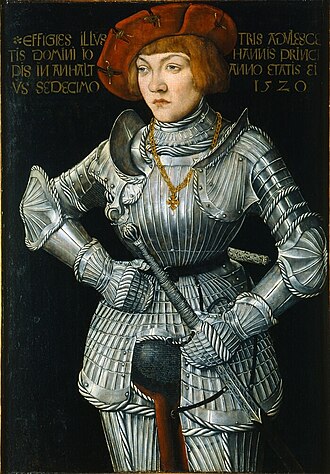 Jean V d'Anhalt-Dessau - Lucas Cranach the Elder (1520)
Œuvres d'artistes liés
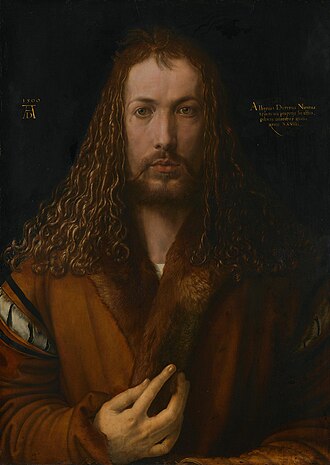 Autoportrait - Albrecht Dürer (1500)
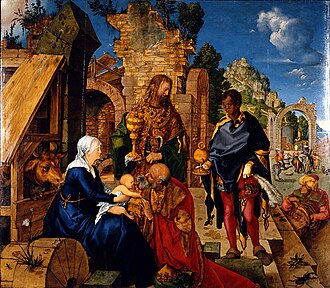 Adoration des mages - Albrecht Dürer (1504)