L'Apparition de la Vierge à saint Jacques le Majeur
Nicolas Poussin · 1620s
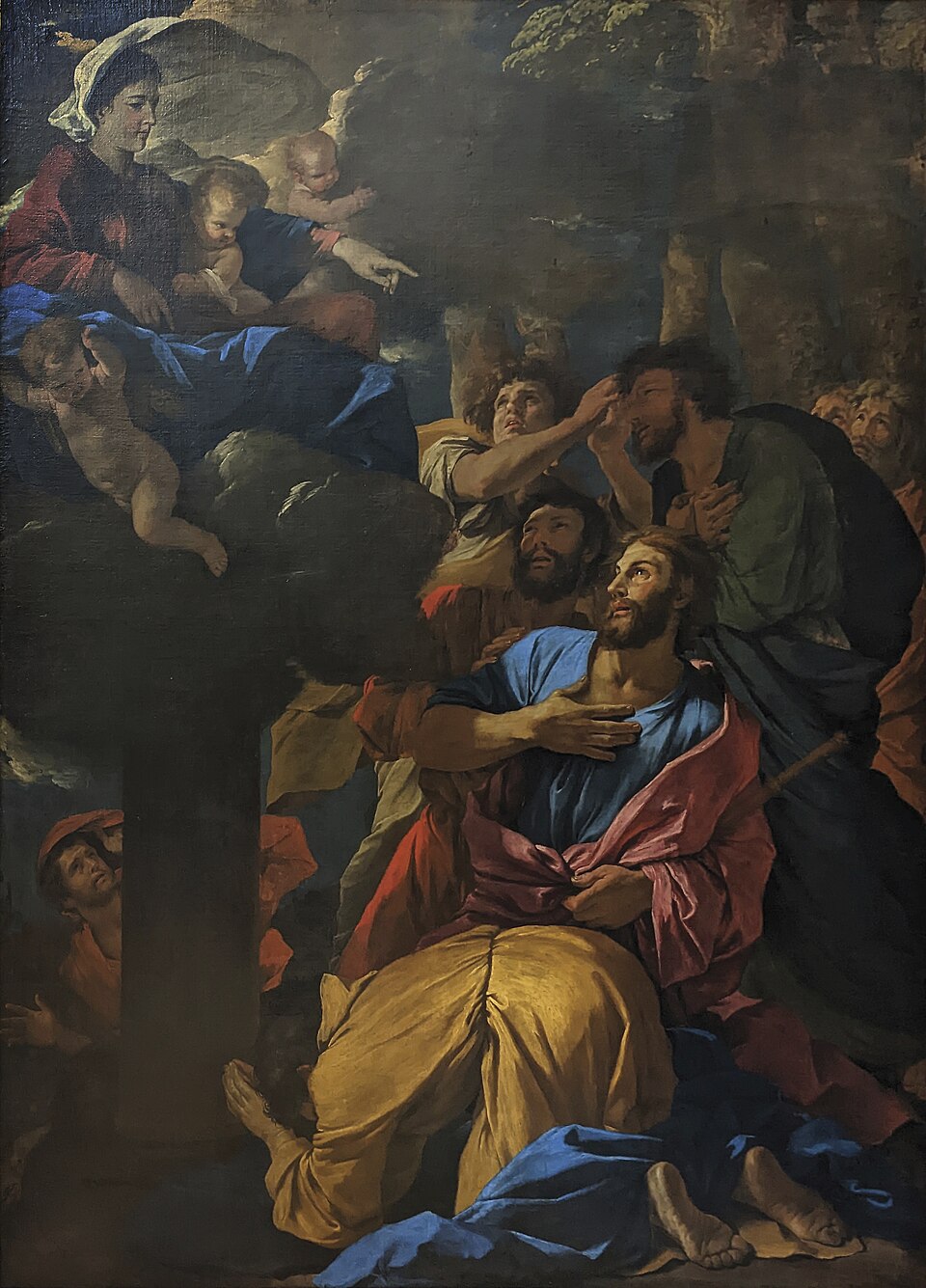
In Zaragoza, a divine wind fills the Virgin's veil and a holy light falls on the face of Saint James. Over three metres tall, this is one of the rare altarpieces Poussin ever painted.
The story behind the painting
Wikipedia dates the canvas to about 1629-1630, while Wikidata places it simply in the 1620s. According to Poussin's biographer Giovanni Pietro Bellori, it was made for the town of Valenciennes, then in the Spanish Netherlands, possibly commissioned by a Spanish general as a church altarpiece, perhaps for the church of Saint-Jacques, though no precise location is known. By 13 October 1665 it belonged to the duc de Richelieu, and Gian Lorenzo Bernini admired it there during his stay in Paris.
What to look for
The Virgin Mary appears seated on a jasper pillar, surrounded by angels. Below, Saint James and his companions react to the vision. Look at how Poussin makes the invisible visible: divine inspiration takes the form of wind rushing into the Virgin's veil, and a light, also divine, falls across the saint's face. The canvas is about 301 by 242 cm. Its composition draws on another Apparition of the Virgin to Saint James by Carlo Saraceni, painted for a Spanish national church in Rome and now lost.
Meaning and intent
The scene shows the moment when Mary appears to James the Great in Zaragoza and asks him to go and evangelise Spain. The pillar on which she sits is the heart of the story, a sign of firm faith at the start of a mission. Poussin's work is close in style to another large canvas he painted in the same years, The Martyrdom of Saint Erasmus, and like it, it belongs to the small group of altarpieces in his career, a painter better known for smaller, meditative pictures.
Legacy
In December 1665 the French king acquired it together with twelve other Poussin works, including The Four Seasons. It appears in an inventory of works held by Charles Le Brun until his death in 1690, then at Versailles from 1695, and in the Luxembourg Palace in 1750. It was among the works shown when the Louvre first opened in 1793. Returned to Versailles four years later, it came back to the Louvre in 1810, where it remains.
Le saviez-vous ?
- Painted about 1629-1630; Wikidata gives the 1620s.
- Possibly made for a church in Valenciennes.
- Admired by Bernini in Paris in 1665.
- On show when the Louvre first opened in 1793.
À propos de l'artiste
Nicolas Poussin (1594-1665)
art religieux · département des peintures du musée du Louvre · nuage · putto · Jacques de Zébédée
Autres œuvres de Nicolas Poussin
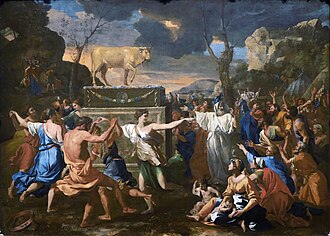 L'Adoration du Veau d'or - Nicolas Poussin (1634)
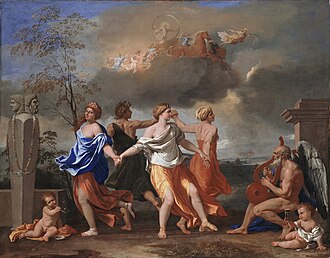 La Danse de la vie humaine - Nicolas Poussin (1630s)
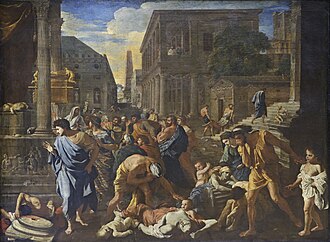 La Peste d'Asdod - Nicolas Poussin (1630)
.jpg) Le Jugement de Salomon - Nicolas Poussin (1649)
Le Jugement de Salomon - Nicolas Poussin (1649)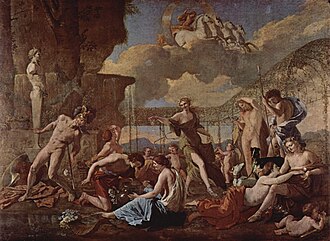 L'Empire de Flore - Nicolas Poussin (1631)
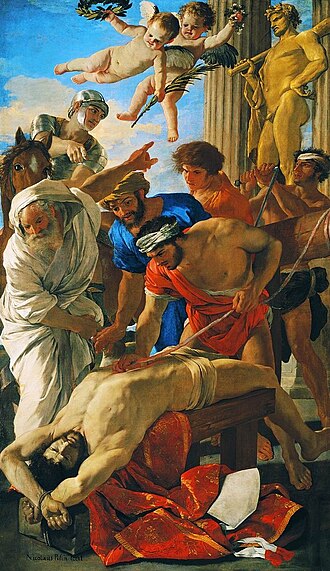 Le Martyre de saint Érasme - Nicolas Poussin (1628)
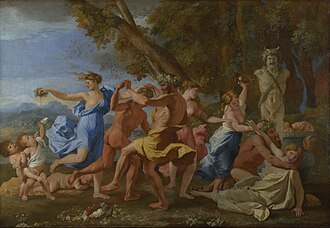 Bacchanale devant un terme - Nicolas Poussin (1630s)
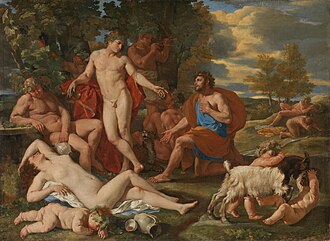 Midas devant Bacchus - Nicolas Poussin (1630)