Saint Jérôme et le lion
Rogier van der Weyden · 1450
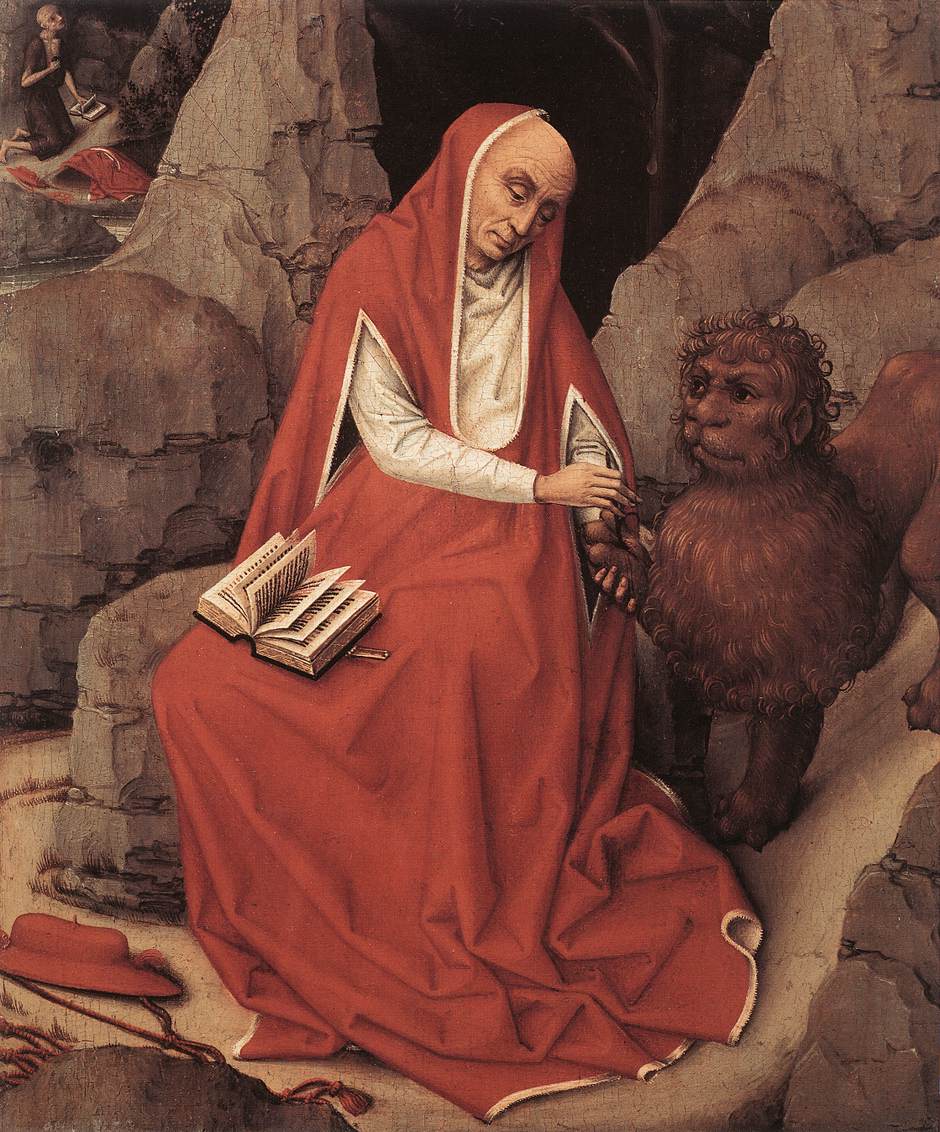
An old saint in cardinal's red gently takes a thorn from a lion's paw. This small oak panel from Rogier van der Weyden or his studio set the pattern for Saint Jerome for about 75 years.
The story behind the painting
In the legend, Saint Jerome was lecturing his students in Bethlehem when a limping lion came to him. The others fled, but the saint welcomed the lion, examined its injured foot and pulled out a thorn. The foot healed, and the lion stayed with Jerome until his death. The panel, oil on oak, was painted around 1450 to 1465 by Rogier van der Weyden or his studio, at a time of renewed interest in pictures of Saint Jerome.
What to look for
Jerome is an old man in a cardinal's outfit, red garments lined with white fur, his galero beside him and a book open on his lap. He sits on a rock outside a cave and turns toward the lion to tend its paw. Look in the upper left corner: the saint appears again, praying with his eyes raised and a hand on an open book, likely the Scriptures, his cardinal's gown thrown on the ground and a hair shirt in its place.
Meaning and intent
The two images of Jerome set side by side his kindness and his self-denial: the scholar in red who cares for a wounded animal, and the penitent who has put aside his rank to pray. The painting is also known as Saint Jerome Extracting the Thorn and Saint Jerome in the Desert. The lion, healed and loyal, becomes the saint's companion for life. The open book appears in both scenes, linking study and prayer.
Legacy
Rogier's painting created an archetype for depictions of Saint Jerome and inspired a series of paintings, sculptures and prints by other artists. That model stayed popular for about 75 years. The panel is now in the Detroit Institute of Arts. Whether the hand is Rogier's own or his studio's is left open, but its influence is not: the cardinal in red, the cave, the lion and the penitent in the corner became a pattern others followed.
Le saviez-vous ?
- Oil on oak panel, about 1450-1465.
- By Rogier van der Weyden or his studio.
- Jerome appears twice, once tending the lion and once praying.
- Now in the Detroit Institute of Arts.
À propos de l'artiste
Rogier van der Weyden (1390s-1464)
art religieux · Jérôme de Stridon · Detroit Institute of Arts
Autres œuvres de Rogier van der Weyden
 La Descente de Croix - Rogier van der Weyden (1440s)
 Portrait d'une dame - Rogier van der Weyden (1460)
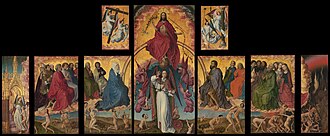 Le Jugement dernier - Rogier van der Weyden (1443)
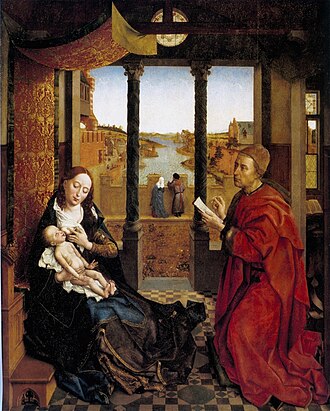 Saint Luc dessinant la Vierge - Rogier van der Weyden (1490)
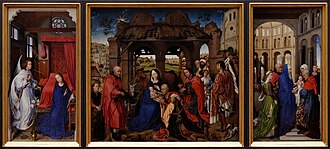 Columba triptyque - Rogier van der Weyden (1450s)
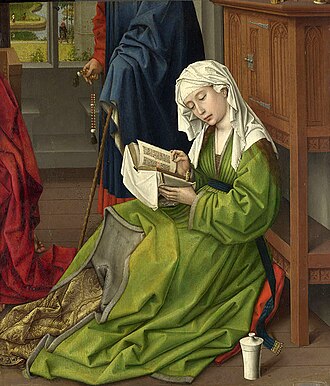 Marie Madeleine lisant - Rogier van der Weyden (1435)
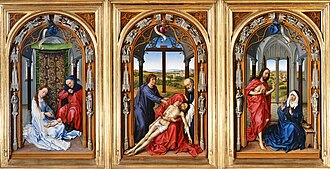 Retable de Miraflores - Rogier van der Weyden (1443)
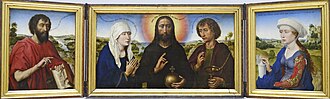 Triptyque de la famille Braque - Rogier van der Weyden (1452)
Œuvres d'artistes liés
 Les Époux Arnolfini - Jan van Eyck (1434)
 L'Agneau mystique - Jan van Eyck (1432)
 L'Annonciation - Hans Memling (1480s)
 Scènes de la Passion du Christ - Hans Memling (1470)
 Le Jardin des délices - Hieronymus Bosch
 La Nef des fous - Hieronymus Bosch (1500s)
 Les Chasseurs dans la neige - Pieter Bruegel the Elder (1565)
 Les Proverbes flamands - Pieter Bruegel the Elder (1551)