Saint Jérôme dans son étude
Jan van Eyck · 1435
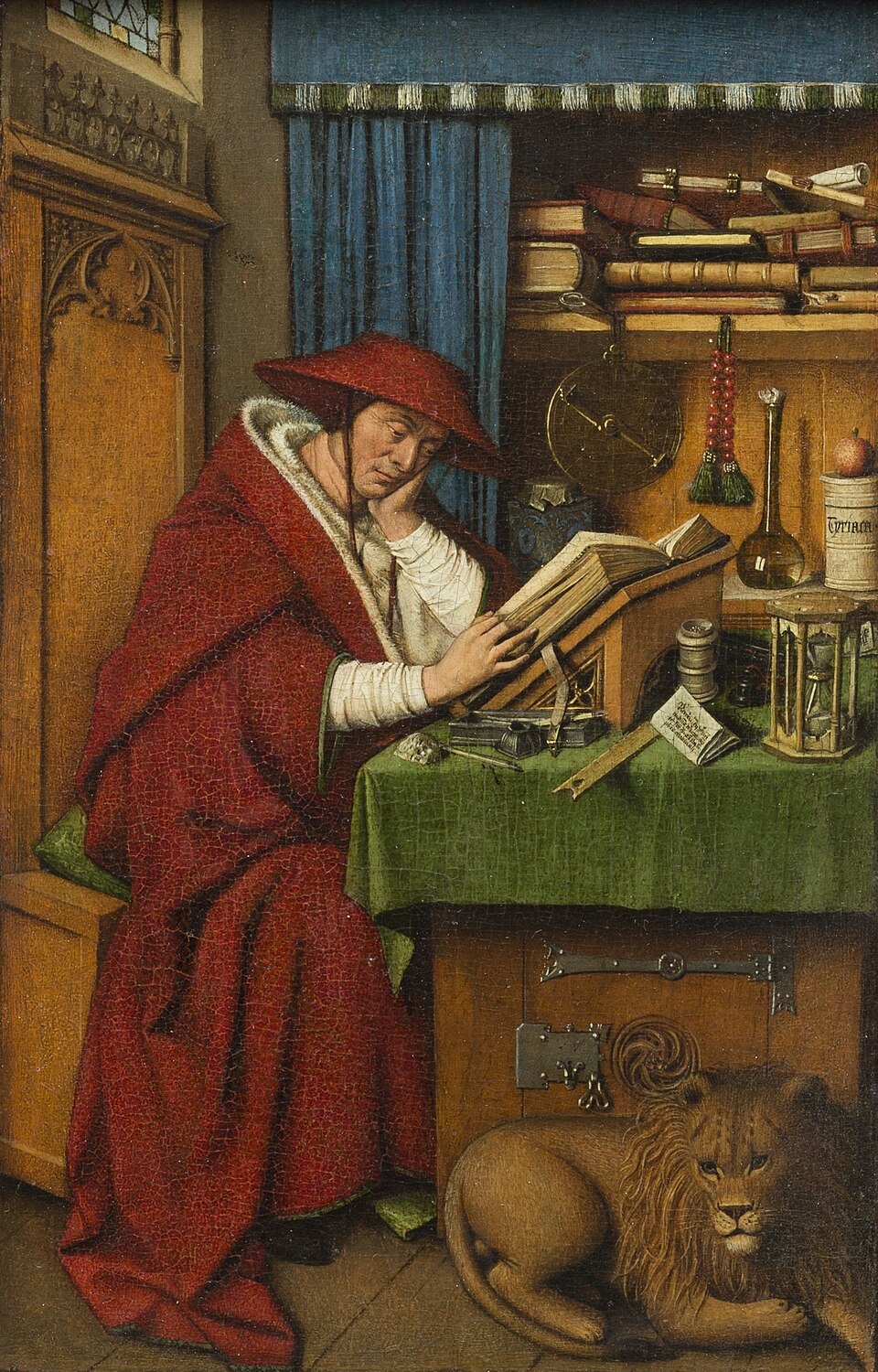
A scholar in a cardinal's red hat reads in a study crammed with books and instruments, while a lion rests at his feet. The panel is hardly bigger than a postcard, and its date falls after Jan van Eyck's own death.
The story behind the painting
The painting is attributed to the workshop of Jan van Eyck. It was begun in 1436, but the date on the panel falls after van Eyck's death in June 1441, so the work was probably left unfinished and completed by members of his workshop or by his brother Lambert. Wikidata gives the year as 1435. A painting of a similar subject appears in the inventories of the Palazzo Medici in Florence, drawn up after the death of Lorenzo de' Medici in 1492; even if it is not this panel, it may have been its prototype.
What to look for
The oil on panel is only about 20.6 by 13.3 cm according to Wikidata, no larger than an oversized postcard. Saint Jerome, the fourth century translator of the Bible, sits reading in a cardinal's dress and hat. Light enters from a window behind the desk and from the front, picking out every detail. Look along the desk and shelves: an hourglass, a pounce pot for drying ink, a ruler, an astrolabe, many books and writing tools. At the bottom lies his lion.
Meaning and intent
The crowded study is a portrait of a mind. The objects exemplify late medieval intellectual life, the tools of an idealised learned man who measures time, the stars and the written word. The lion recalls the legend in which Jerome drew a thorn from the animal's paw, after which it stayed loyal to him. Together, scholar and beast show learning joined to gentleness, an image that spoke strongly to collectors who saw themselves in the saint.
Legacy
The panel was bought in 1925 by Dr W. R. Valentiner, director of the Detroit Institute of Arts, when it was attributed to Petrus Christus, and it remains in Detroit. The attribution to van Eyck is not unanimous, which is why it is now described as from his workshop. Scholars have also noted striking similarities with Domenico Ghirlandaio's Saint Jerome in His Study of 1480, a sign that this small Flemish image, or its prototype in Florence, may have reached Italian painters.
Le saviez-vous ?
- Begun in 1436, dated after Jan van Eyck's death in 1441.
- Probably finished by his workshop or his brother Lambert.
- Bought by the Detroit Institute of Arts in 1925 as a Petrus Christus.
- Closely resembles Ghirlandaio's Saint Jerome of 1480.
À propos de l'artiste
Jan van Eyck (1390-1441)
art religieux · Primitifs flamands · Jérôme de Stridon · Detroit Institute of Arts
Autres œuvres de Jan van Eyck
 Les Époux Arnolfini - Jan van Eyck (1434)
 L'Agneau mystique - Jan van Eyck (1432)
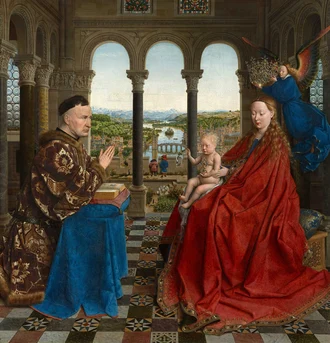 La Vierge du chancelier Rolin - Jan van Eyck
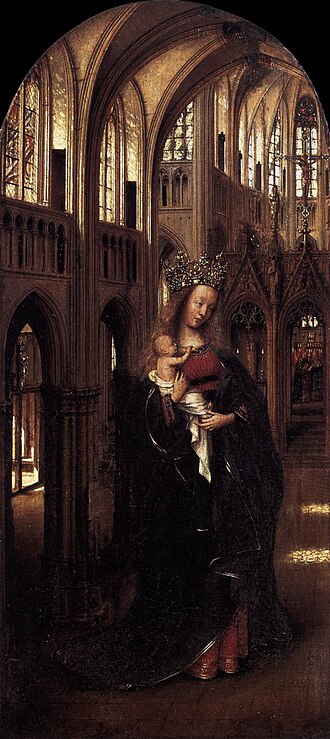 La Vierge dans une église - Jan van Eyck (1440)
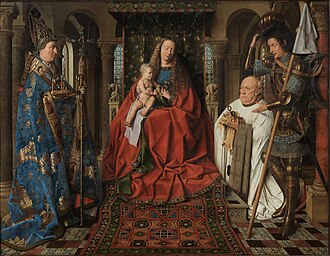 La Vierge au chanoine Van der Paele - Jan van Eyck (1436)
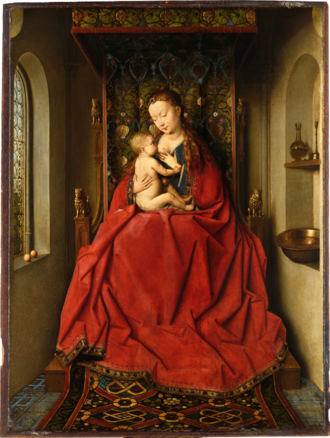 Vierge de Lucques - Jan van Eyck (1437)
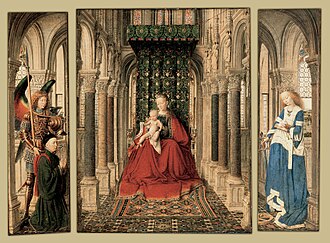 Triptyque de Dresde - Jan van Eyck (1437)
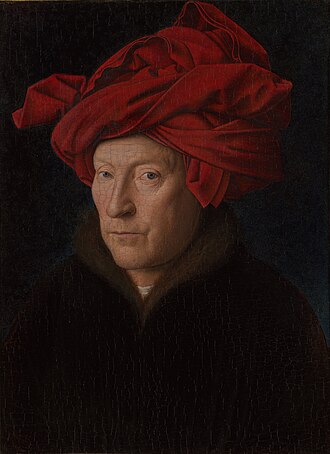 Portrait d'un homme - Jan van Eyck (1433)
Œuvres d'artistes liés
 La Descente de Croix - Rogier van der Weyden (1440s)
 Portrait d'une dame - Rogier van der Weyden (1460)
 L'Annonciation - Hans Memling (1480s)
 Scènes de la Passion du Christ - Hans Memling (1470)
 Le Jardin des délices - Hieronymus Bosch
 La Nef des fous - Hieronymus Bosch (1500s)
 Les Chasseurs dans la neige - Pieter Bruegel the Elder (1565)
 Les Proverbes flamands - Pieter Bruegel the Elder (1551)