Roses dans un vase
Édouard Manet · 1883
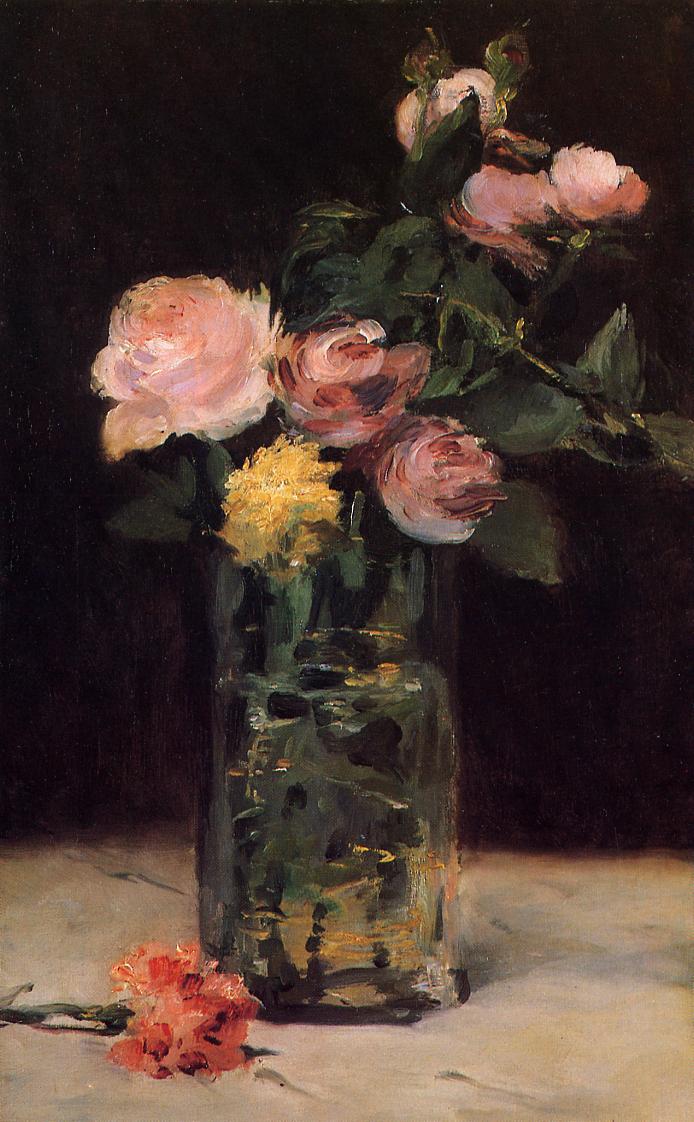
Pink roses and a carnation in a glass vase with a golden dragon, one more carnation laid on the marble. Manet's biographer dated it 1 March 1883, after which the painter never entered his studio again.
The story behind the painting
From the late 1870s Manet suffered from syphilis, which caused him great pain. He struggled to stand for long and could no longer paint large formats, so between 1881 and 1883 he made many small still lifes he could paint seated. He painted the flowers his friends gave him and often gave the pictures to people close to him. Roses in a Glass Vase is one of these, painted in 1883. According to the biographer Edmond Bazire it dates from 1 March 1883. After that, exhausted by illness, Manet never went into his studio again, and he died on 30 April.
What to look for
The canvas is 56 by 35 cm. A glass vase holds pink roses and a carnation; the vase has a hexagonal base, according to the French article, and a golden motif of an oriental dragon. On the marble slab beneath it Manet laid another carnation, reddish orange, to the left. The slab resembles a café counter and was in his studio. The background is dark brown and blurred. Watch for the dragon: in this picture it is only guessed at, a fainter echo of the one painted clearly a few weeks earlier.
Meaning and intent
Manet used eight different vases for his last still lifes, and this one appears in three paintings. He bought it in a shop in the Passage des Princes, as the archives of his godson Léon Leenhoff record. It was first used early in 1883 for Roses and Tulips in a Vase, where the dragon is clearly visible, then for Vase of White Lilacs and Roses, dated by Bazire to 28 February 1883. The art historian Stéphane Guégan saw the last works as sketches with great freedom of style, expressing great vitality, without the slightest sign of emotion or self pity.
Legacy
The work was commissioned by Manet's friend Ignace Ephrussi, brother of the collector Charles Ephrussi. After 1902 it belonged for decades to the Havemeyer family of New York: to Henry and Louisine Havemeyer, then to Louisine alone, who left two thousand works to the Metropolitan Museum. This painting went instead to her son Horace and, after his death in 1956, to his wife Doris Dick Havemeyer. Her children sold it at Sotheby's New York in 1983 to the businessman Wendell Cherry, and after his death in 1991 it was bought by a Japanese collector who chose to remain anonymous.
Le saviez-vous ?
- Dated by Edmond Bazire to 1 March 1883.
- Manet never entered his studio again after this.
- The dragon vase appears in three of Manet's last paintings.
- Commissioned by Ignace Ephrussi; now in a private collection.
À propos de l'artiste
Édouard Manet (1832-1883)
Autres œuvres de Édouard Manet
 Le Déjeuner sur l'herbe - Édouard Manet (1863)
 Olympia - Édouard Manet (1863)
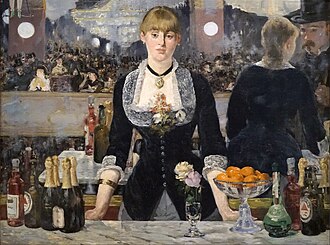 Un bar aux Folies Bergère - Édouard Manet (1882)
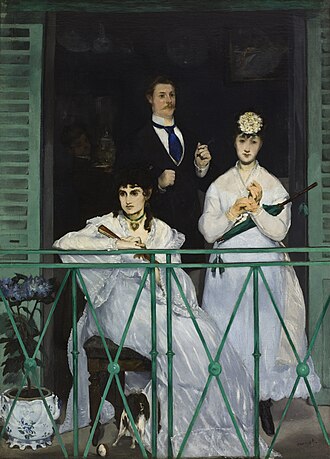 Le Balcon - Édouard Manet (1868)
 La Musique aux Tuileries - Édouard Manet (1862)
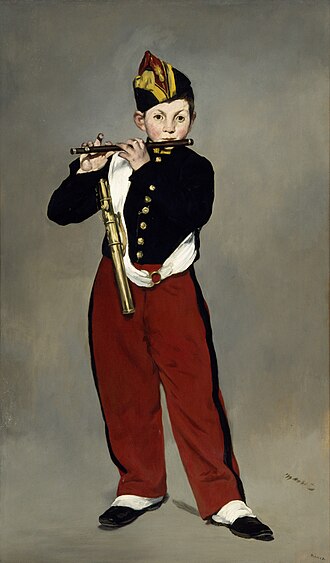 Le Fifre - Édouard Manet (1866)
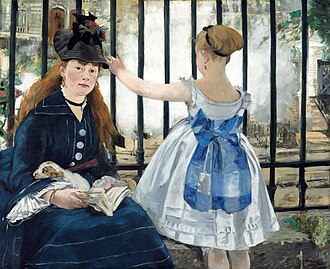 Le Chemin de fer - Édouard Manet (1873)
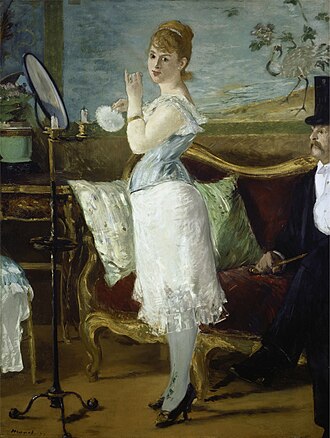 Nana - Édouard Manet (1877)
Œuvres d'artistes liés
 Impression, soleil levant - Claude Monet (1872)
 Nymphéas - Claude Monet (1906)
 Bal du moulin de la Galette - Pierre-Auguste Renoir (1876)
 Le Déjeuner des canotiers - Pierre-Auguste Renoir (1881)
 Le Berceau - Berthe Morisot (1872)
 Jour d'été - Berthe Morisot (1879)
 L'Absinthe - Edgar Degas (1875)
 La Famille Bellelli - Edgar Degas (1858)
 Le Canal du Loing - Alfred Sisley (1892)
 L'Abreuvoir à Marly-Le-Roi, gelée blanche - Alfred Sisley (1876)
 Rue de Paris, temps de pluie - Gustave Caillebotte (1877)
 Les Raboteurs de parquet - Gustave Caillebotte (1875)