Roses et tulipes dans un vase
Édouard Manet · 1883
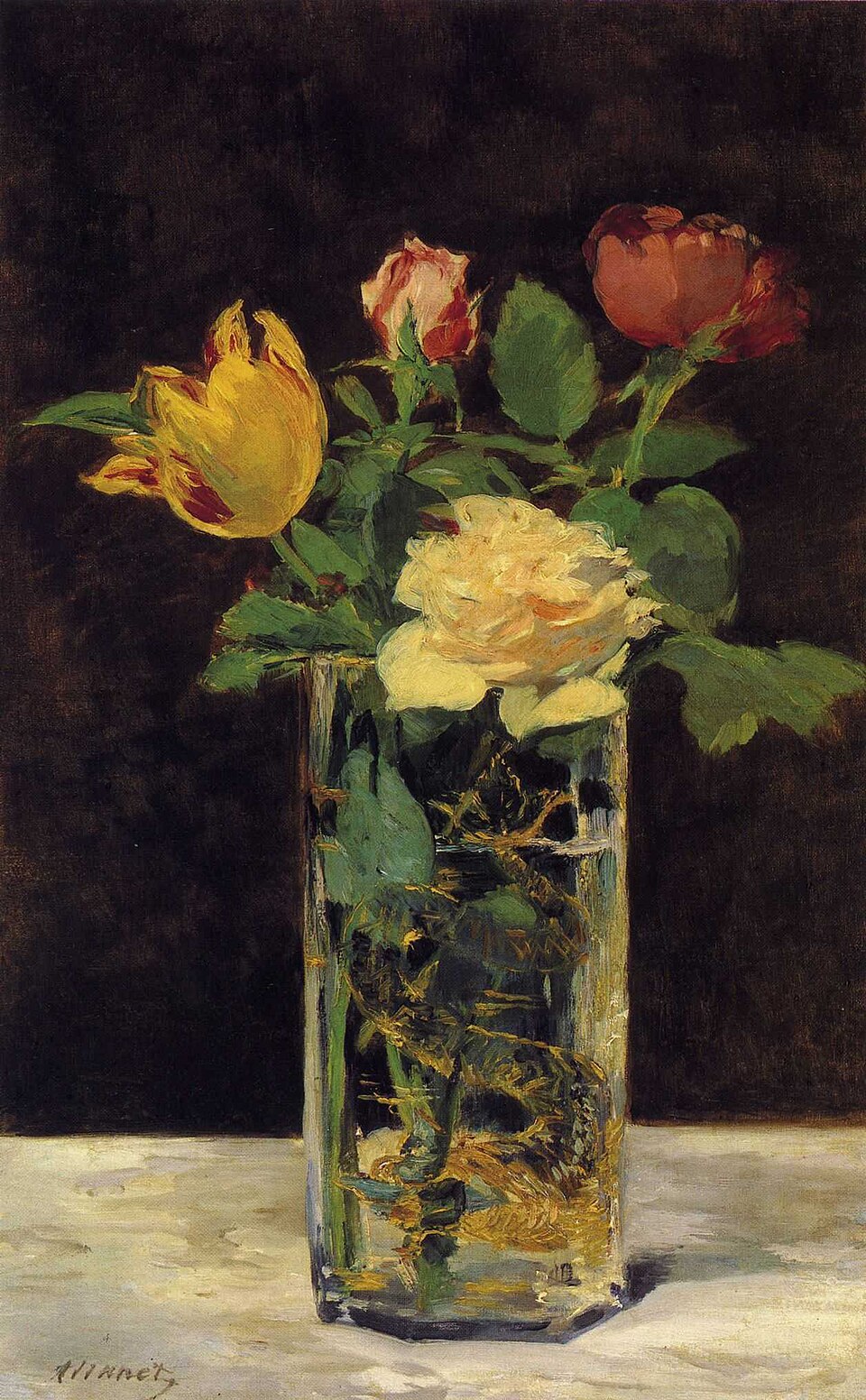
A tulip and three roses, from bud to full bloom, in a glass vase painted with a golden dragon. Manet bought the vase himself and painted this months before he died in 1883.
The story behind the painting
Manet had painted some flower still lifes in the mid 1860s, but in the last months of his life he turned to the subject far more. He suffered from syphilis and had pain when walking, and the bouquets friends brought him as get-well wishes gave him models for small pictures he could finish quickly without long, painful standing. He painted Roses and Tulips in a Vase in 1883. For these late works he could choose among seven glass vases in his household, and here he picked one he had bought himself in a shop in the Passage des Princes.
What to look for
The canvas is 56.5 by 36 cm. On the left a yellow and red tulip rises from the vase; a closed pink rose falls back, an open red rose sits on the right, and a pale yellow rose in full bloom faces us. The tall glass vase is octagonal and bears a golden dragon in the Asian manner. It stands on a light marble slab, likely the marble topped table Manet kept in his studio, against an almost uniform dark brown background. Light falls from above, casting a short shadow to the right. The brushwork is loose, in the Impressionist manner, and it is signed Manet at lower left.
Meaning and intent
The dragon décor followed the fashion for Japonisme; Manet knew Asian art from the Paris World Fairs of 1867 and 1878, and the vase may have been a European imitation. Ina Conzen found the picture almost magical, the painting of the surface becoming an expression of its depth. Eduard Hüttinger saw it as a high point of Manet's still life painting. Like all still lifes it can be read as a vanitas, and the flowers moving from bud to open bloom suggest the cycle of life, though the German article notes that no such intention by Manet is documented.
Legacy
The painting first belonged to the critic Louis de Fourcaud in Paris and was sold after his death in 1917 to the dealer Paul Rosenberg. When Rosenberg fled France in June 1940 he had to leave his stock behind, and the picture passed under unclear circumstances to the Lucerne dealer Theodor Fischer, from whom Emil Georg Bührle bought it in 1942. After the war Bührle had to recognise Rosenberg's claim and bought it again from Rosenberg's New York gallery in 1948. After Bührle's death in 1956 it passed to his descendants.
Le saviez-vous ?
- Painted in 1883, months before Manet's death.
- The vase with a golden dragon was bought by Manet himself.
- Left behind when Paul Rosenberg fled France in 1940.
- Bought twice by Emil Georg Bührle, in 1942 and 1948.
À propos de l'artiste
Édouard Manet (1832-1883)
Autres œuvres de Édouard Manet
 Le Déjeuner sur l'herbe - Édouard Manet (1863)
 Olympia - Édouard Manet (1863)
 Un bar aux Folies Bergère - Édouard Manet (1882)
 Le Balcon - Édouard Manet (1868)
 La Musique aux Tuileries - Édouard Manet (1862)
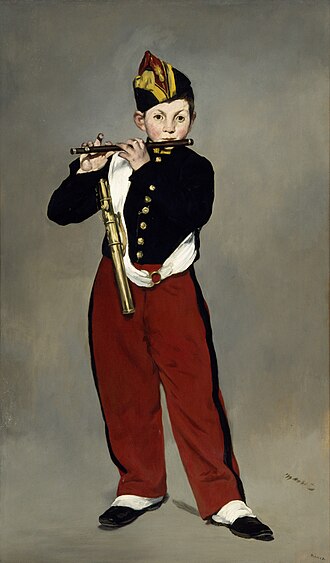 Le Fifre - Édouard Manet (1866)
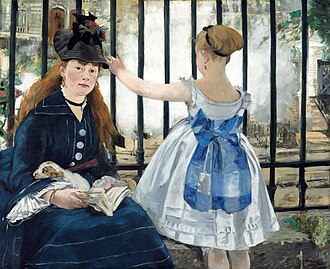 Le Chemin de fer - Édouard Manet (1873)
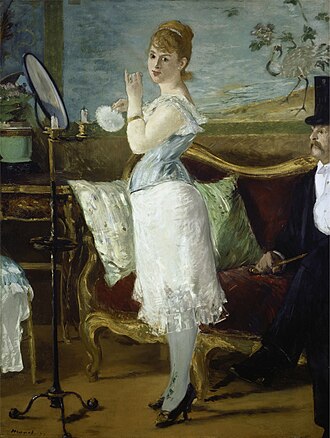 Nana - Édouard Manet (1877)
Œuvres d'artistes liés
 Impression, soleil levant - Claude Monet (1872)
 Nymphéas - Claude Monet (1906)
 Bal du moulin de la Galette - Pierre-Auguste Renoir (1876)
 Le Déjeuner des canotiers - Pierre-Auguste Renoir (1881)
 Le Berceau - Berthe Morisot (1872)
 Jour d'été - Berthe Morisot (1879)
 L'Absinthe - Edgar Degas (1875)
 La Famille Bellelli - Edgar Degas (1858)
 Le Canal du Loing - Alfred Sisley (1892)
 L'Abreuvoir à Marly-Le-Roi, gelée blanche - Alfred Sisley (1876)
 Rue de Paris, temps de pluie - Gustave Caillebotte (1877)
 Les Raboteurs de parquet - Gustave Caillebotte (1875)