Portrait of Mrs. Cecil Wade
John Singer Sargent · 1886
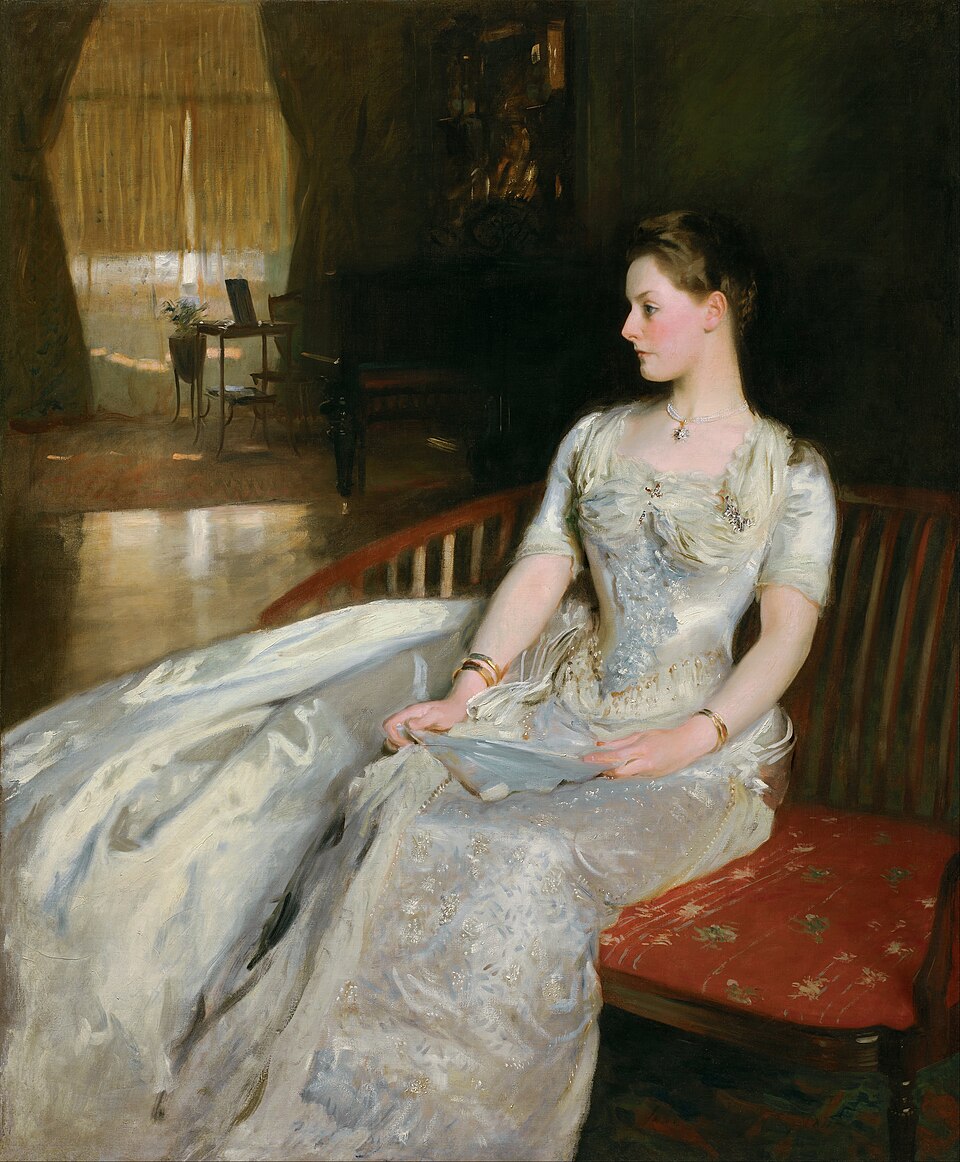
A young Scottish woman in white satin sits in a dim London room, light washing over her skin and dress. It was Sargent's first major portrait after the scandal of Madame X, and critics could not agree whether it was brilliant or cold.
The story behind the painting
After his Portrait of Madame X caused a scandal at the Paris Salon of 1884, John Singer Sargent lost much of his French clientele and moved to England in 1886 in search of new commissions. Portrait of Mrs. Cecil Wade was his first major project after that Salon, and it formally steps back from many of the controversial aspects of Madame X. The sitter, Frances Frew Wade, was born in Glasgow in 1863 and married the London stockbroker Cecil Lowry Wade in 1883. She was 23 when she sat for Sargent in her own London home, wearing the white satin gown in which she had been presented to Queen Victoria.
What to look for
Mrs. Wade is painted full length, in profile glancing to her right, her body turned at a slight angle. A bright light washes over her fair skin and white satin dress. She sits on a wooden bench with a red floral cushion, wearing sparkling bracelets and a choker, a white fan in hand. Behind her the room is dim. Midday light trickles in through a window covered by a yellow curtain and touches a small table and chair with a plant nearby. The painting shows Sargent's skill with both portraits and interiors, and his willingness to experiment boldly with light and darkness. Wikidata gives the size as about 168 by 138 cm.
Meaning and intent
The picture is about a moment of light as much as a person: the bright figure in the foreground against a quiet, shadowed interior. Critics in 1887 read that contrast in opposite ways. The Spectator praised the individuality and life in the sitter's face but found the foreground light forced and the handling cold, with no tenderness or poetry. The Saturday Review called it a brilliant, admirably handled likeness of a lady in white against a charmingly painted interior. The Illustrated London News joked that her arms and face looked made of cardboard.
Legacy
The portrait was exhibited only once in Sargent's lifetime, in 1887 with the New English Art Club at the Dudley Gallery in London, and later in posthumous shows in Liverpool in 1925 and at the Royal Academy in 1926. It stayed in the Wade family for a century, passing from the sitter to her daughter Aileen and then to her nephew Sir Ruthven Wade. In 1986 the Enid and Crosby Kemper Foundation bought it and gave it to the Nelson-Atkins Museum of Art in Kansas City, which called it a stellar example of Sargent's work.
Le saviez-vous ?
- Painted in 1886 in the sitter's London home.
- Sargent's first major project after Madame X.
- Shown once in his lifetime, in 1887.
- At the Nelson-Atkins Museum of Art since 1986.
À propos de l'artiste
John Singer Sargent (1856-1925)
femme · portrait · musée d'art Nelson-Atkins
Autres œuvres de John Singer Sargent
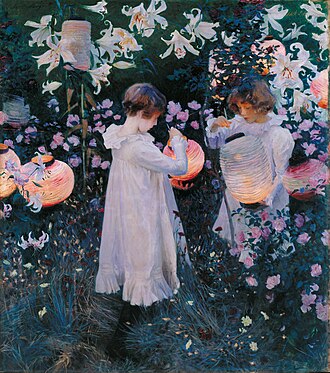 Œillet, lys, lys, rose - John Singer Sargent (1885-1886)
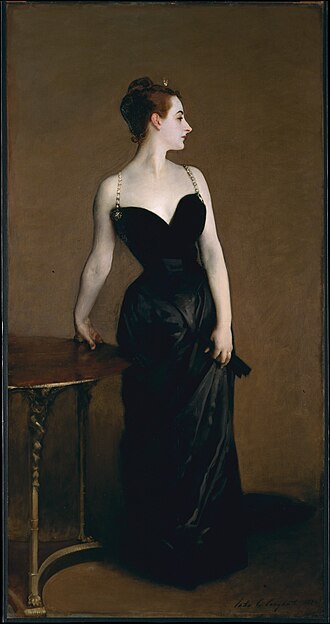 Madame X - John Singer Sargent (1884)
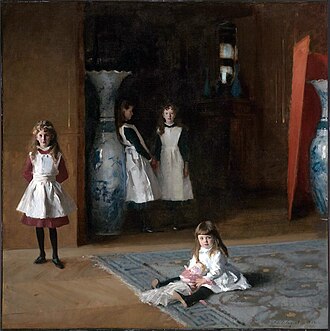 Les Filles d'Edward Darley Boit - John Singer Sargent (1882)
.jpg) Gazés - John Singer Sargent (1919)
Gazés - John Singer Sargent (1919).jpeg) Portrait de Lady Agnew of Lochnaw - John Singer Sargent (1892)
Portrait de Lady Agnew of Lochnaw - John Singer Sargent (1892) El Jaleo - John Singer Sargent (1882)
.jpg) Rue à Venise - John Singer Sargent (1882)
Rue à Venise - John Singer Sargent (1882) Les Demoiselles Vickers - John Singer Sargent (1884)
Œuvres d'artistes liés
 Le Déjeuner sur l'herbe - Édouard Manet (1863)
 Olympia - Édouard Manet (1863)
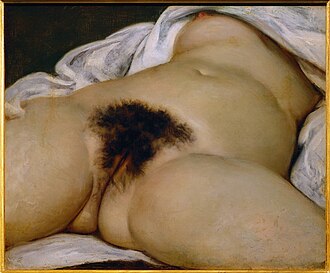 L'Origine du monde - Gustave Courbet (1866)
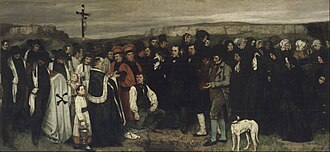 Un enterrement à Ornans - Gustave Courbet (2020)
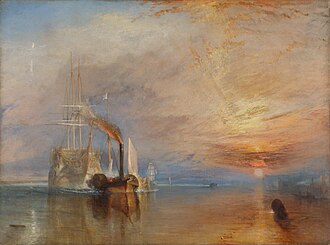 Le Dernier Voyage du Téméraire - J. M. W. Turner (1839)
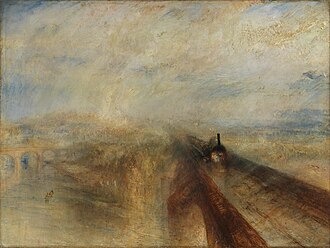 Pluie, Vapeur et Vitesse - J. M. W. Turner (1844)
 Le Serment des Horaces - Jacques-Louis David (1784)
.jpg) Les Sabines - Jacques-Louis David (1799)
Les Sabines - Jacques-Louis David (1799)