Joachim II Hector de Brandebourg
Lucas Cranach l'Ancien · 1520
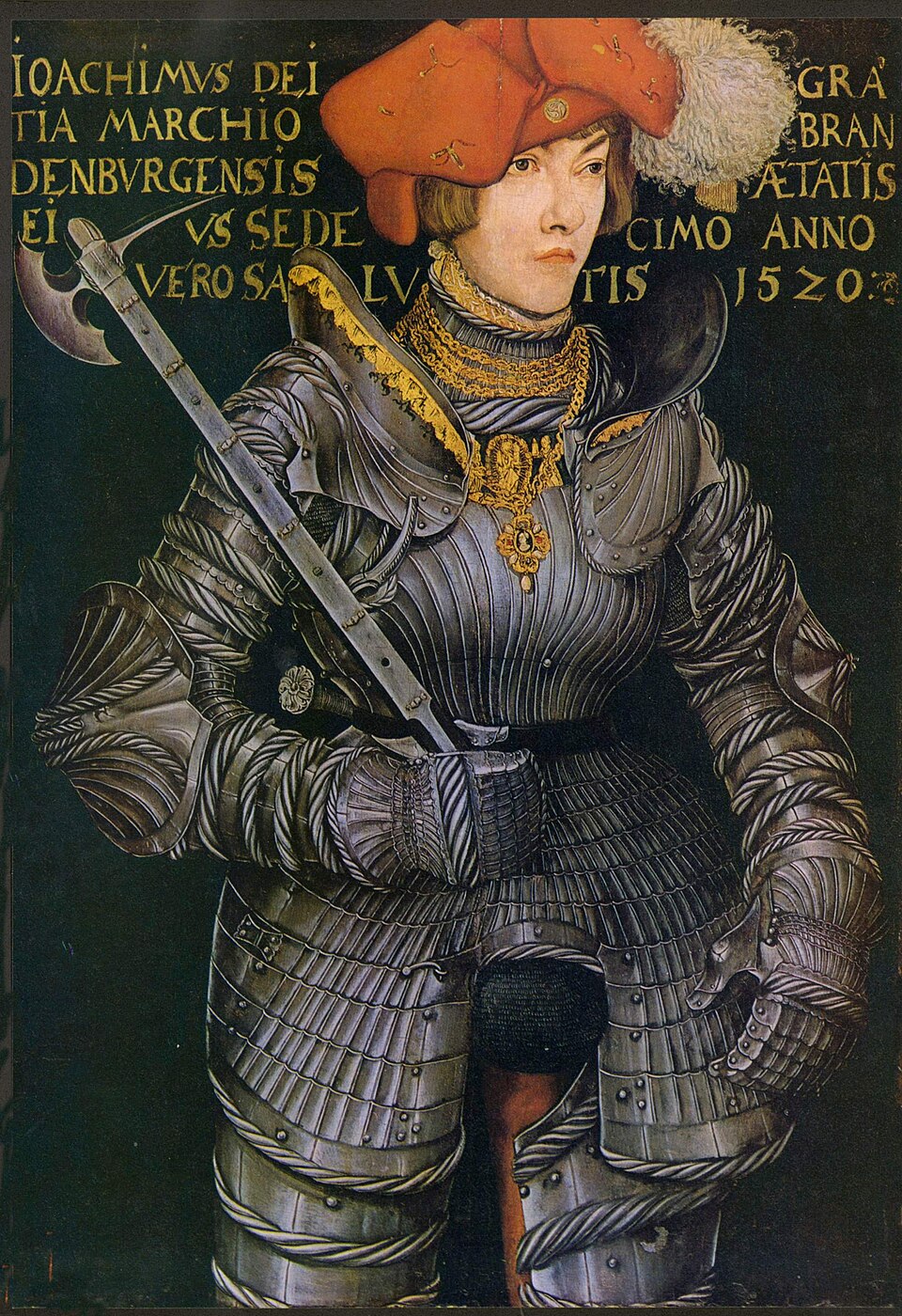
A sixteen-year-old prince poses in costume armour with a battle-axe, ready for a tournament on foot. Lucas Cranach the Elder painted the young Joachim II of Brandenburg around 1520, at a moment when his father's grand marriage plans for him had just failed.
The story behind the painting
The panel shows Joachim II of Brandenburg, heir to the electorate, as a boy. It is painted on beech wood around 1520 and measures 61.5 by 43.2 cm. It has a companion: a portrait of Prince John IV of Anhalt, also sixteen and also in full armour. The pair can be dated between autumn 1520 and spring 1521. They were probably painted in Cranach's workshop in Wittenberg, since no visit by Cranach to the court at Cölln is known, while the two young nobles are documented in Wittenberg in January and March 1520, on their way to and from the Diet of Worms.
What to look for
Joachim is seen in three-quarter view from the right. He wears a cuirass made like a costume harness, and the raised horizontal ridges on the arms imitate the dress of landsknecht mercenaries. In his hand he holds a battle-axe, as if equipped for a foot tournament. At the top runs a Latin inscription meaning Joachim, by the grace of God Margrave of Brandenburg, in his sixteenth year, in the year of salvation 1520. Look at how it sits on the picture: it was placed without feeling for the composition.
Meaning and intent
The portrait presents the prince as combative and self-assured at a time when his father, Joachim I, had tried and failed to marry him into higher circles; the sister of the future Emperor Charles V and the sister of the French king had both been considered. Pictures of princes in armour only became common in the Holy Roman Empire in the second half of the sixteenth century. With the elder Cranach they are unique, so the pair is thought to be a commission, though the patron is unknown.
Legacy
Because of its clumsy placement, the inscription is probably not by Cranach, though studies show it was added soon after the painting was finished. From the early nineteenth century until after the First World War the picture belonged to the Dukes of Anhalt and hung in the Gothic House at Wörlitz. Around 1930 it was acquired for exhibitions in Berlin, and from 1936 it was lent to the Göring collection. After 1945 it was restituted and returned in 1948 to the Grunewald Hunting Lodge in Berlin. It is owned by the Prussian Palaces and Gardens Foundation.
Le saviez-vous ?
- Painted on beech wood around 1520.
- Joachim is shown aged sixteen, in costume armour with a battle-axe.
- A companion portrait shows John IV of Anhalt.
- Lent to the Göring collection from 1936, returned in 1948.
À propos de l'artiste
Lucas Cranach l'Ancien (1472-1553)
portrait · Fondation des châteaux et jardins prussiens de Berlin-Brandebourg
Autres œuvres de Lucas Cranach l'Ancien
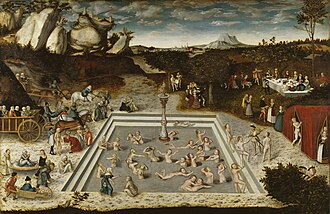 Fontaine de jouvence - Lucas Cranach the Elder (1546)
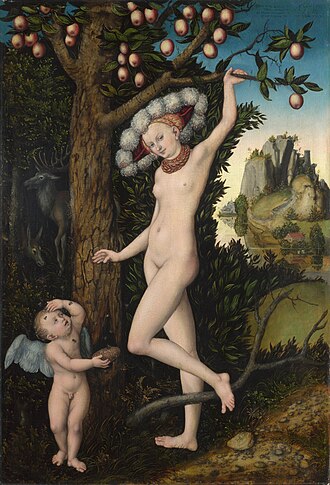 Vénus avec Cupidon le voleur de miel - Lucas Cranach the Elder (1520s)
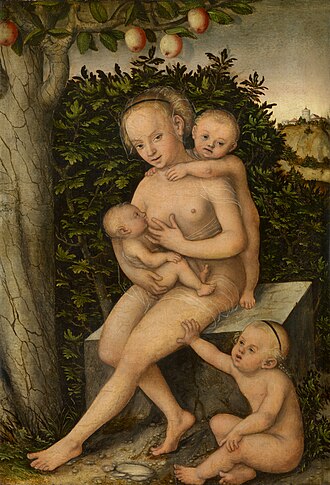 Charité - Lucas Cranach the Elder (1540)
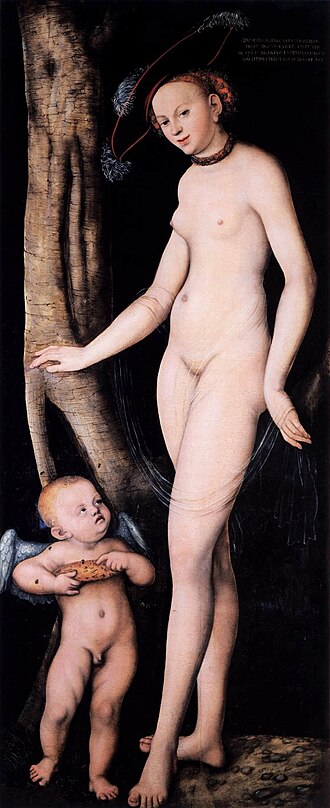 Vénus avec Cupidon voleur de miel - Lucas Cranach the Elder (1531)
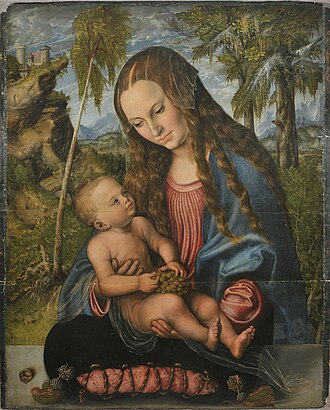 Madonna sous le sapin. - Lucas Cranach the Elder
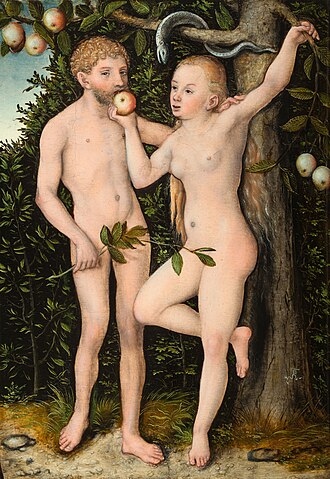 Adam et Eve - Lucas Cranach the Elder (1538)
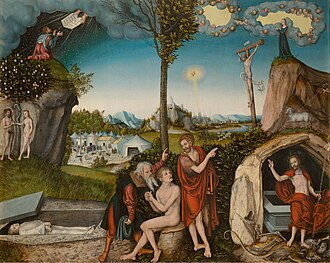 Loi et Évangile - Lucas Cranach the Elder (1529)
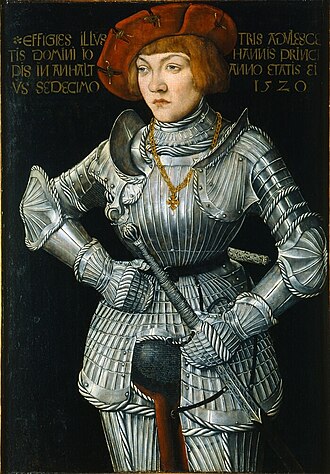 Jean V d'Anhalt-Dessau - Lucas Cranach the Elder (1520)
Œuvres d'artistes liés
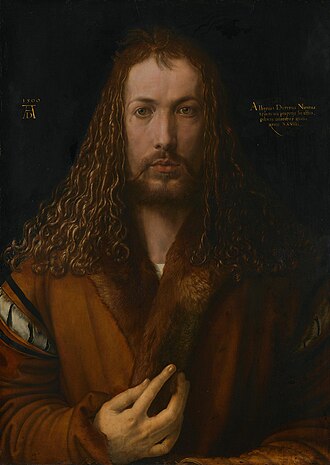 Autoportrait - Albrecht Dürer (1500)
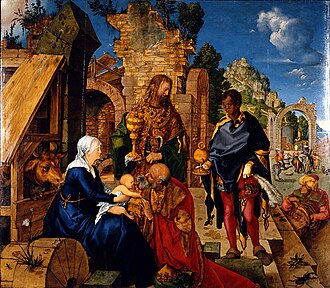 Adoration des mages - Albrecht Dürer (1504)