Jeune femme, les cheveux tressés
Albrecht Dürer · 1497
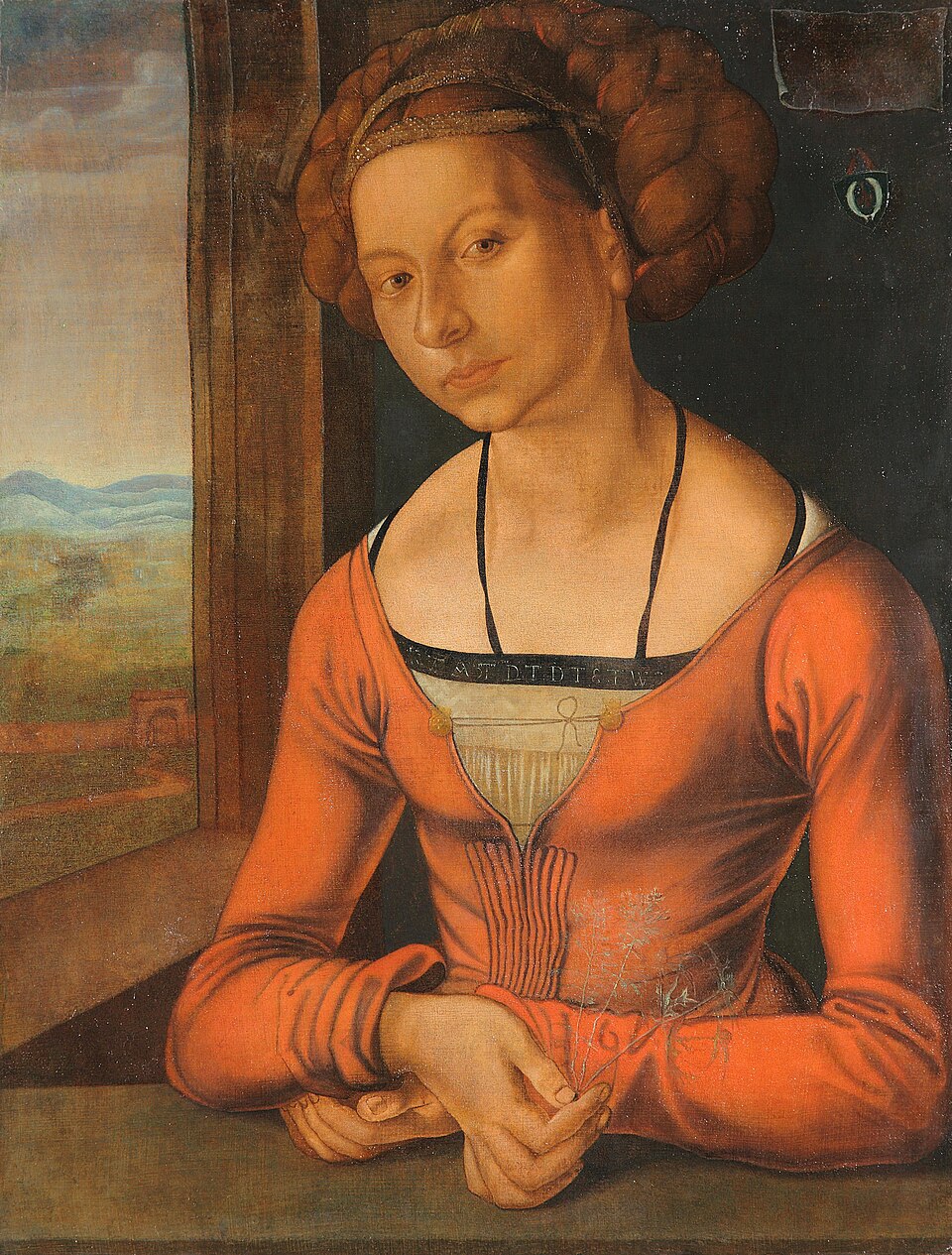
Katharina Fürleger leans on a ledge by a window, a thistle flower in her hand, thick braids wound at her neck. Dürer painted her as a bride-to-be, beside a sister bound for the convent.
The story behind the painting
After portraying Frederick the Wise in 1496, Albrecht Dürer became a sought-after painter among the Nuremberg elite. In 1497 he was commissioned to paint two portraits of the Fürleger sisters of similar size. This oil on panel, 56.5 by 42.5 cm, signed with his monogram, is one; it is in the Gemäldegalerie in Berlin. Its companion, the Fürleger with loose hair, hangs in the Städel in Frankfurt. Because the backgrounds differ, the two were probably not made as one diptych. The source names this sister Katharina.
What to look for
She sits near a window that opens onto a glimpse of landscape, her arms resting on a parapet along the bottom of the picture in the Flemish manner. In her hand is a thistle flower, a symbol of marital fidelity. Her clothing is rich, and her hair is elaborately dressed, with thick braids wound around the back of her neck. Look for the small coat of arms: here a lily sits between two heraldic fish, marking a woman of a burgher family, where her sister's shows a little cross for the religious life.
Meaning and intent
Both sisters were painted close to a turning point: one about to enter a convent as a novice, the other about to become a wife. Dürer showed the two destinies through bearing, through contrasting colour and through the emblems in the arms. Here everything points to marriage: the thistle of fidelity, the rich dress, the window opening onto the world outside. Set beside her sister's lowered eyes and rosary against plain green, Katharina's portrait reads as the worldly half of a single story.
Legacy
Painted in 1497, the portrait belongs to the moment when Dürer's reputation in Nuremberg was rising after his work for Frederick the Wise. The window view and the parapet show him drawing on Flemish models. Today the two sisters are divided between Berlin and Frankfurt, so the dialogue between bride and novice that Dürer built has to be followed across two museums, but each panel still carries the sign of the path its sitter was about to take.
Le saviez-vous ?
- Oil on panel, 56.5 by 42.5 cm, 1497.
- She holds a thistle, a symbol of marital fidelity.
- Companion to her sister's loose-hair portrait in Frankfurt.
- Held by the Gemäldegalerie, Berlin.
À propos de l'artiste
Albrecht Dürer (1471-1528)
femme · portrait · Renaissance allemande · Gemäldegalerie · fenêtre
Autres œuvres de Albrecht Dürer
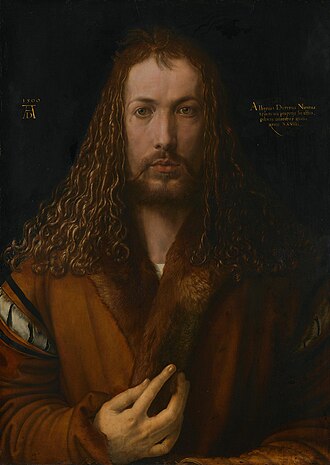 Autoportrait - Albrecht Dürer (1500)
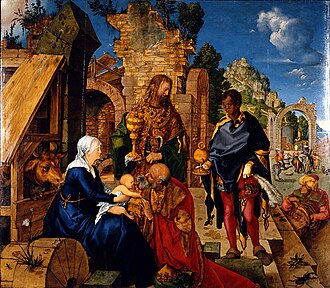 Adoration des mages - Albrecht Dürer (1504)
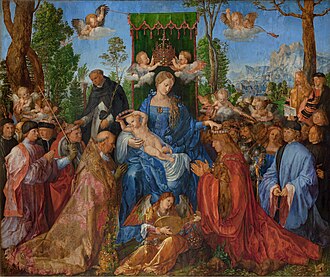 La Vierge de la fête du rosaire - Albrecht Dürer (1506)
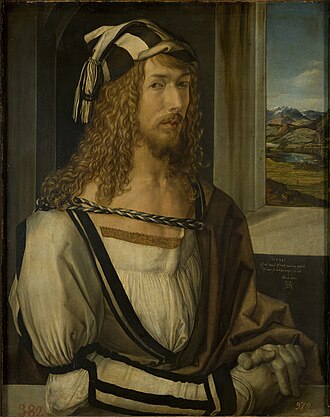 Autoportrait à 26 ans - Albrecht Dürer (1498)
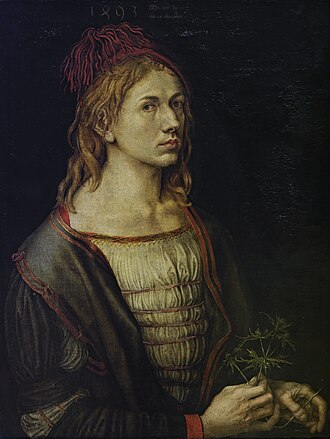 Portrait de l'artiste tenant un chardon - Albrecht Dürer (1493)
 retable Heller - Albrecht Dürer (1500s)
 retable des dix mille martyrs - Albrecht Dürer (1508)
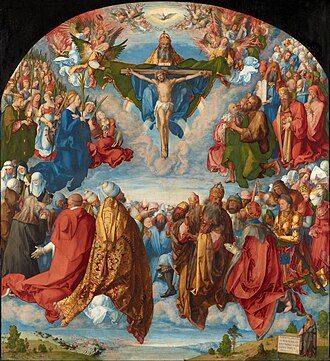 L'Adoration de la Sainte Trinité - Albrecht Dürer (1511)
Œuvres d'artistes liés
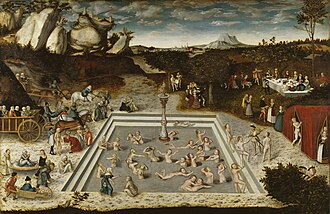 Fontaine de jouvence - Lucas Cranach the Elder (1546)
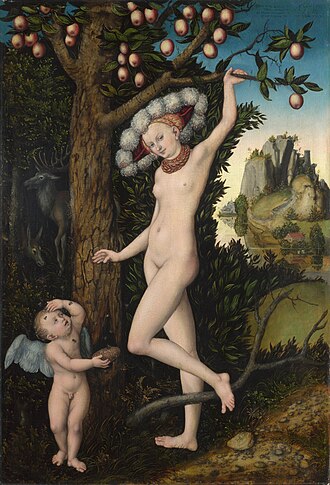 Vénus avec Cupidon le voleur de miel - Lucas Cranach the Elder (1520s)