Portrait d'un homme
Diego Velázquez · 1630s
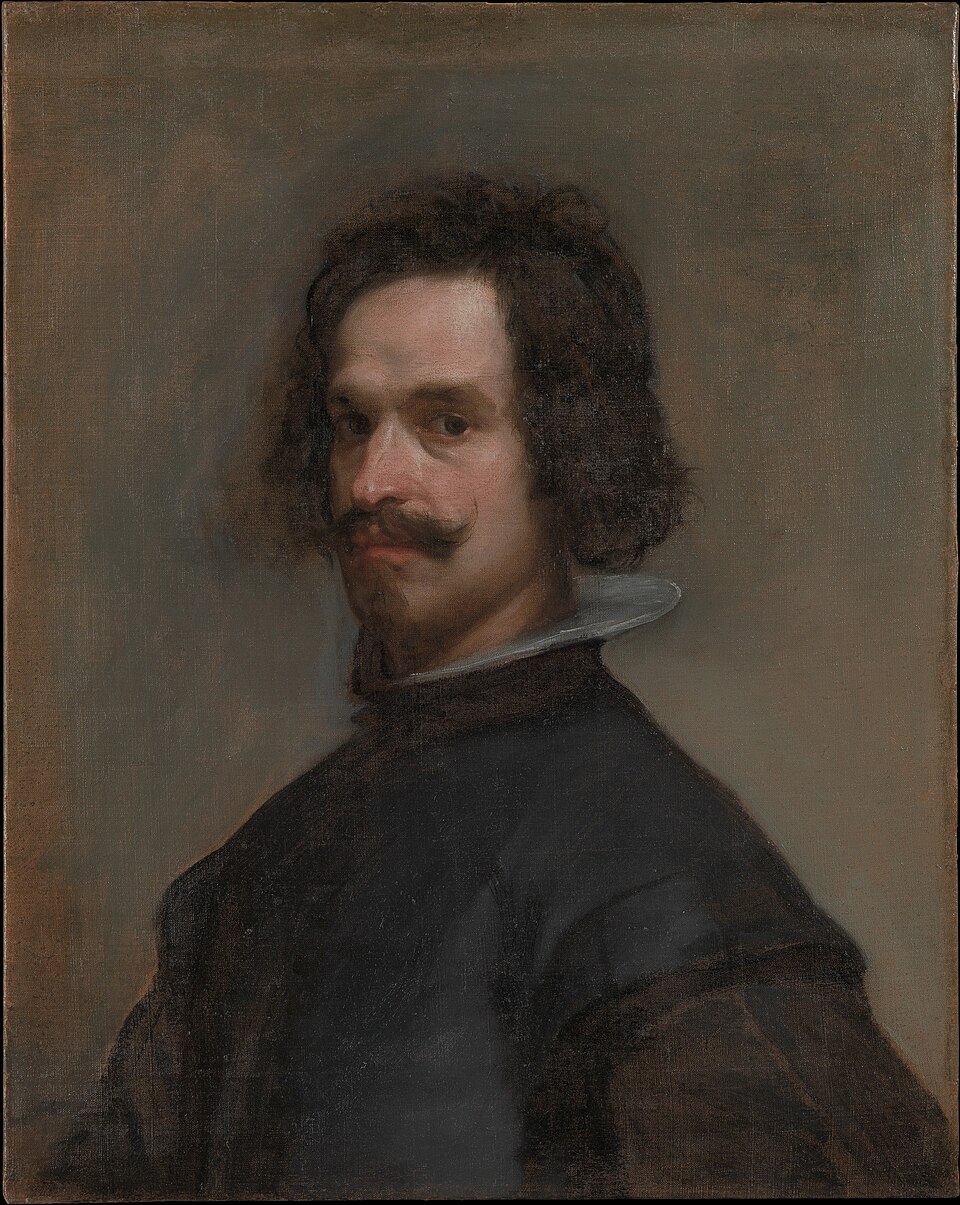
For decades the Met labelled this man the work of Velázquez's workshop. Then a cleaning in 2009 turned murky green to grey, and the master's hand came back, in one expert's words, like Cinderella.
The story behind the painting
Diego Velázquez painted this portrait around 1630 to 1635. It once belonged to Count Johann Ludwig von Wallmoden-Gimborn, the illegitimate son of George II of Great Britain. It was later owned by the dealer Joseph Duveen, who sold it to Jules Bache in 1926 as a genuine Velázquez, and Duveen may have had it retouched to look more "old masterish". Bache bequeathed it to the Metropolitan Museum of Art in New York in 1949. Darkened and discoloured by varnish, it was cleaned in 1953 and again in 1965.
What to look for
The picture was painted from life with an informal handling. It measures 68.6 by 55.2 cm, and its frame comes from northern Spain. Look for what the 2009 cleaning revealed: tones that had seemed murky and greenish turned out to be grey, and fine details of brushwork and a long-hidden vibrancy of colour appeared. The man's face closely resembles that of a figure at the far right of Velázquez's Surrender of Breda, the painting that commemorates a Spanish victory over the Dutch. Seeing the two together is part of the pleasure.
Meaning and intent
That resemblance raises the central question: who is he? It is possible, though uncertain, that both this portrait and the figure in the Surrender of Breda show Velázquez himself. The sources go no further, and neither should we. What the painting does show is the difference between an image clouded by varnish and the same image cleaned: a portrait judged second-hand became, once visible again, a work convincing enough for the museum to restore its traditional attribution.
Legacy
In the 1960s a scholar attributed it to Velázquez's workshop, and the museum agreed in 1979. In 2009, after the latest cleaning by Michael Gallagher of the Met's conservation department, the museum returned it to Velázquez. Jonathan Brown, a leading authority on the painter, said one glance was all it took, calling it a fantastic discovery that had been under his nose all his life and that emerged "Cinderella-like". It remains a lesson in how much the condition of a painting shapes the way we judge it.
Le saviez-vous ?
- Painted by Velázquez around 1630 to 1635.
- Bequeathed to the Metropolitan Museum by Jules Bache in 1949.
- Demoted to the workshop, then re-attributed to Velázquez in 2009 after cleaning.
- May be a self-portrait, though this is uncertain.
À propos de l'artiste
Diego Velázquez (1599-1660)
portrait · homme · Metropolitan Museum of Art · portrait
Autres œuvres de Diego Velázquez
 Les Ménines - Diego Velázquez (1656)
 La Reddition de Bréda - Diego Velázquez (1635)
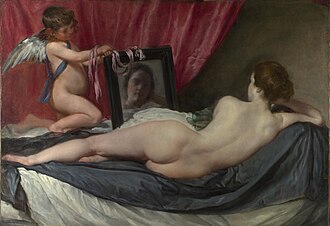 Vénus à son miroir - Diego Velázquez (1644)
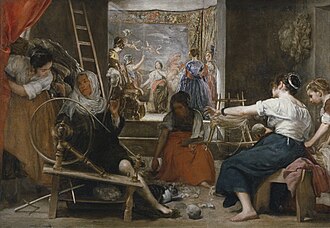 Les Fileuses - Diego Velázquez
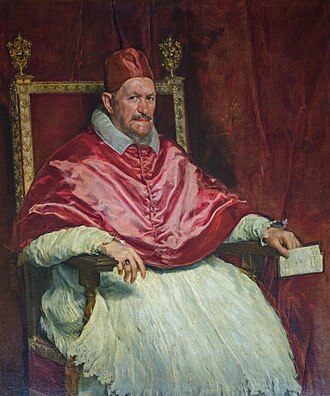 Innocent X - Diego Velázquez
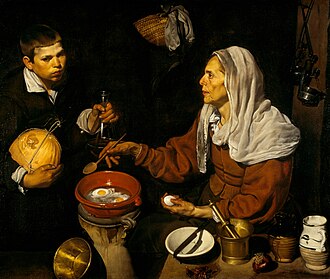 Vieille faisant frire des œufs - Diego Velázquez (1618)
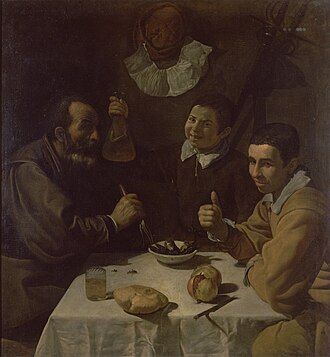 Trois hommes à table, le déjeuner - Diego Velázquez (1617)
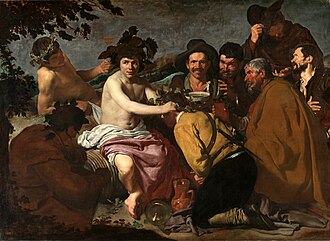 Le Triomphe de Bacchus - Diego Velázquez (1628)
Œuvres d'artistes liés
 Le Souper à Emmaüs - Caravaggio (1601)
 La Vocation de saint Matthieu - Caravaggio (1609)
 Saint Francis in Meditation - Francisco de Zurbarán (1639)
 The Immaculate Conception - Francisco de Zurbarán (1661)
 Triple portrait de Charles Ier - Anthony van Dyck (1635)
 Charles Ier à cheval avec Monsieur de Saint Antoine - Anthony van Dyck (1636)
 L'Érection de la croix - Peter Paul Rubens (1609)
 L'Enlèvement des filles de Leucippe - Peter Paul Rubens (1618)
 La Ronde de nuit - Rembrandt van Rijn (1642)
 Autoportrait - Rembrandt van Rijn (1659)
 Le Joyeux Buveur - Frans Hals (1620s)
 Le Cavalier riant - Frans Hals (1624)