Portrait d'une jeune fille à l'œillet
Lucas Cranach l'Ancien · 1526
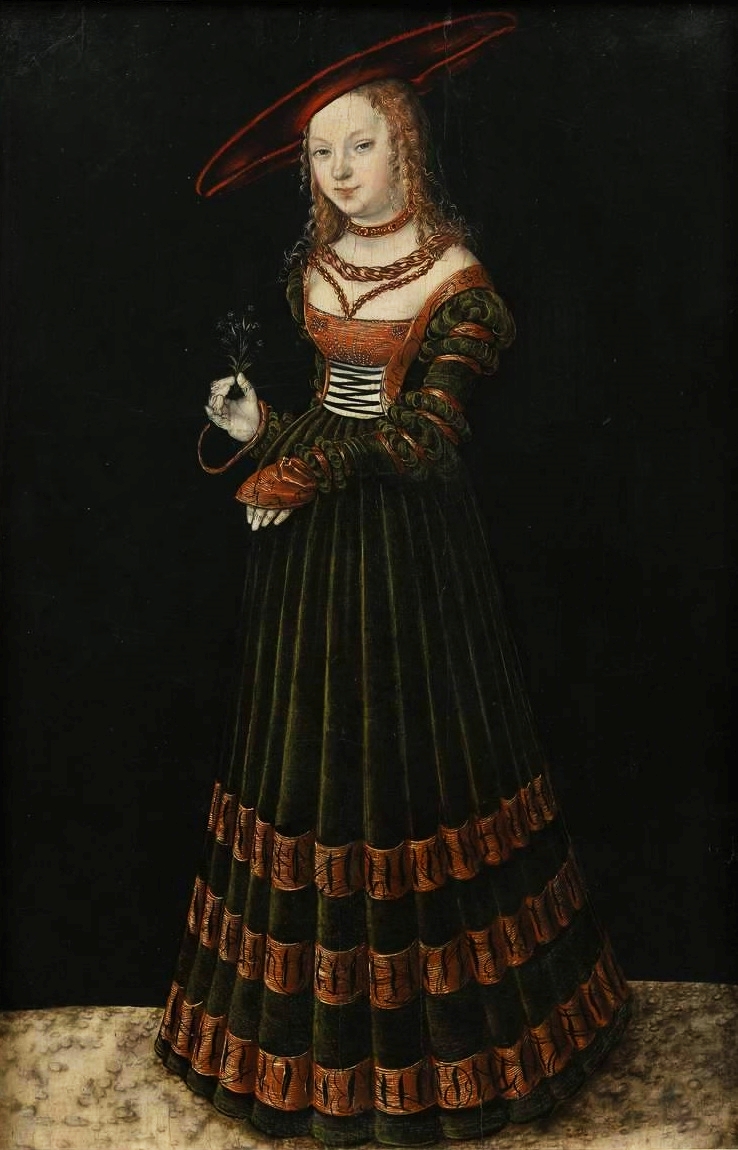
A pale young woman in a wide red hat holds a tiny forget-me-not in her gloved hand. She was once called a princess, then stolen by the Nazis, and she came home to Warsaw in 1945.
The story behind the painting
Lucas Cranach the Elder dated this small panel 1526. It was once known as The Princess and was thought to show Princess Sibylle of Cleves, but there is not enough evidence for that. Neither the place where it was made nor the person who ordered it is known. From 1793 the painting was in the collection of Stanisław Kostka Potocki at Wilanów, where it was at first believed to be by Lucas van Leyden. It stayed in the Wilanów Palace collections until 1939, when it was deposited in the National Museum in Warsaw.
What to look for
Against a dark, neutral background and over a pale stony ground, both typical of Cranach, a young woman stands turned slightly three-quarters. She has pale skin, a round head, curly reddish-blond hair to the shoulders, dark, slightly narrow eyes and delicate brows, and a faint smile. In her gloved right hand she holds a forget-me-not. She wears a flat, wide-brimmed red hat and an elegant dark green velvet dress with gold and red details, its square neckline veiled by a fine shirt, richly embroidered. Gold jewellery completes it: a choker and two different necklaces.
Meaning and intent
Because her features recur across Cranach's work and reflect his Gothic ideal of beauty, most researchers see her as a portrait of an ideal woman with no strictly defined identity. Cranach often generalised faces while reconstructing the costumes of princes and nobles in great detail, which gives such figures a stiff but always elegant air, proudly showing their rank. Because of the little flower she holds, art historians interpret the picture as a betrothal portrait, meant for a fiancé who would in turn send his own portrait to her.
Legacy
The painting's own history is turbulent. A year after it was deposited in the National Museum in Warsaw, it was stolen by the Nazis and taken to Germany. Wikidata records the Munich Central Collecting Point among its locations, the centre where looted art was gathered after the war. In 1945 the recovered work was returned to the National Museum in Warsaw, where it is displayed. The panel measures only about 34.9 by 23.8 cm, a small object that has travelled a long way.
Le saviez-vous ?
- Dated 1526 by Lucas Cranach the Elder.
- Once called The Princess, but the sitter is not identified.
- Stolen by the Nazis around 1940 and recovered in 1945.
- Read as a betrothal portrait because of the forget-me-not.
À propos de l'artiste
Lucas Cranach l'Ancien (1472-1553)
portrait · fille · Munich Central Collecting Point
Autres œuvres de Lucas Cranach l'Ancien
 Fontaine de jouvence - Lucas Cranach the Elder (1546)
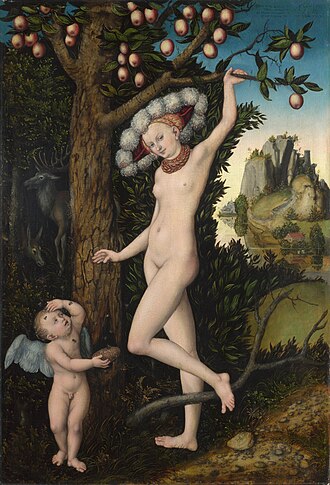 Vénus avec Cupidon le voleur de miel - Lucas Cranach the Elder (1520s)
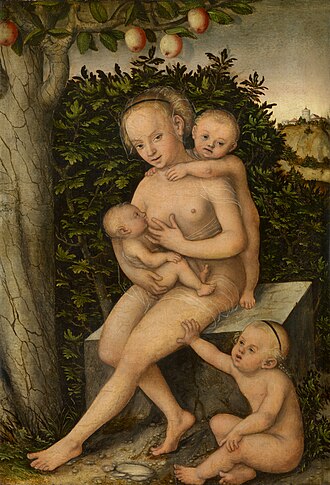 Charité - Lucas Cranach the Elder (1540)
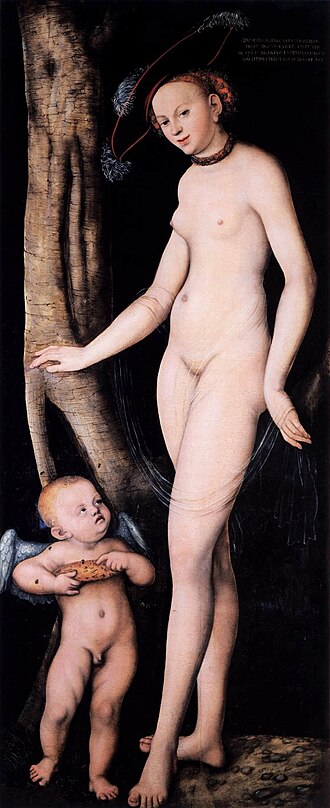 Vénus avec Cupidon voleur de miel - Lucas Cranach the Elder (1531)
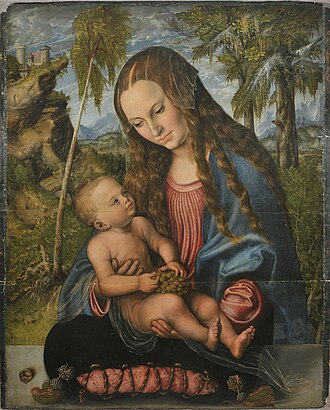 Madonna sous le sapin. - Lucas Cranach the Elder
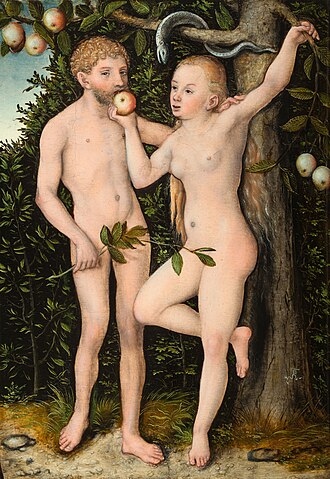 Adam et Eve - Lucas Cranach the Elder (1538)
 Loi et Évangile - Lucas Cranach the Elder (1529)
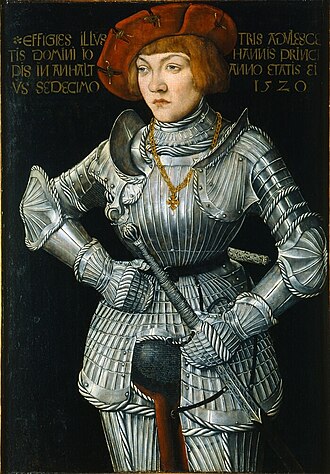 Jean V d'Anhalt-Dessau - Lucas Cranach the Elder (1520)
Œuvres d'artistes liés
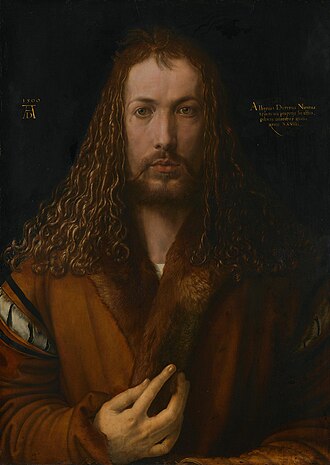 Autoportrait - Albrecht Dürer (1500)
 Adoration des mages - Albrecht Dürer (1504)