Philippe IV
Diego Velázquez · 1620s
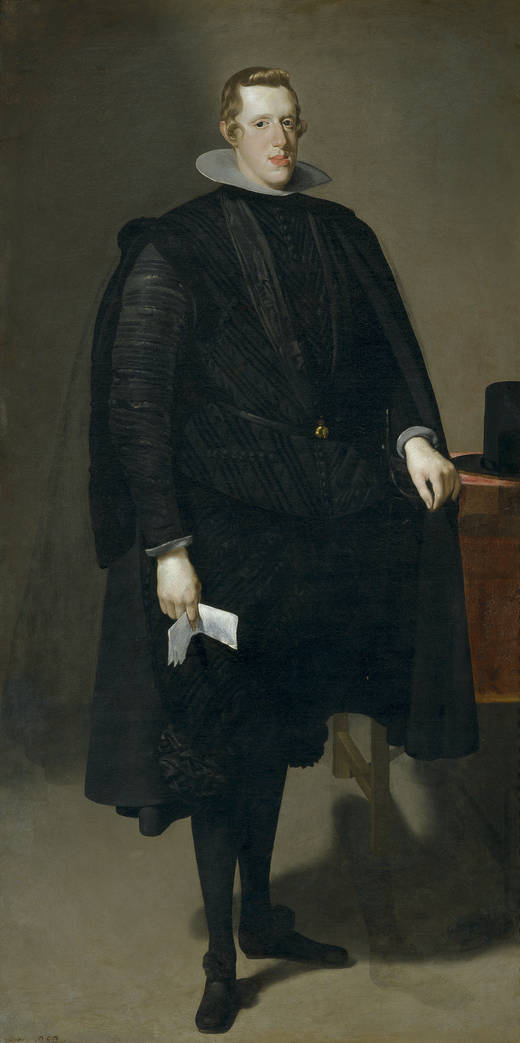
An 18-year-old king stands dressed entirely in black, one hand on his sword, a paper in the other. X-rays show that Velázquez repainted almost the whole canvas a few years later to make him look taller and more regal.
The story behind the painting
Shortly after settling in Madrid in 1623, Velázquez painted his patron Juan de Fonseca, and when that portrait was seen at court it was ordered that he paint the king. According to his father-in-law Francisco Pacheco, Philip IV sat for him on 30 August 1623. That first likeness, probably a quick study, served as a model for later portraits. This full-length official portrait shows the king at 18, entirely in black. French Wikipedia dates it to around 1623, totally reworked around 1628, while Wikidata gives the 1620s. José López-Rey believed the first portrait is the one visible in x-rays beneath the Prado canvas.
What to look for
The king stands upright, almost life-size at about 198 by 101.5 cm. His right hand rests on a sword, the sword of justice; his left holds a paper. A table beside him carries a tall hat, alluding to his duties of government. The Golden Fleece hangs from a black ribbon rather than a gold chain as in the first version. With tight brushwork and a reduced palette, the majesty comes far more from his bearing than from the discreet emblems of power around him. Look at the legs: traces of the first version, with legs apart like a compass, are still visible.
Meaning and intent
The x-rays reveal a portrait almost entirely remodelled. The cape became longer and closer to the body, the hands moved, the table was raised, the face grew thinner and the costume was completely redone. The hair shifted to the right, the chin rose and the starched collar shrank, so the head seems higher. The arm on the sword lifts the shoulder slightly, and the legs are now joined and straight. All of it serves to elevate the monarch. Velázquez seems to have been dissatisfied with the first appearance and tried to shape a slenderer figure, reinforcing an image of austerity without losing meaning.
Legacy
The painting came from the Buen Retiro Palace, where a 1700 inventory described it as a portrait of the young Philip IV in Velázquez's first manner. In 1791 it went to the Royal Palace of Madrid, was shown at the Royal Academy of San Fernando from 1816, and entered the Prado in 1828. Workshop copies record its first appearance, one in Boston and one in the Metropolitan Museum of Art, though López-Rey thought the New York picture original, while Enriqueta Harris and Jonathan Brown see it as workshop work. A copy of the final version is in the Isabella Stewart Gardner Museum.
Le saviez-vous ?
- Philip IV first sat for Velázquez on 30 August 1623.
- Painted around 1623 and totally reworked around 1628.
- X-rays reveal the earlier portrait underneath.
- In the Prado since 1828.
À propos de l'artiste
Diego Velázquez (1599-1660)
portrait · musée du Prado · Toison d'or · Philippe IV d'Espagne
Autres œuvres de Diego Velázquez
 Les Ménines - Diego Velázquez (1656)
 La Reddition de Bréda - Diego Velázquez (1635)
 Vénus à son miroir - Diego Velázquez (1644)
 Les Fileuses - Diego Velázquez
.jpg) Innocent X - Diego Velázquez
Innocent X - Diego Velázquez Vieille faisant frire des œufs - Diego Velázquez (1618)
 Trois hommes à table, le déjeuner - Diego Velázquez (1617)
.jpg) Le Triomphe de Bacchus - Diego Velázquez (1628)
Le Triomphe de Bacchus - Diego Velázquez (1628)
Œuvres d'artistes liés
 Le Souper à Emmaüs - Caravaggio (1601)
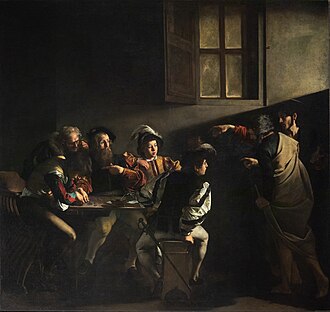 La Vocation de saint Matthieu - Caravaggio (1609)
.jpg) L'Érection de la croix - Peter Paul Rubens (1609)
L'Érection de la croix - Peter Paul Rubens (1609)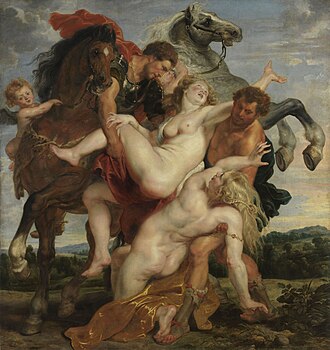 L'Enlèvement des filles de Leucippe - Peter Paul Rubens (1618)
%20-%20Google%20Art%20Project.jpg) Triple portrait de Charles Ier - Anthony van Dyck (1635)
Triple portrait de Charles Ier - Anthony van Dyck (1635)%20with%20M.%20de%20St%20Antoine%20-%20Google%20Art%20Project.jpg) Charles Ier à cheval avec Monsieur de Saint Antoine - Anthony van Dyck (1636)
Charles Ier à cheval avec Monsieur de Saint Antoine - Anthony van Dyck (1636)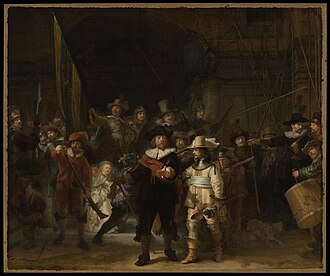 La Ronde de nuit - Rembrandt van Rijn (1642)
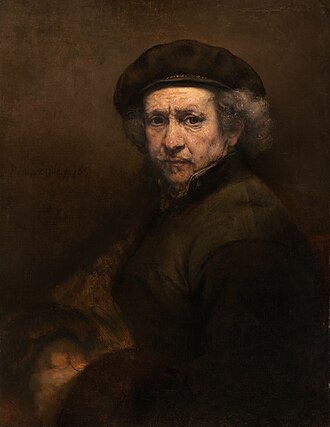 Autoportrait - Rembrandt van Rijn (1659)
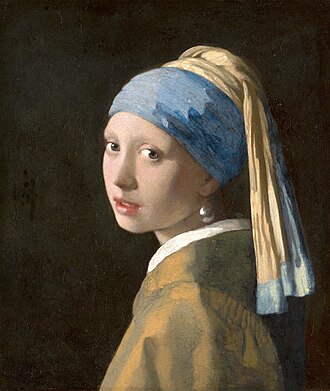 La Jeune Fille à la perle - Johannes Vermeer (1665)
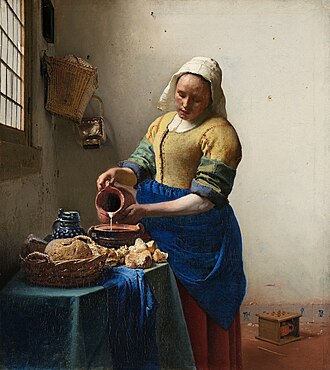 La Laitière - Johannes Vermeer (c. 1658)