Parisiennes habillées en Algériennes
Pierre-Auguste Renoir · 1872
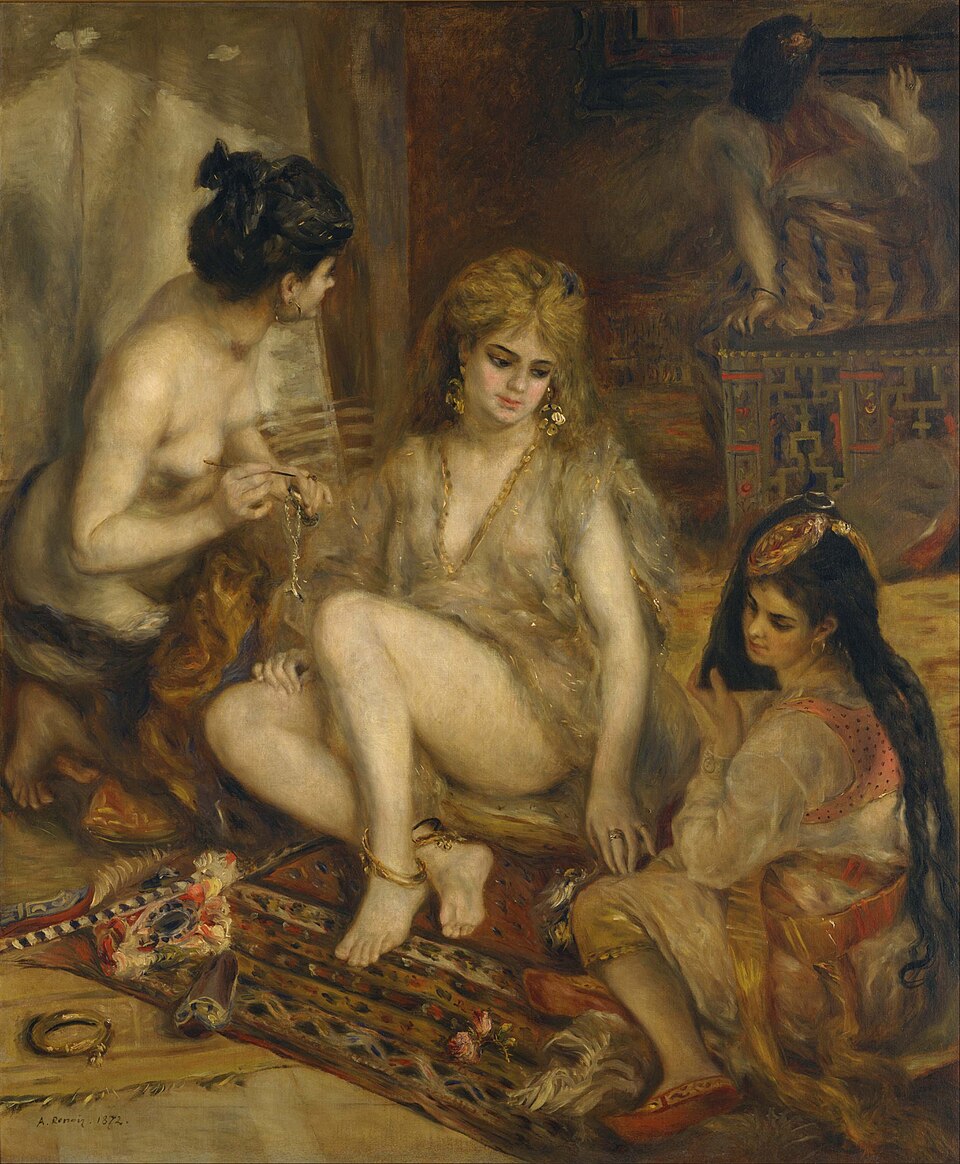
Renoir's love letter to Delacroix: Parisian models dressed as Algerian women in a theatrical harem. The Salon rejected it, Renoir came to dislike it, and it ended up treasured in Tokyo.
The story behind the painting
In the early 1870s Renoir turned away for a while from the realism of Courbet and Manet toward the colour and drama of his hero Eugène Delacroix. He painted this picture, completed in 1872, in homage to Delacroix's Women of Algiers in their Apartment of 1834, which he later called the most beautiful picture in existence. It was rejected for the Paris Salon of 1872. Roger Benjamin argues that this rejection ended Renoir's experiments with Orientalism in the 1870s. Renoir himself did not visit Algeria until 1881.
What to look for
Unlike Delacroix, who spread his figures across the foreground, Renoir sets his women on a diagonal, ending in an indistinct figure at the top right. The floor tips toward us so steeply that the women seem about to slide out of the picture. Two black-haired women attend a blonde woman in the centre: one holds up a mirror, the other may be applying make-up with a brush. At the top, a figure raises her hand as if greeting or delaying a sudden visitor, who also catches the eye of the woman on the left. One model has been identified as Lise Tréhot, Renoir's lover, in one of her last sittings for him.
Meaning and intent
The title is the key. By calling them Parisian women in costume, Renoir admits the artificial nature of much Orientalist painting. It may also be a gentle joke about Delacroix, who had to paint his Women of Algiers in the studio with French models after failing to gain real access to women's quarters in Algiers in 1832. Benjamin calls the picture a naturalist demythologisation of the Orient, close to pastiche. There is nudity that Delacroix never showed, and one reading sees the scene as a client arriving at a Paris brothel with an oriental theme.
Legacy
Renoir was not fond of the painting and called it a grande machine, a large academic composition. When he moved studios he left it behind, hoping his former landlady would get rid of it, but he had to take it back, and it was later sold as part of a lot of eleven works. It passed through Paris collectors and dealers, including Bernheim-Jeune and Durand-Ruel, to the Japanese collector Kojiro Matsukata. Sequestered by the French government in 1944, it returned to Japan in 1959 and is now in the National Museum of Western Art, Tokyo. Anthony Hecht describes it in his poem The Deodand.
Le saviez-vous ?
- Completed in 1872 as a homage to Delacroix's Women of Algiers.
- Rejected by the Paris Salon of 1872.
- Lise Tréhot, Renoir's lover, was one of the models.
- Now in the National Museum of Western Art, Tokyo.
À propos de l'artiste
Pierre-Auguste Renoir (1841-1919)
Autres œuvres de Pierre-Auguste Renoir
 Bal du moulin de la Galette - Pierre-Auguste Renoir (1876)
 Le Déjeuner des canotiers - Pierre-Auguste Renoir (1881)
 La Balançoire - Pierre-Auguste Renoir (1876)
 Les Grandes Baigneuses - Pierre-Auguste Renoir (1884)
 Jeunes Filles au piano - Pierre-Auguste Renoir (1892)
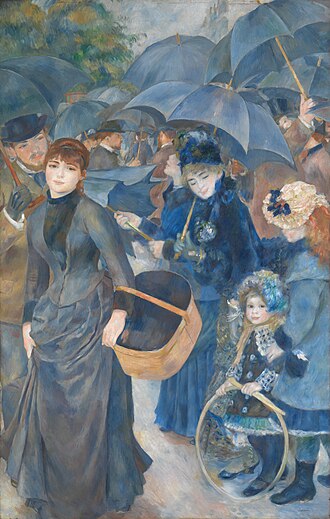 Les Parapluies - Pierre-Auguste Renoir (1880s)
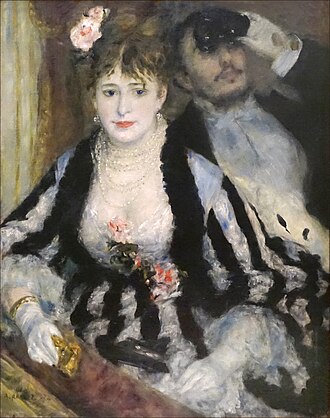 La Loge - Pierre-Auguste Renoir (1874)
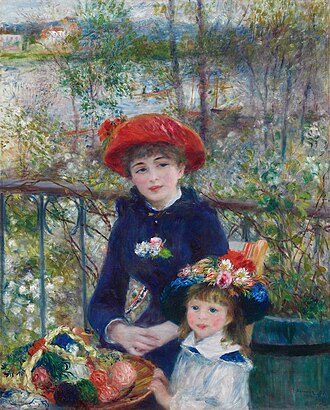 Les Deux Sœurs - Pierre-Auguste Renoir (1881)
Œuvres d'artistes liés
 Impression, soleil levant - Claude Monet (1872)
 Nymphéas - Claude Monet (1906)
 Le Déjeuner sur l'herbe - Édouard Manet (1863)
 Olympia - Édouard Manet (1863)
 Le Berceau - Berthe Morisot (1872)
 Jour d'été - Berthe Morisot (1879)
 L'Absinthe - Edgar Degas (1875)
 La Famille Bellelli - Edgar Degas (1858)
 Le Canal du Loing - Alfred Sisley (1892)
 L'Abreuvoir à Marly-Le-Roi, gelée blanche - Alfred Sisley (1876)
 Rue de Paris, temps de pluie - Gustave Caillebotte (1877)
 Les Raboteurs de parquet - Gustave Caillebotte (1875)