Pallas et Arachné
Pierre Paul Rubens · 1637
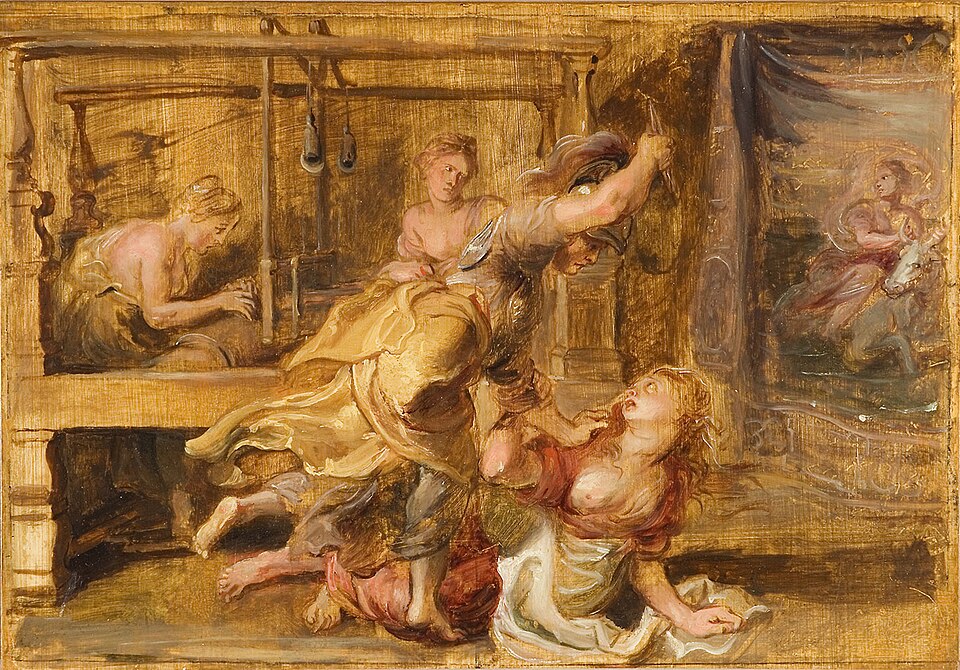
A goddess raises her hand against a mortal weaver who dared to be better. Rubens's small oil study tells Ovid's tale of pride and punishment, and it later found its way into the background of Las Meninas.
The story behind the painting
Pallas and Arachne, also called Minerva Punishing Arachne, is an oil study on board that Rubens completed in 1636 or 1637; Wikidata gives 1637. It was a preparatory study for one of the series of paintings that Rubens and his workshop made for the Torre de la Parada, a royal hunting lodge of the Spanish king. The finished painting for that series is now lost, which makes this small study a precious witness to it. The study itself is now in the Virginia Museum of Fine Arts in Richmond.
What to look for
The scene comes from Ovid's Metamorphoses: the weaving contest between the goddess Athena, or Pallas, and the mortal Arachne. Look for the loom and the gesture of the angry goddess about to strike. In the background hangs a partly visible tapestry showing Titian's The Rape of Europa. According to Ovid, Europa was exactly the theme Arachne wove during the contest, so Rubens lets us see the very work that caused her downfall. Because this is an oil sketch on a panel, the brushwork is quick and free, made to work out the composition.
Meaning and intent
In the myth, Athena challenges Arachne and loses. She punishes Arachne anyway, for insulting the gods by not recognising the divine source of her skill and for making a work more beautiful than the goddess's own. The painting is therefore about art itself: the risk of rivalling the gods, and the price of pride and of talent. By quoting Titian inside the picture, Rubens also pays homage to the great Venetian painter he admired, and turns the scene into a story about artists and their models.
Legacy
The painting had a remarkable afterlife. Juan Bautista Martínez del Mazo, the son-in-law of Diego Velázquez, made a copy of it. Velázquez placed Mazo's copy behind himself when composing Las Meninas, paired with another painting about a contest of the arts between gods and mortals, Apollo as Victor over Pan. The copy was painted into the background of Las Meninas, one of the most analysed canvases in Western art. A copy by Rubens of Titian's Europa, Velázquez's favourite work, belonged to Philip IV, so one painting nests inside another, inside another.
Le saviez-vous ?
- An oil study on board by Rubens, 1636 or 1637.
- A study for the lost Torre de la Parada series.
- Shows Titian's Rape of Europa as the tapestry in the background.
- A copy of it appears in the background of Las Meninas by Velázquez.
À propos de l'artiste
Pierre Paul Rubens (1577-1640)
Autres œuvres de Pierre Paul Rubens
.jpg) L'Érection de la croix - Peter Paul Rubens (1609)
L'Érection de la croix - Peter Paul Rubens (1609)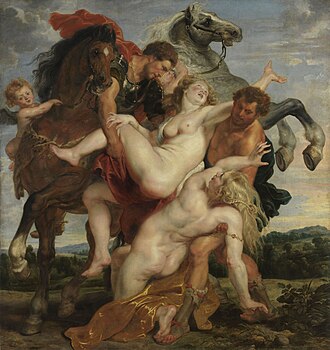 L'Enlèvement des filles de Leucippe - Peter Paul Rubens (1618)
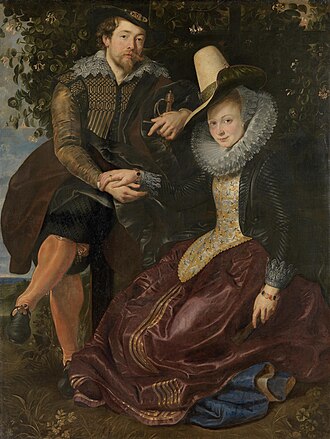 Sous la tonnelle de chèvrefeuille - Peter Paul Rubens (1600s)
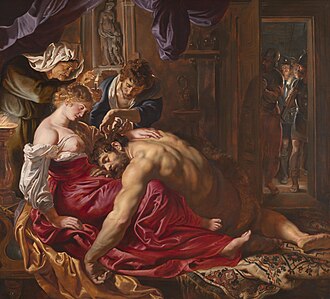 Samson et Dalila - Peter Paul Rubens (1600s)
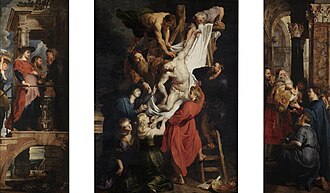 La Descente de Croix - Peter Paul Rubens (1611)
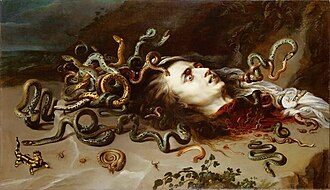 Tête de Méduse - Peter Paul Rubens (1618)
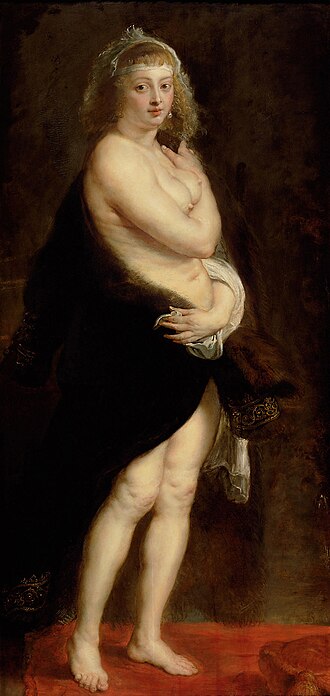 Hélène Fourment sortant du bain - Peter Paul Rubens (1638)
.jpg) Le Jardin d'Amour - Peter Paul Rubens (1632)
Le Jardin d'Amour - Peter Paul Rubens (1632)
Œuvres d'artistes liés
 La Nuit étoilée - Vincent van Gogh (1889)
.jpg) Terrasse du café le soir - Vincent van Gogh (1888)
Terrasse du café le soir - Vincent van Gogh (1888)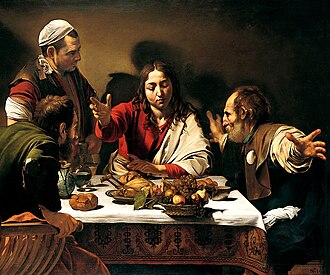 Le Souper à Emmaüs - Caravaggio (1601)
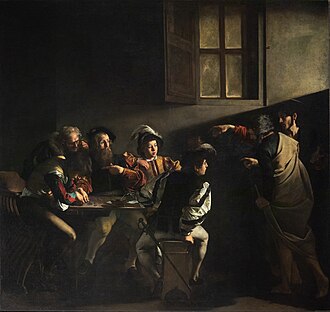 La Vocation de saint Matthieu - Caravaggio (1609)
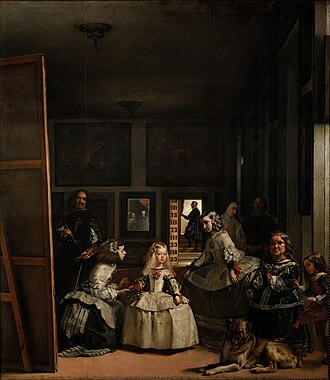 Les Ménines - Diego Velázquez (1656)
 La Reddition de Bréda - Diego Velázquez (1635)
%20-%20Google%20Art%20Project.jpg) Triple portrait de Charles Ier - Anthony van Dyck (1635)
Triple portrait de Charles Ier - Anthony van Dyck (1635)%20with%20M.%20de%20St%20Antoine%20-%20Google%20Art%20Project.jpg) Charles Ier à cheval avec Monsieur de Saint Antoine - Anthony van Dyck (1636)
Charles Ier à cheval avec Monsieur de Saint Antoine - Anthony van Dyck (1636) La Ronde de nuit - Rembrandt van Rijn (1642)
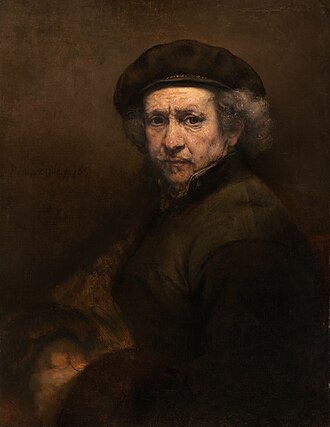 Autoportrait - Rembrandt van Rijn (1659)
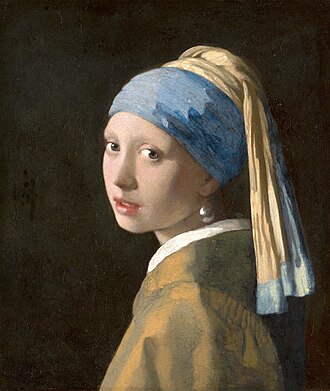 La Jeune Fille à la perle - Johannes Vermeer (1665)
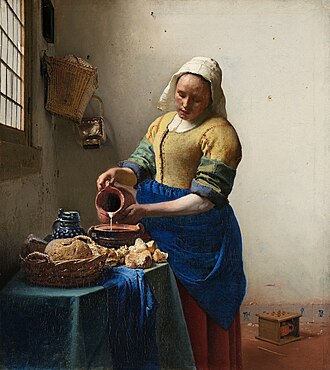 La Laitière - Johannes Vermeer (c. 1658)