Marine, Arcachon, temps d’orage
Édouard Manet · 1871
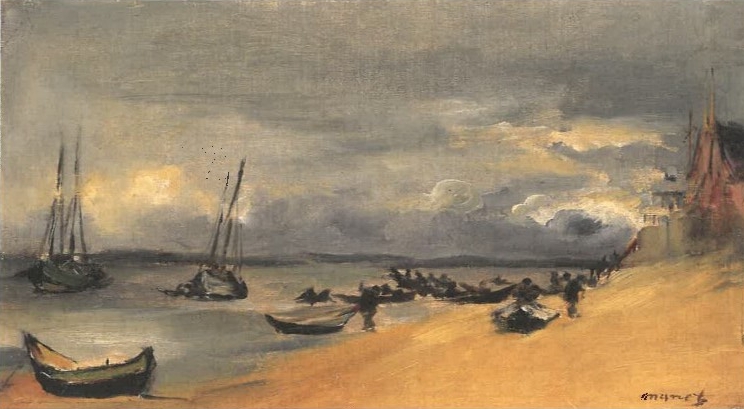
A storm gathers over the bay of Arcachon while fishermen haul their boats ashore. Manet painted this little seascape in March 1871, waiting out war and revolution, with only a few quick strokes of sky.
The story behind the painting
In March 1871 Manet and his family had rented the Villa Servantie at Arcachon in the south-west of France. They were waiting there for the end of the Franco-Prussian War and the Paris Commune. The source notes that the troubled times could be read into the stormy sky, but that there is no evidence Manet himself meant it that way. He had begun painting outdoors only the year before, and this picture was made directly in front of the motif, either from the villa terrace or on the beach. Its small size, about 20.6 by 36.7 cm, made it easy to carry and kept the coastal wind from being a problem.
What to look for
The shoreline runs diagonally from the lower left to the horizon on the right. On the right stand sketchy buildings: a house with a reddish front, a dark roof and flagpoles, a signal mast that may have shown wind or tide, and a lower building with a red-brown stair down to the sea. The water mixes blue, grey, yellow and white. Sailing boats with dark hulls lie at anchor, sails furled. In the lower left corner rests a pinasse, the local rowing boat made for the shallow bay, and further along shadowy fishermen pull boats ashore. The Ile aux Oiseaux is a dark strip on the horizon, under blue-grey storm clouds. The picture is signed Manet at lower right.
Meaning and intent
The art historian Sandra Gianfreda wrote that with a few brushstrokes Manet evokes the threatening mood of a coming storm. The picture is closely tied to a similar-sized painting, Arcachon in Fine Weather, in the Denver Art Museum, which shows almost the same stretch of beach under a blue sky. Painting one motif in different weather and light was unusual for Manet and anticipates the series Claude Monet would paint much later, such as the haystacks from 1890. Manet had loved the sea since youth: at 16 he sailed to Rio de Janeiro on the Havre et Guadeloupe, watching sea and sky on deck.
Legacy
Years later Manet told the painter Charles Toche how he had studied the sea and sky during the 113-day round voyage, and the source sees that youthful study of changing light carried into this and his other seascapes painted on the French coast. The first known owner after Manet was Thomas W. Evans, a dentist living in Paris, who owned several Manets; the actress Mery Laurent, a friend of both, may have introduced them. The painting later went to Alfred Cassirer in Berlin, who left it to his daughter Eva on his death in 1932. After the Second World War it was on long-term loan to the Kunstmuseum Basel. Today it belongs to an unnamed private collection.
Le saviez-vous ?
- Painted in March 1871 at Arcachon, while Manet waited out the war and the Commune.
- Made outdoors, directly in front of the motif.
- Pairs with Arcachon in Fine Weather in the Denver Art Museum.
- Now in a private collection.
À propos de l'artiste
Édouard Manet (1832-1883)
Autres œuvres de Édouard Manet
 Le Déjeuner sur l'herbe - Édouard Manet (1863)
 Olympia - Édouard Manet (1863)
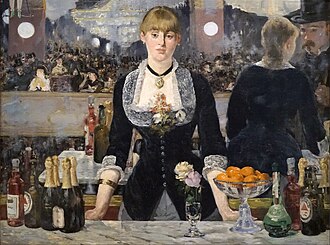 Un bar aux Folies Bergère - Édouard Manet (1882)
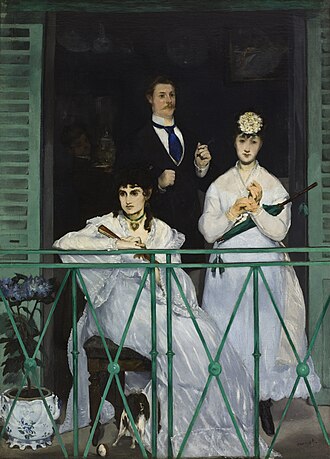 Le Balcon - Édouard Manet (1868)
 La Musique aux Tuileries - Édouard Manet (1862)
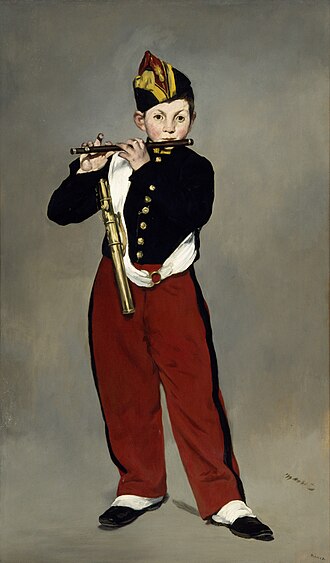 Le Fifre - Édouard Manet (1866)
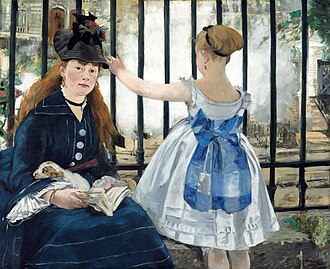 Le Chemin de fer - Édouard Manet (1873)
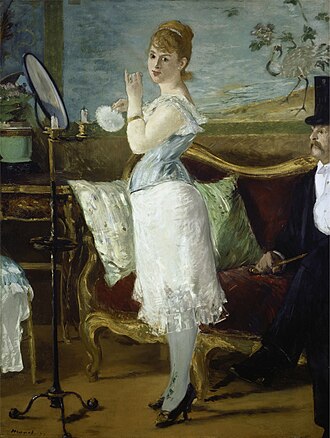 Nana - Édouard Manet (1877)
Œuvres d'artistes liés
 Impression, soleil levant - Claude Monet (1872)
 Nymphéas - Claude Monet (1906)
 Bal du moulin de la Galette - Pierre-Auguste Renoir (1876)
 Le Déjeuner des canotiers - Pierre-Auguste Renoir (1881)
 Le Berceau - Berthe Morisot (1872)
 Jour d'été - Berthe Morisot (1879)
 L'Absinthe - Edgar Degas (1875)
 La Famille Bellelli - Edgar Degas (1858)
 Le Canal du Loing - Alfred Sisley (1892)
 L'Abreuvoir à Marly-Le-Roi, gelée blanche - Alfred Sisley (1876)
 Rue de Paris, temps de pluie - Gustave Caillebotte (1877)
 Les Raboteurs de parquet - Gustave Caillebotte (1875)