Vierge à la poire
Albrecht Dürer · 1526
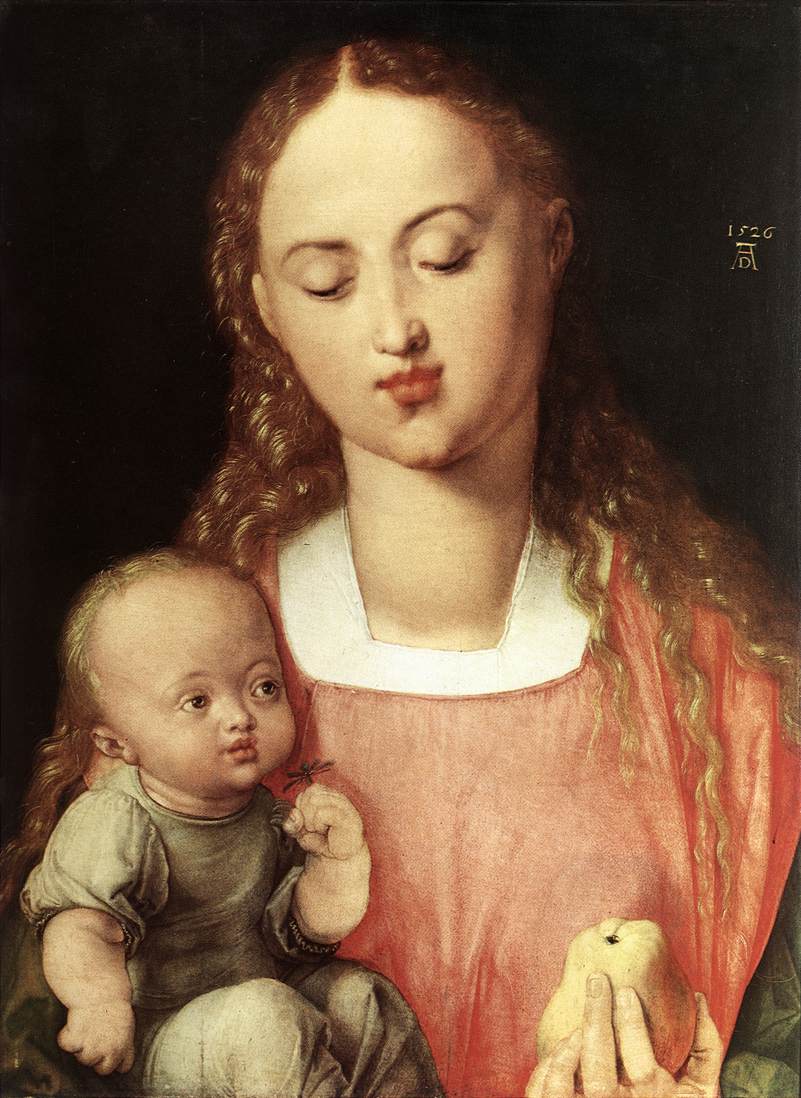
A mother without a veil, a pensive child, a pear and a small daisy. In 1526 Albrecht Dürer painted his last Madonna, in a Nuremberg where the Reformation had turned against such images.
The story behind the painting
Known as the Madonna with the Pear, this small oil on wood is signed and dated 1526 at the upper right. It is the last Virgin Dürer ever painted and one of his final works. He made it in Nuremberg, where the Protestant Reformation had been introduced a year earlier and devotion to images of the Virgin and the saints had been hit hard. Dürer probably drew on a preparatory drawing for a Saint Barbara, made after his journey to the Netherlands for a high altar that was never built.
What to look for
On a dark background, the Virgin appears without her traditional veil, holding the Christ Child in her arms. The Child holds a little daisy and gazes thoughtfully at the pear his mother holds. The composition is compact and tightly framed, and one continuous outline wraps both figures together, giving a strong feeling of family closeness. The handling is smooth and fluid. Look closely at the pear: a change of mind, a pentimento, shows that it was first planned larger. The panel measures 43 by 31 cm.
Meaning and intent
The daisy is read as a symbol of the mystical marriage between mother and son, and so of Christ with the Church, which was identified with Mary. The pear stands for the forbidden fruit, and therefore for the redemption of the world that the Child will bring. The arrangement reverses Dürer's earlier Madonna with the Carnation in the Alte Pinakothek in Munich, where the mother holds the flower and the son the fruit. Painted when images of the Virgin were under attack, this intimate picture holds on to tenderness between a mother and her child.
Legacy
The smooth, fluid style of this panel announces the great masterpiece of Dürer's late maturity, the Four Apostles in the Alte Pinakothek in Munich. In Florence the painting is documented from the 17th century, when it was in the Medici Guardaroba. A century later it was in the Palazzo Pitti, then at the Medici villa of Poggio a Caiano, and only in 1773 did it reach the Uffizi Gallery, where it remains today.
Le saviez-vous ?
- Signed and dated 1526, Dürer's last Madonna.
- Oil on wood, 43 x 31 cm.
- In the Uffizi in Florence since 1773.
- A pentimento shows the pear was first painted larger.
À propos de l'artiste
Albrecht Dürer (1471-1528)
art religieux · femme · Marie · Enfant Jésus · garçon · mère · galerie des Offices · Renaissance allemande
Autres œuvres de Albrecht Dürer
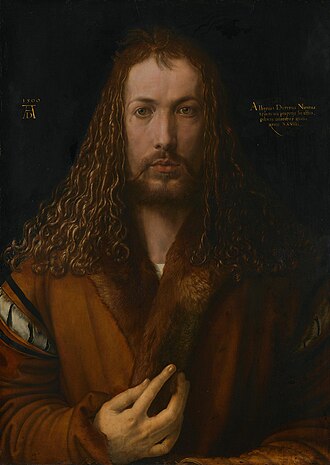 Autoportrait - Albrecht Dürer (1500)
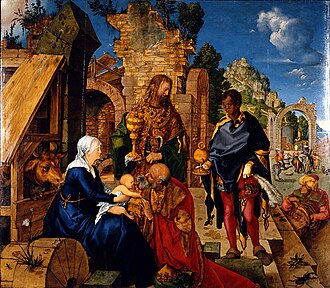 Adoration des mages - Albrecht Dürer (1504)
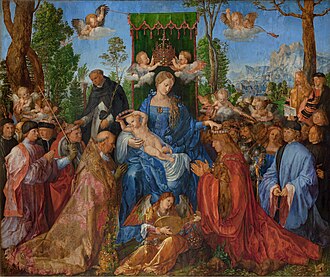 La Vierge de la fête du rosaire - Albrecht Dürer (1506)
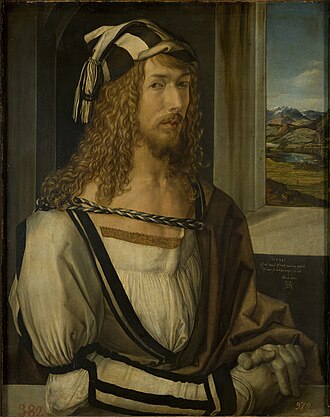 Autoportrait à 26 ans - Albrecht Dürer (1498)
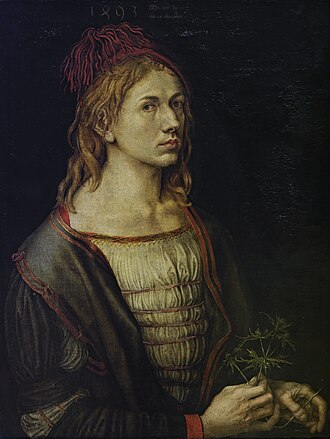 Portrait de l'artiste tenant un chardon - Albrecht Dürer (1493)
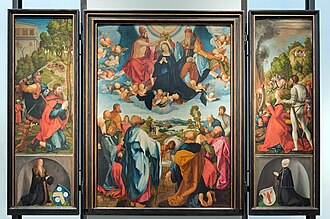 retable Heller - Albrecht Dürer (1500s)
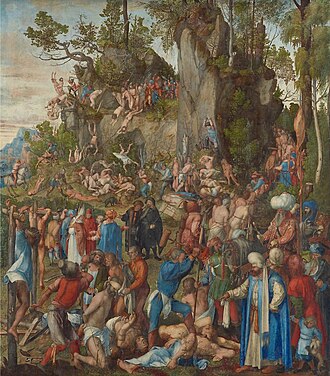 retable des dix mille martyrs - Albrecht Dürer (1508)
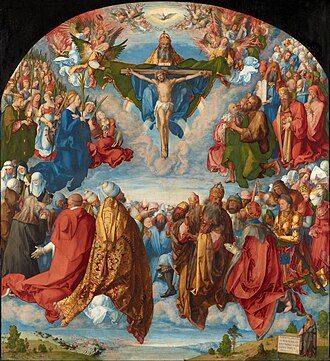 L'Adoration de la Sainte Trinité - Albrecht Dürer (1511)
Œuvres d'artistes liés
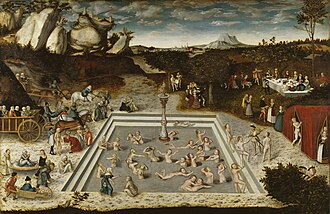 Fontaine de jouvence - Lucas Cranach the Elder (1546)
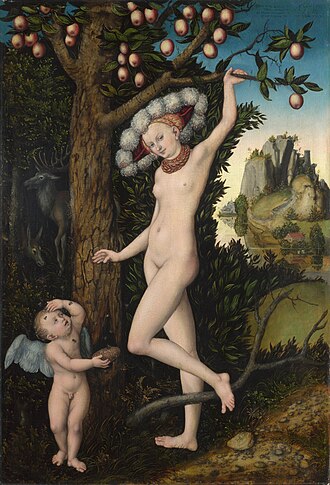 Vénus avec Cupidon le voleur de miel - Lucas Cranach the Elder (1520s)